Drift in analog sticks is a recurring headache for gamers. This fault, which affects PlayStation, Xbox, and Nintendo Switch controllers, stems from the mechanical wear of traditional potentiometers. Hall Effect technology, based on magnetic sensors without physical contact, presents itself as a viable alternative to permanently eliminate this problem.
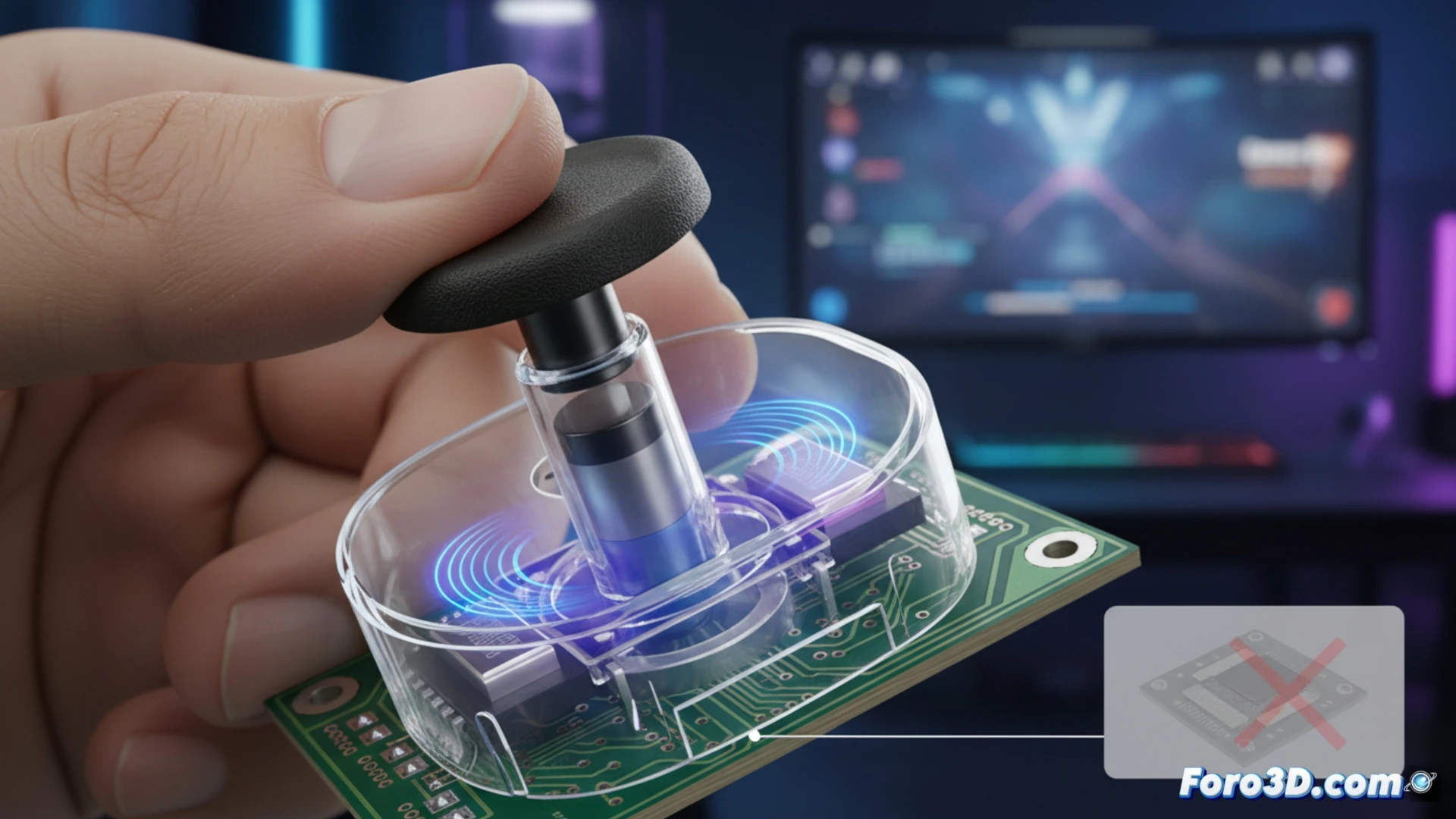
How the contactless magnetic sensor works 🧲
Unlike potentiometers, which use physical parts that rub and wear out, Hall Effect sensors detect the joystick's position through a magnetic field. A magnet on the lever alters the voltage when moved, and the sensor translates that variation into electrical signals. With no friction, wear is drastically reduced. Manufacturers like GuliKit already integrate this technology into controllers for Nintendo Switch and PC, offering greater durability without the need for constant calibration.
Goodbye to cleaning rituals with alcohol 🧴
Veteran gamers have developed strange rituals to combat drift: furious blowing, isopropyl alcohol swabs, and prayers to the hardware gods. With Hall Effect, those days of technological witchcraft could end. No longer will it be necessary to disassemble the controller every three months or pretend the problem is fixed by hitting it against the table. Black magic gives way to basic physics, although we will always have the consolation of blaming the lag.