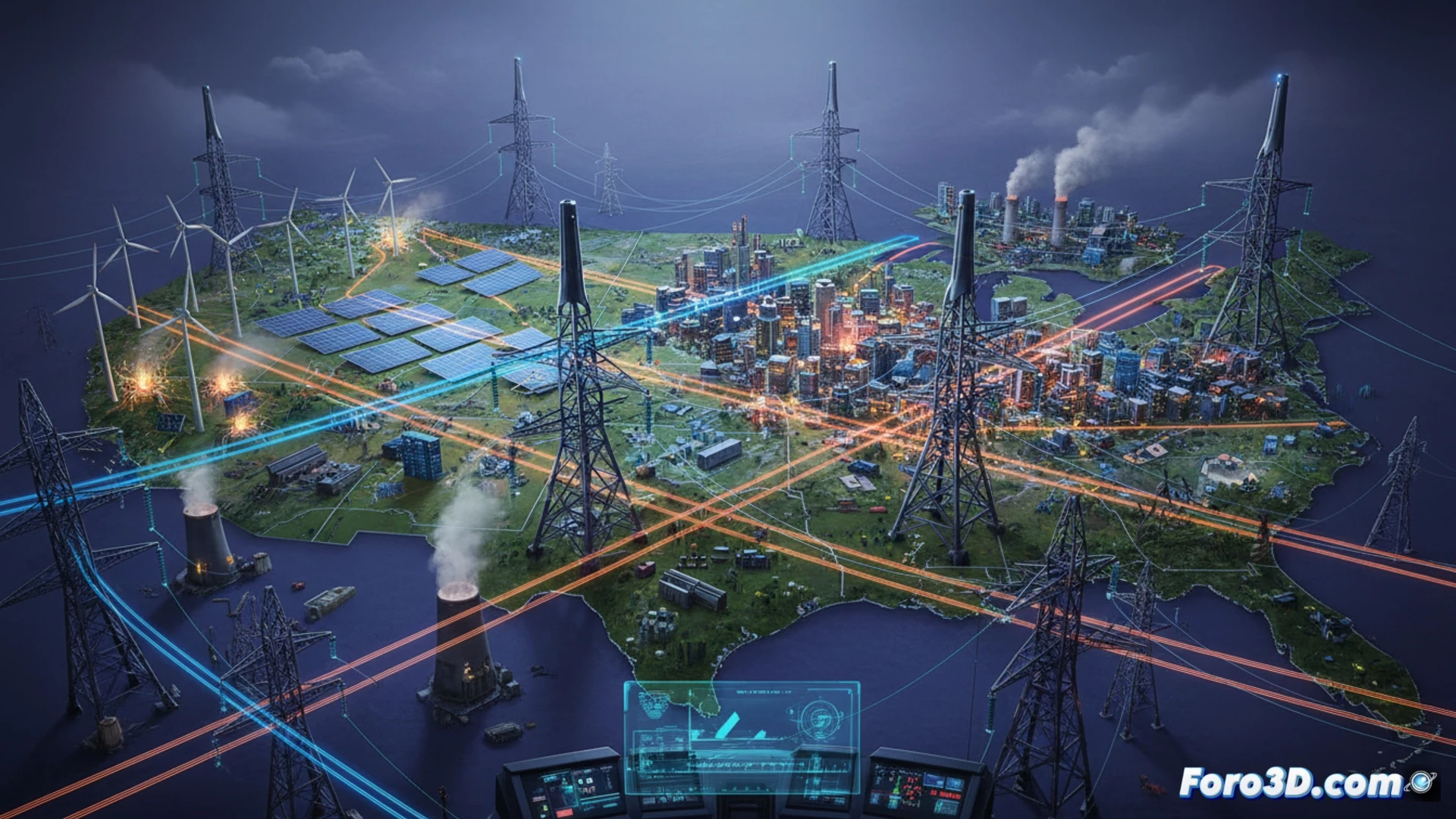
The U.S. power grid is facing unprecedented pressure. An aging infrastructure, the closure of coal plants, the explosive demand from data centers, and the need to integrate distant renewable energy sources are creating a bottleneck. The proposed solution is an Interregional Transmission System, an overlay network that connects regions with abundant solar and wind resources to major energy consumption centers. 🔌
HVDC and EHVAC, the Technical Pillars of the Future Grid ⚡
This system would be based on two high-voltage transmission technologies. HVDC, or High-Voltage Direct Current, is key for long-distance point-to-point links with minimal losses, ideal for bringing offshore wind or southwestern solar power. EHVAC, Extra High Voltage Alternating Current, would be the backbone for reinforcing and connecting existing regional grids, improving stability and allowing for the sharing of energy reserves between regions.
Because a 20th-Century Grid with 21st-Century Problems Doesn't Work 😅
The current situation has an unintentionally humorous side. We have solar farms that could power entire states, but the energy gets stuck in a grid that sometimes seems to run on steam and pulleys. It's like trying to stream an 8K video through a dial-up modem: the source is modern, but the channel collapses. Perhaps it's time to update the infrastructure, not just our phones' operating systems.