Colin Chapman, founder of Lotus, applied his philosophy of simplicity and lightness beyond the track. His approach not only revolutionized car engineering but also found a practical solution to a common problem: taxes. The Lotus Seven, a basic and ultralight sports car, was marketed in a particular way that benefited both the manufacturer and the end customer, leveraging a legal detail with engineering precision.
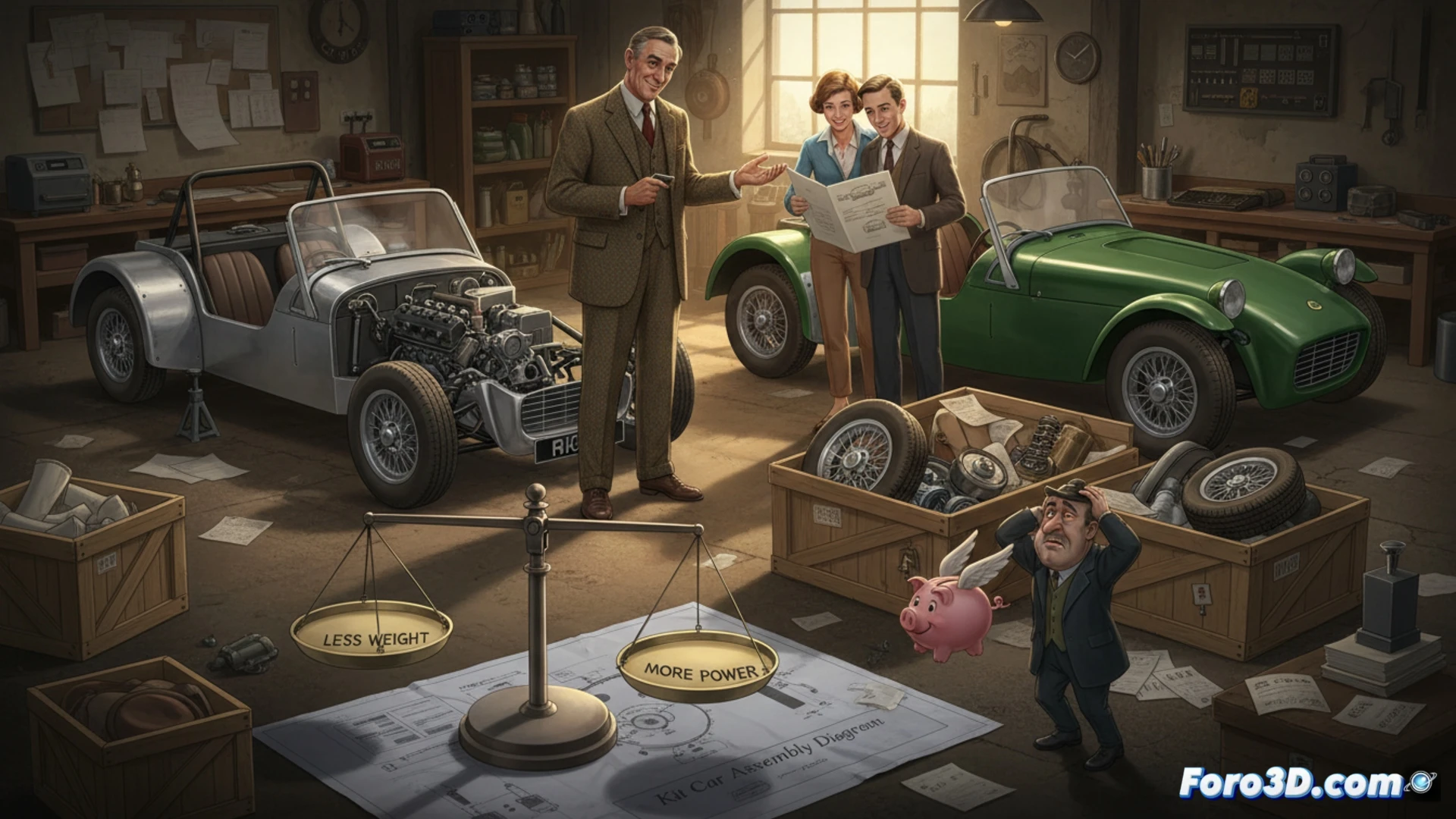
The Self-Assembly Kit as a Technical and Commercial Solution 🧩
Chapman decided to sell the Lotus Seven as a kit of parts for enthusiasts to assemble at home. This modality, common at the time, had a technical advantage by reducing production and logistics costs. But the key aspect was fiscal: by not being a complete vehicle, the package escaped the taxes applied to new cars. The buyer acquired the parts, paid a lower tax on components, and after assembly, registered a used car, legal but with a significantly lower tax burden.
How to Avoid Taxes with an Instruction Manual and a Hammer ⚖️
Chapman's genius demonstrated that sometimes the most effective tool against the Tax Office is not an accountant, but a wrench. The British government saw boxes of parts passing by without suspecting that inside traveled a sports car ready to evade taxes. The buyer, happy, sweated during assembly thinking that every tightened bolt was a saved bill. It was a lesson that lightweight engineering can also lighten the tax burden, as long as you have the patience to follow a blueprint without having leftover pieces.