A suspect denies wielding a knife, but the evidence lies hidden at a micrometric level. The pressure of a grip on a plastic handle can transfer the textile pattern of a glove, becoming imprinted like a factory mark. This article breaks down the forensic pipeline used to extract, analyze, and visualize this crucial evidence, combining high-resolution scanning, texture matching, and 3D modeling.
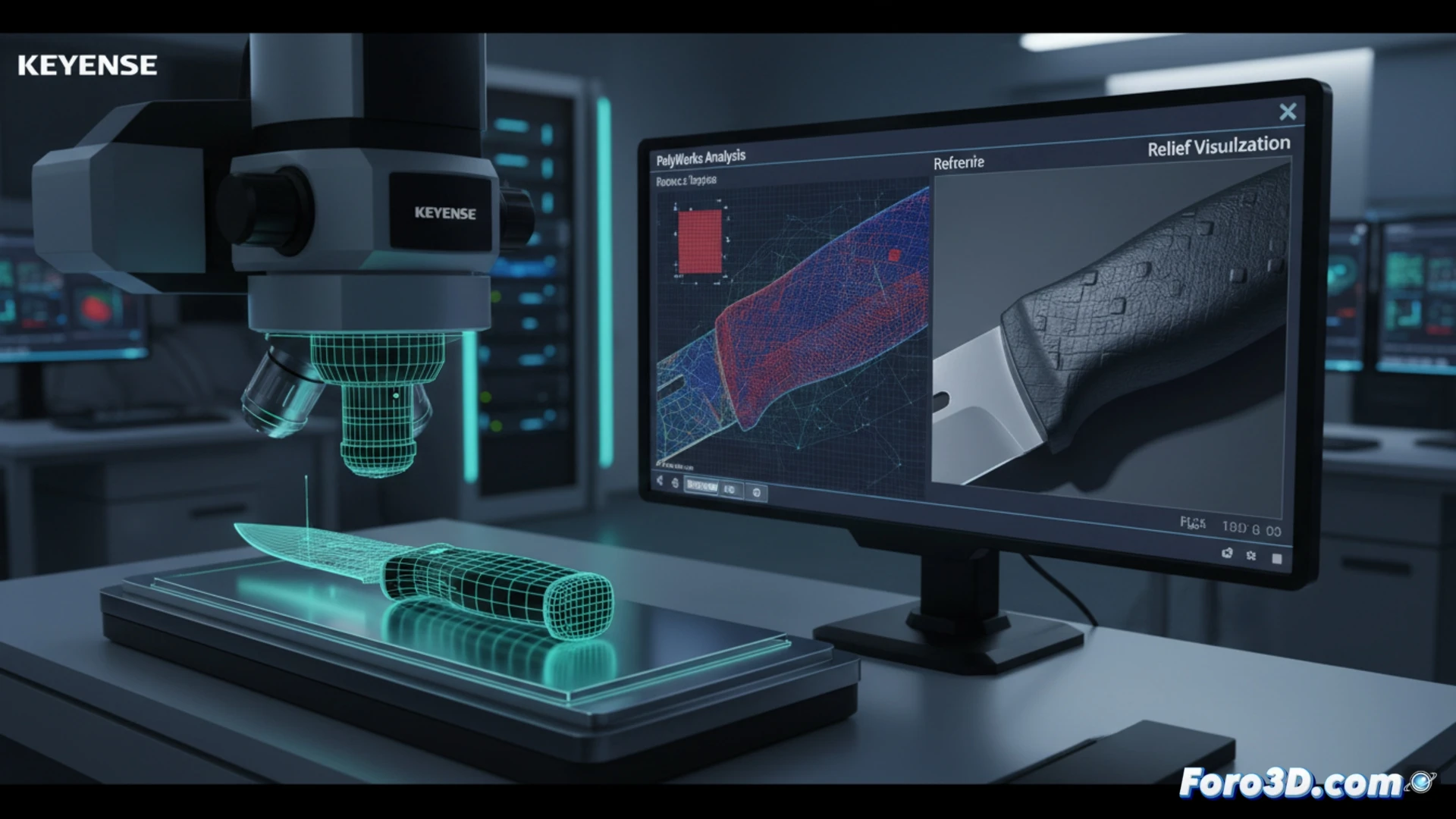
Technical pipeline: From plastic surface to analytical 3D model 🔬
The process begins with a high-resolution 3D scan using the Keyence VR microscope. This equipment captures the surface topography of the plastic handle with micrometric precision, generating a point cloud that records deformations caused by grip pressure. The data is imported into PolyWorks, where a texture matching analysis is applied. This software compares the raised marks on the plastic with known patterns of latex or leather glove fabrics. PolyWorks allows quantifying the statistical match, establishing a forensic relationship between the suspect and the weapon. Finally, Blender is used for relief visualization, creating depth maps and 3D animations that make the subtle glove impressions evident, ready to be presented as evidence in a courtroom.
Pressure as a signature: When plastic becomes a witness 🧤
Beyond the technology, this case demonstrates that evidence is not always visible to the naked eye. The transfer of the glove pattern to the plastic is not an accident, but a physical record of the force and duration of contact. The combination of Keyence VR, PolyWorks, and Blender not only documents the scene but transforms an inert object into a silent witness. For the digital forensic expert, this pipeline is a reminder that the truth can be engraved in the roughness of a surface, waiting to be deciphered.
Is it possible for a 3D scan of a handle to distinguish between the imprint of a voluntary grip and that of an accidental or forced contact at a micrometric level?
(PS: In the forensic pipeline, the most important thing is not to mix the evidence with the reference models... or you'll end up with a ghost at the scene.)