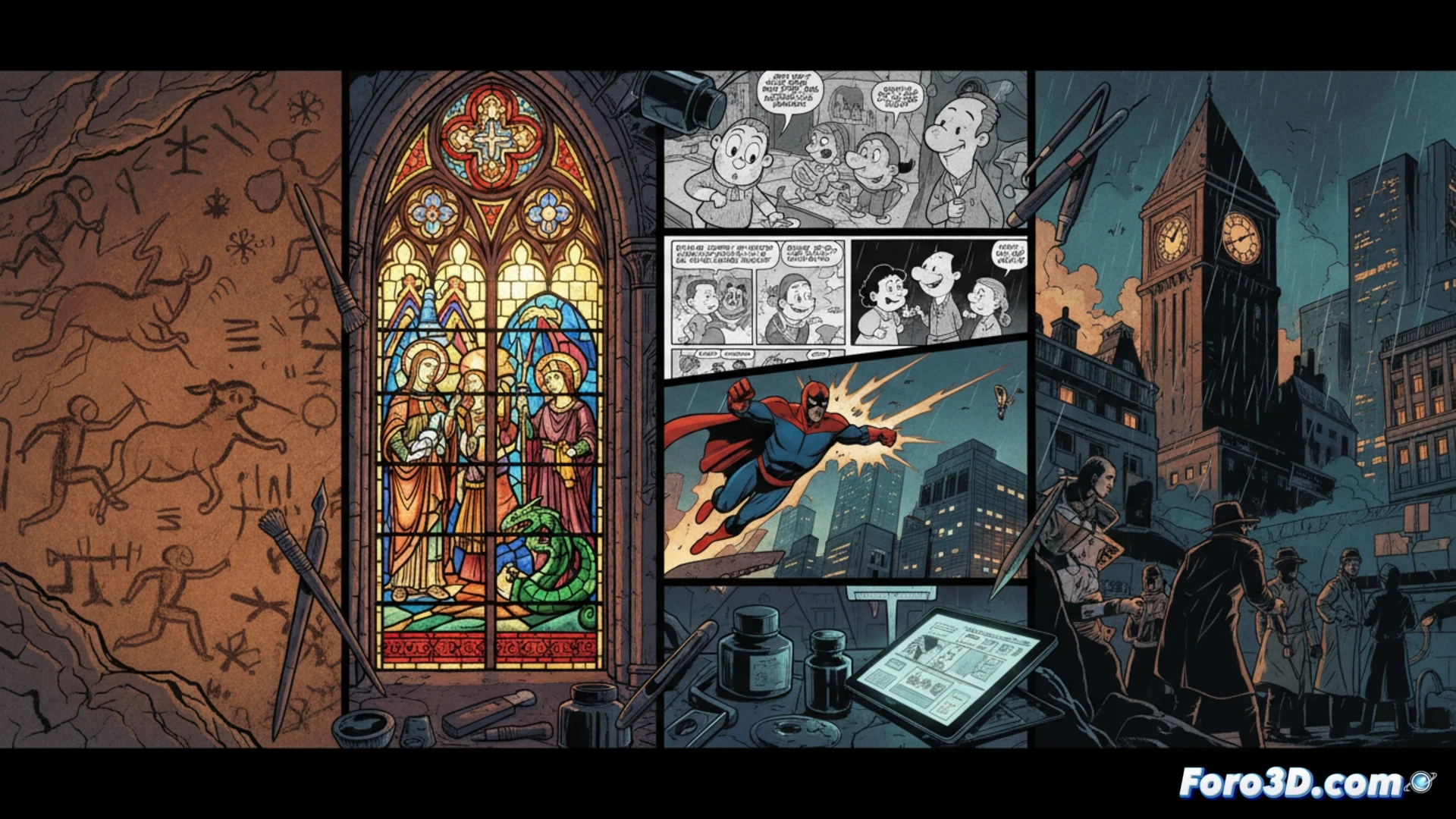
The Western comic did not emerge out of nowhere. Its narrative DNA traces back to cave paintings, where hunting stories were told with sequential images. This impulse to narrate visually evolved, passing through illuminated manuscripts and broadsides, until it crystallized into the modern format. Today it spans from daily newspaper strips to complex graphic novels, demonstrating constant adaptability throughout its history.
From Pencil to Pixel: Tools and Digital Workflows 🎨
The creative process has transitioned from the drawing board to the graphics tablet. Software like Clip Studio Paint, Adobe Photoshop, and Procreate dominates the industry, offering digital brushes that emulate traditional techniques. The workflow is segmented: script, layout, inking, and coloring, which can now be done collaboratively in the cloud. File formats like PSD or CSP keep layers editable, facilitating revisions and technical adjustments until the last moment before printing or digital publication.
Chapter 1 Syndrome: When Inking is Your Worst Enemy 😫
It all starts with enthusiasm worthy of a superhero. You plan an epic twelve-issue saga, with detailed art that will leave everyone speechless. The first panel is impeccable. By the tenth, you're drawing stick figures pretending to be trees and ink blots serving as a crowd. The promise of a realistic style transforms, page by page, into a race to finish before your hand goes on strike. The reader will never know that that villain with a blurry face is not an artistic effect, but pure digital fatigue.