Call of Cthulhu, designed by Sandy Petersen for Chaosium in 1981, revolutionized horror in role-playing games. Its key contribution was the Sanity roll, a system that quantifies the mental deterioration of investigators when faced with the supernatural. This mechanic prioritizes narrative and psychological immersion over combat, making vulnerability and fear central elements of the game.
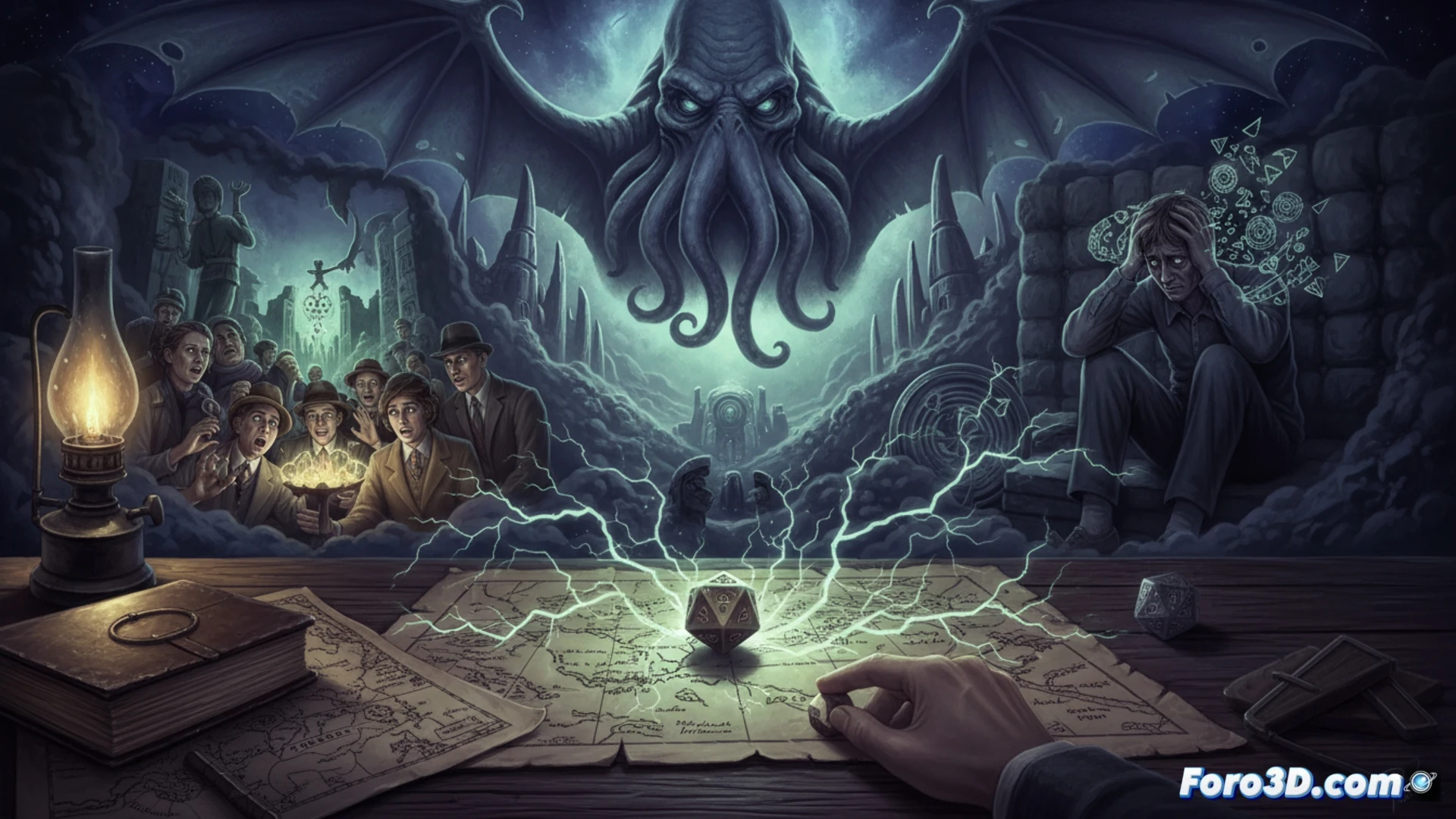
The Algorithm of Horror: Designing a Psychological Degradation System 🧠
Technically, Sanity operates as a secondary resource, parallel to hit points. Each encounter with the unnamable requires a roll based on a percentage. Failing it implies a loss of points, whose value depends on the magnitude of the horror witnessed. The system includes critical thresholds that trigger phobias, manias, or temporary crises, altering gameplay. Lost sanity is difficult to recover, which simulates permanent trauma and adds a strategic layer of risk management to exploration.
How to Lose Your Mind (and the Game) with Style 😱
Nothing unites a group more than seeing their Oxford scholar screaming at a cat or their detective hiding in a closet out of fear of tentacles. The mechanic ensures that your decisions matter, especially the decision to never look at anything interesting. It's a system that rewards prudence, if by prudence we mean sending the rookie to open the cursed book. In the end, victory is not about defeating the ancient god, but about reaching the asylum with the highest sanity.