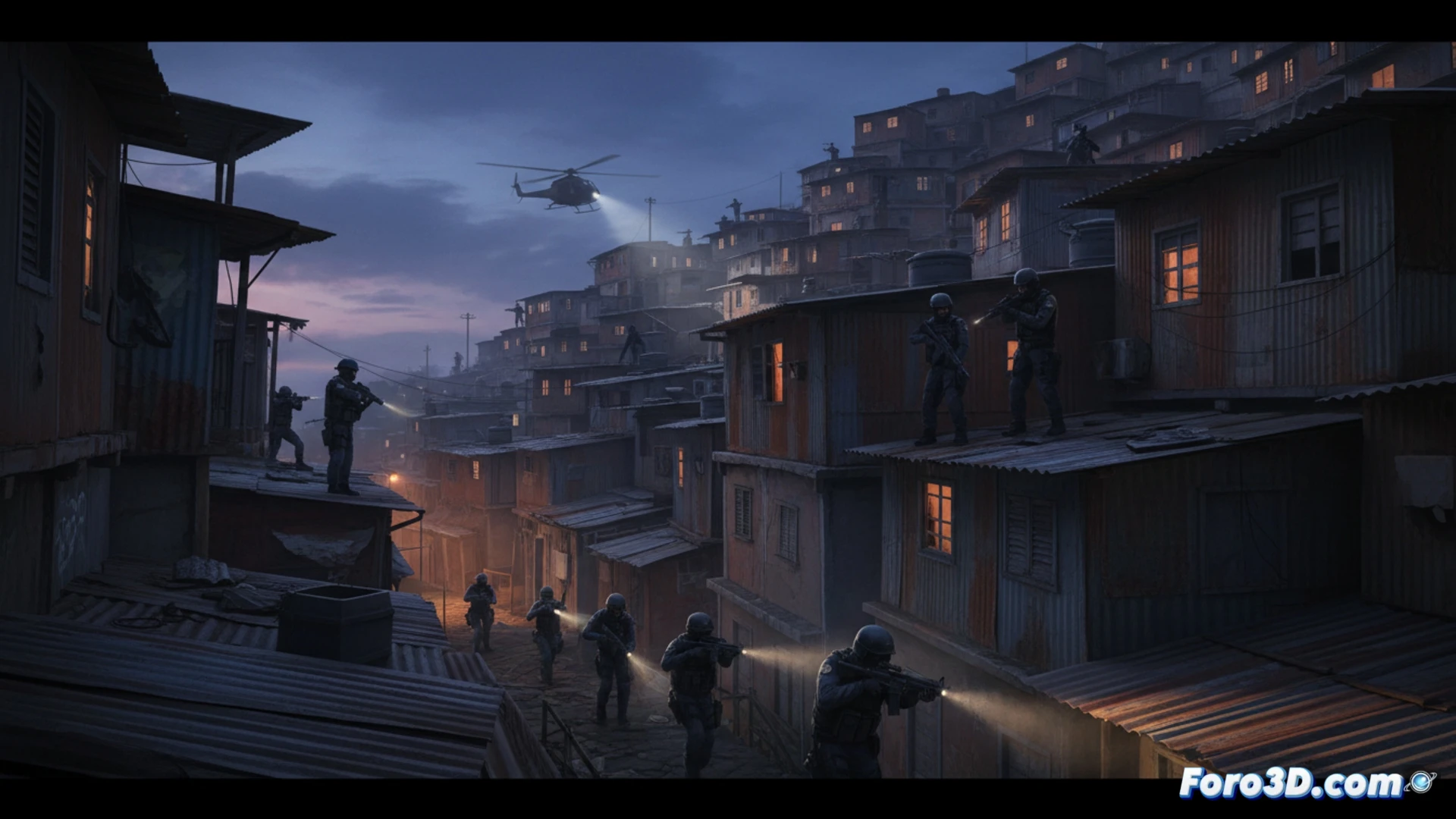
Mark Galeotti, in his book Homo Criminalis, presents a realistic view of organized crime. He describes it as a phenomenon inherent to modern societies, impossible to eradicate completely. Although the State has more power, criminal groups operate from the margins, making a total state response too costly. Police operations, like in the favelas, only displace the problem temporarily.
The Technological Escalation in Asymmetric Warfare ⚔️
This dynamic can be analyzed as a system of forces in imbalance. The State possesses brute power, equivalent to a large centralized database. Crime acts as a distributed and resilient network, with nodes that regenerate. The increase in criminal weaponry is a parameter that alters the equation, increasing collateral violence. This overloads state resources and degrades the perception of security, a key service the system must keep stable.
Planning for an Eternal Sprint, Without a Finish Line 🔄
So, according to this logic, we have been framing the project incorrectly from the start. It's not about developing the definitive application that eliminates all bugs. It's more about maintaining an in-house support team, fixing critical failures in a continuous cycle, knowing that new bugs will appear. Final victory is a goal that is not on the roadmap. It's comforting to think that, at least, we have guaranteed work in perpetuity.