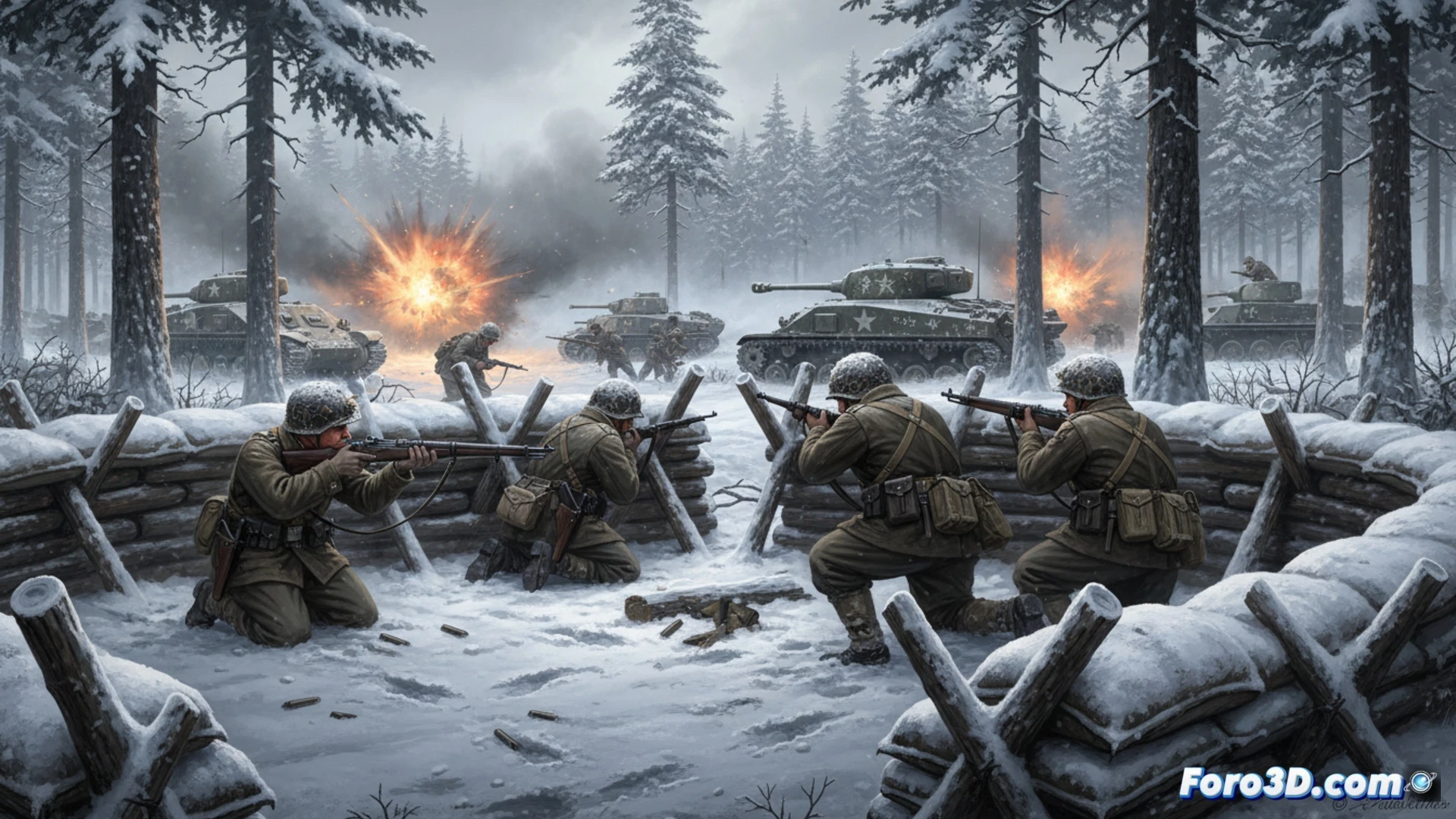
In December 1944, the German army launched its last major offensive on the Western Front. The objective was to split the Allied lines in the Belgian Ardennes. The American forces, taken by surprise, resisted extreme pressure. This resistance, under very harsh weather conditions, halted the German advance and exhausted their strategic reserves.
Communications and Logistics Under Extreme Weather 📡
The success of the initial American defense depended on technical and logistical factors. The winter weather nullified Allied air superiority, but it also slowed the German advance. The ability to move reinforcements by road, such as the 101st Airborne Division to Bastogne, was key. Furthermore, the breakdown of German communications, which forced the use of radio with simple ciphers, allowed the Allies to intercept operational plans.
When Your Offensive Depends on the Enemy Surrendering 🤞
German planning had a notable component of hope. It was based on capturing Allied fuel to continue advancing, a plan with a certain air of misappropriation. They also relied on the bad weather, their initial ally, lasting forever. When the sun came out and the Allied air force arrived, the operation showed its limits. It is a reminder that plans that require everything to go perfectly often encounter obstacles.