Choosing a keyboard goes beyond tactile feel. While mechanical switches have dominated the market, optical technology is gaining ground with solid arguments. This article compares both systems, analyzing their operation, durability, and latency, to understand which technology suits each need, whether for intense gaming sessions or long writing marathons.
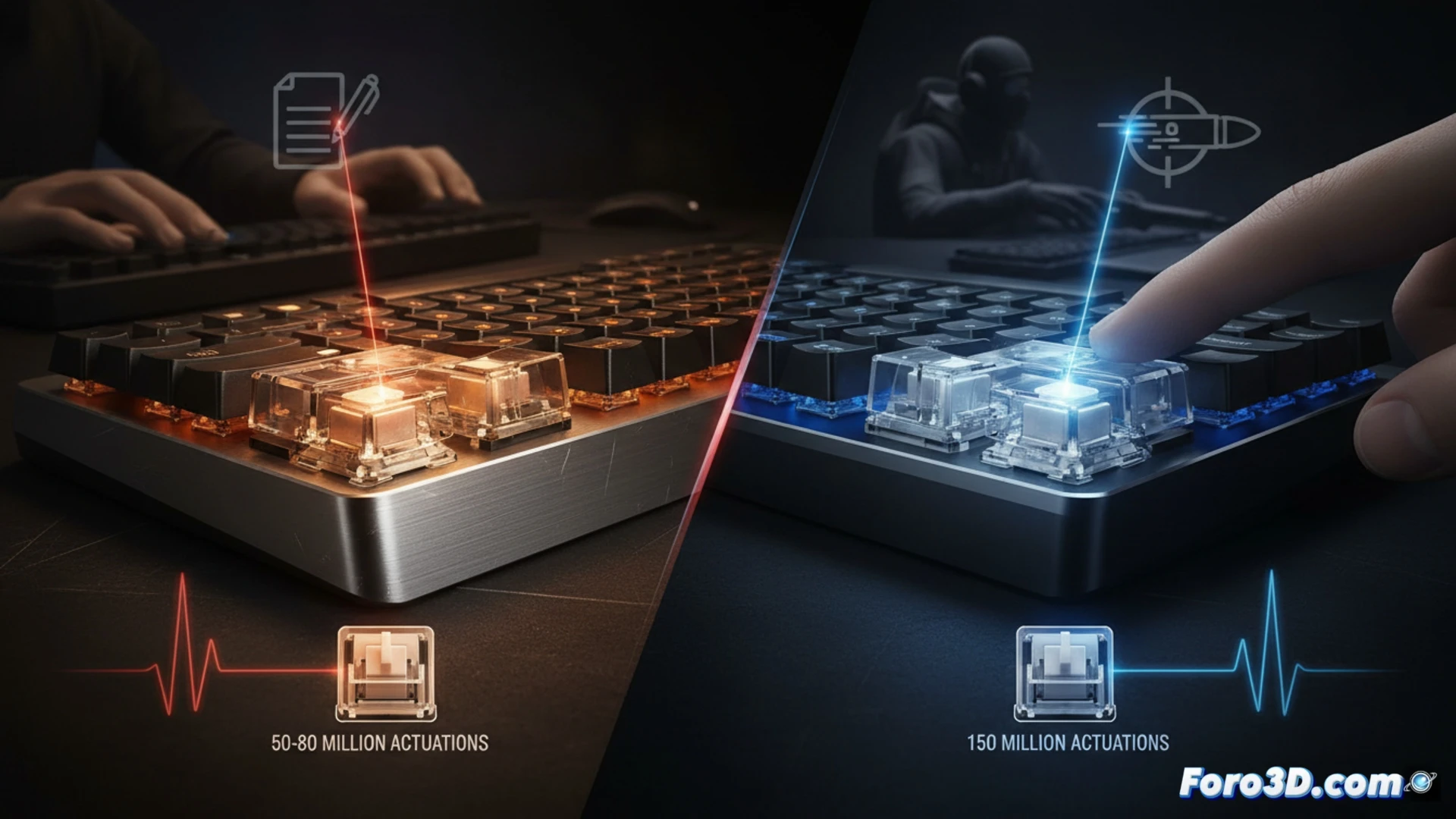
The Mechanism Behind Light and Metal 🤔
The fundamental difference is the detection principle. A mechanical switch relies on physical contact between two metal leaves. This contact suffers from wear and requires a software filter to eliminate electrical bounce, which adds milliseconds of latency. An optical switch, on the other hand, breaks an infrared light beam with the switch stem. Since there is no electrical contact to bounce, the detection is instantaneous and there are no parts that erode with use, explaining its greater theoretical lifespan.
A Marriage of Convenience with Dust 🦠
Optical keyboards boast an almost eternal lifespan, which is reassuring. However, they introduce a new intimate enemy: dirt. Some crumbs or lint strategically placed in that light beam could turn your high-response keyboard into an expensive paperweight. Meanwhile, the mechanical one, with its predictable wear and known bounce, is like an old car: you know when it's going to fail, and sometimes, you even grow fond of the noise.