The Labor Inspectors Association has responded to a recent Supreme Court ruling that limits surprise visits to companies when these are carried out in spaces considered homes, such as dwellings or similar premises. The ruling requires judicial authorization or the owner's consent, which clashes with the usual practice of inspectors, who consider these unannounced visits a key tool for uncovering labor fraud and the underground economy.
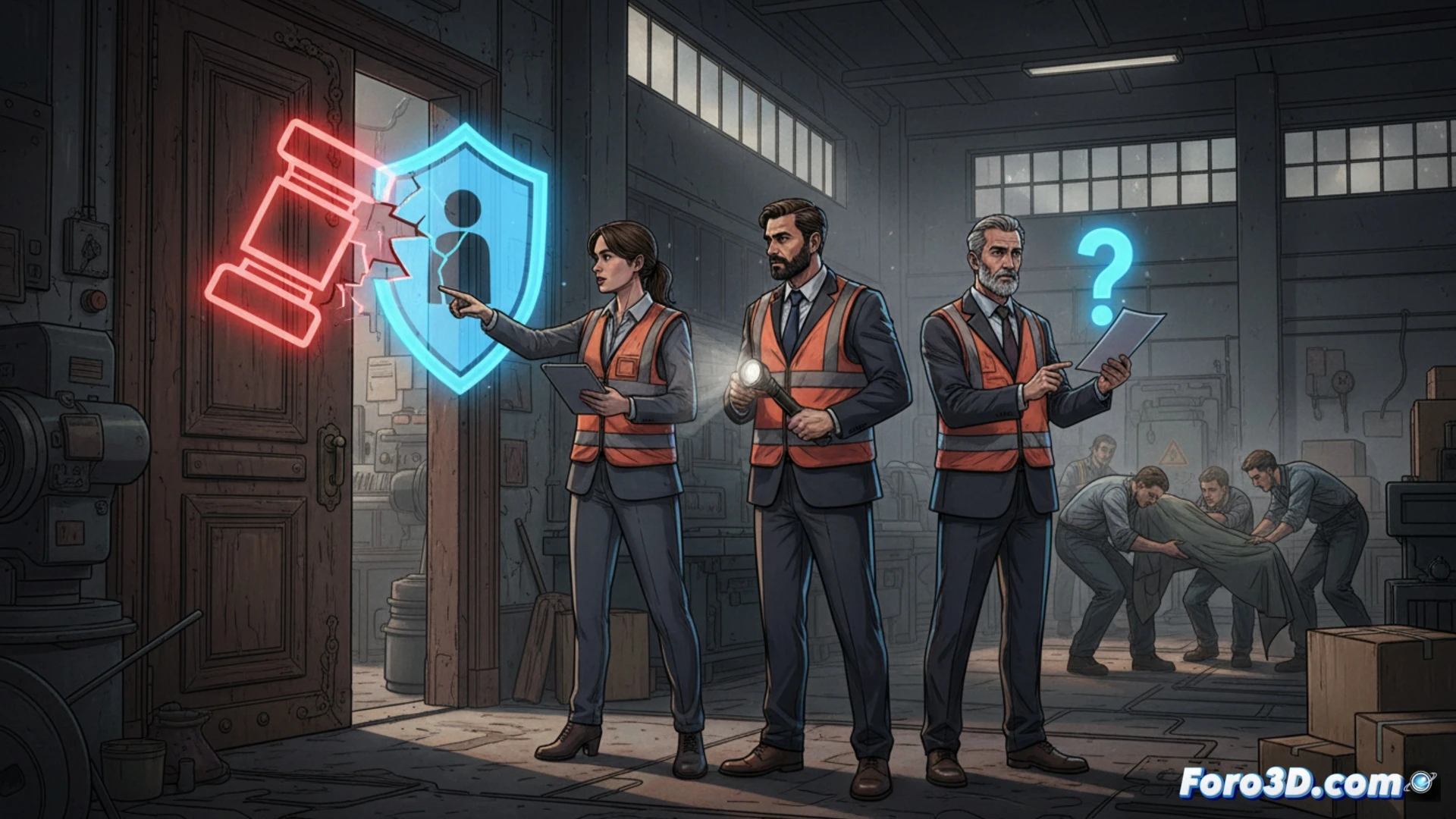
How technology can bypass prior notification 🛡️
In a context where advance notice could alert the offender, inspectors could rely on digital tools to gather evidence before the visit. Systems for cross-referencing Social Security data, analyzing electronic invoicing, or algorithms for detecting anomalous patterns make it possible to identify potential irregularities without having to set foot on the premises. The key lies in strengthening remote inspection and data intelligence as an alternative to physical entry.
The good businessman's manual: hiding the office chair 🪑
Now, thanks to the Supreme Court, the savvy businessman has plenty of time, upon receiving an inspection notice, to turn his warehouse into a daycare center or his workshop into a meditation room. Just place a sofa bed, a plant, and call any corner a home so that the surprise visit becomes a visit by appointment. Of course, don't forget to remove the construction scale and put up a sign saying rest area.