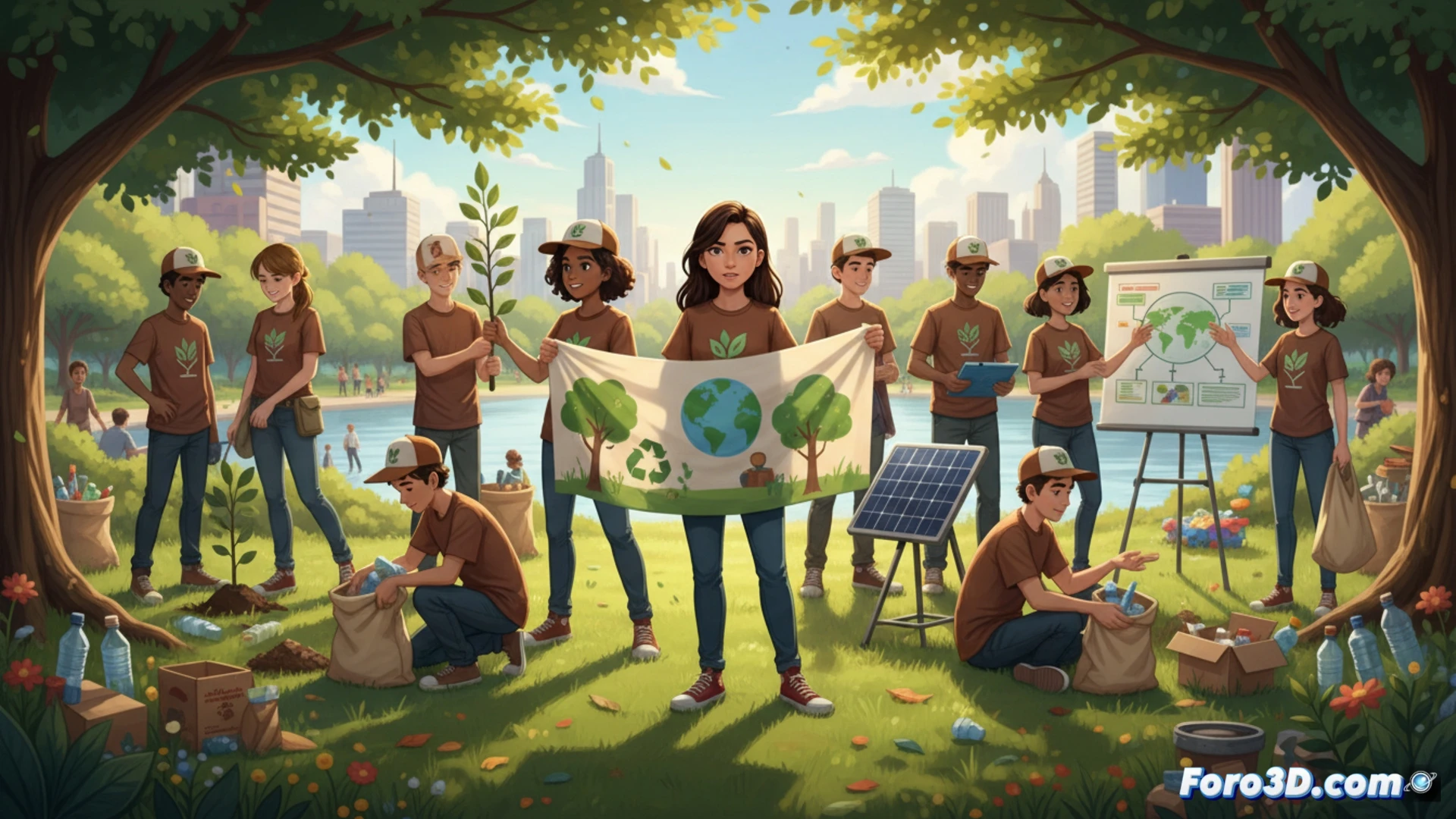
Within the framework of Earth Day, student groups from various universities have organized clean-up and reforestation campaigns. These actions seek to transcend the symbolic celebration to generate a tangible impact on local environments. The mobilization is characterized by its practical approach and the integration of academic knowledge into project logistics, demonstrating a concrete application of environmental awareness.
Geolocation apps and logistics for waste management 📱
The effectiveness of these campaigns has been supported by accessible technological tools. Students use collaborative mapping applications to mark critical trash points or areas for reforestation. Project management platforms facilitate the coordination of volunteers and resources. Additionally, they use low-cost sensors connected to microcontrollers to monitor parameters such as soil moisture in new plantings, ensuring a higher survival rate.
The dilemma of the reusable container and the new cotton t-shirt 🤔
Not everything is consistent in the ecological paradise. It is common to see a participant arrive in their own car for a 500-meter clean-up, or wear a new cotton t-shirt, with the campaign slogan printed, to collect plastics. The carbon footprint of producing that garment likely exceeds that of the plastic collected. The paradox is complete when, after the day, hundreds of photos are shared on servers that constantly consume energy. The intention is commendable, but the details are sometimes contradictory.