A project covered in the press shows how 3D printing technology is applied to archaeology. It focuses on digitizing and reproducing historical pieces, like those from Ursi, to create exact replicas. This method allows for the study and display of objects without handling the originals, reducing their deterioration. The initiative merges heritage and technology, facilitating access for researchers, museums, and the public.
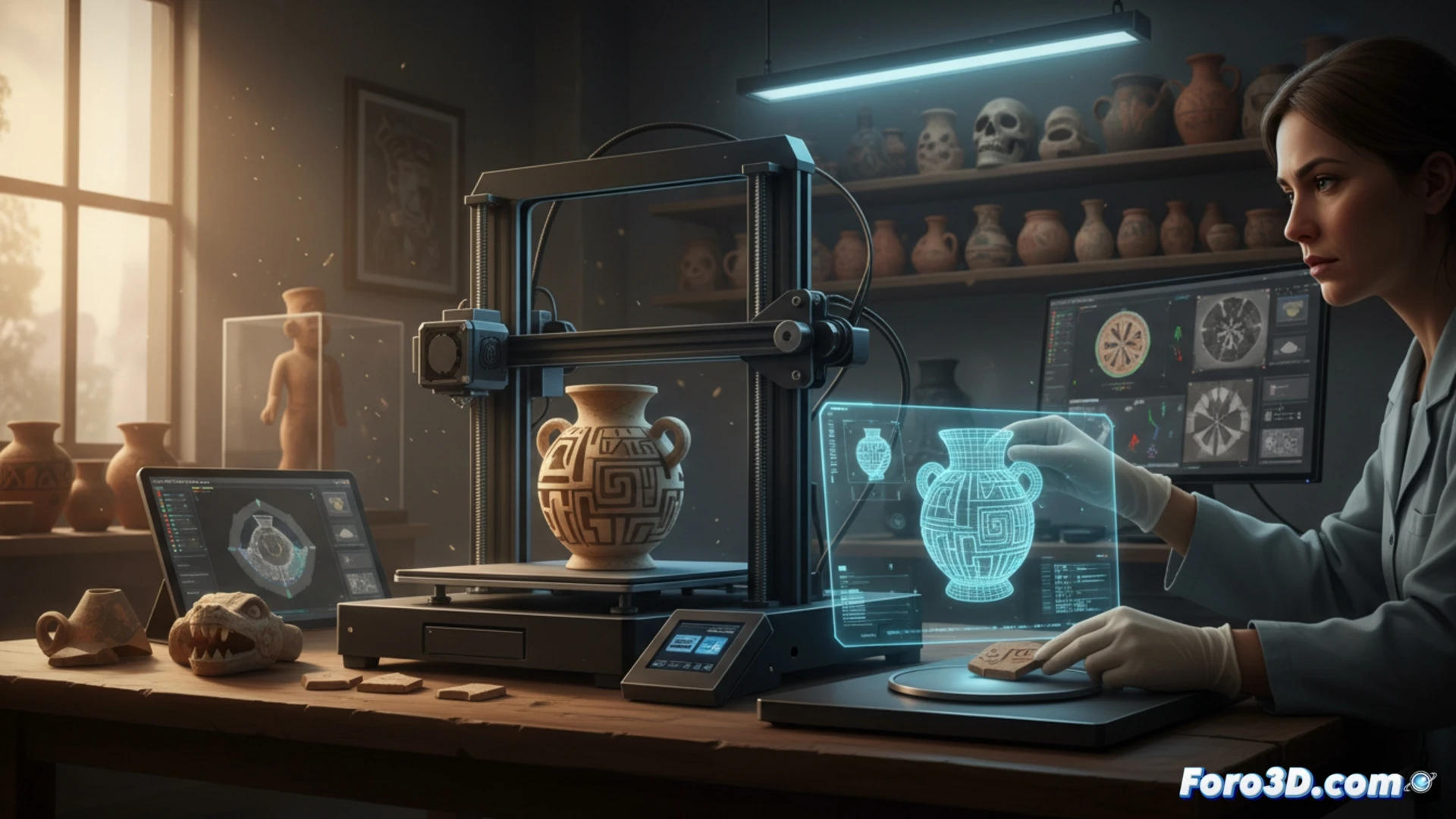
From Scanning to Material Replica: The Technical Process 🔍
The process begins with high-resolution 3D scanning of the original piece, capturing every geometric and surface detail. This digital data is processed to correct imperfections and prepare a virtual model optimized for printing. Then, a material (special resins or filaments) is selected to emulate the texture or density of the original. Layer-by-layer printing builds the physical replica, which can later undergo post-processing treatments to achieve the final finish.
Your Archaeological Replica at Home, Without Waiting Millennia 🏠
It's a notable advance: now you can have your own historical piece without needing to loot a site or wait for it to oxidize in the ground. 3D printing brings archaeology into the domestic sphere, where a ceremonial vessel can end up holding pencils on a desk. Perhaps in the future, excavations will be measured not by discoveries, but by the download speed of the .STL file. Authenticity is under debate, but the decorative object is guaranteed.