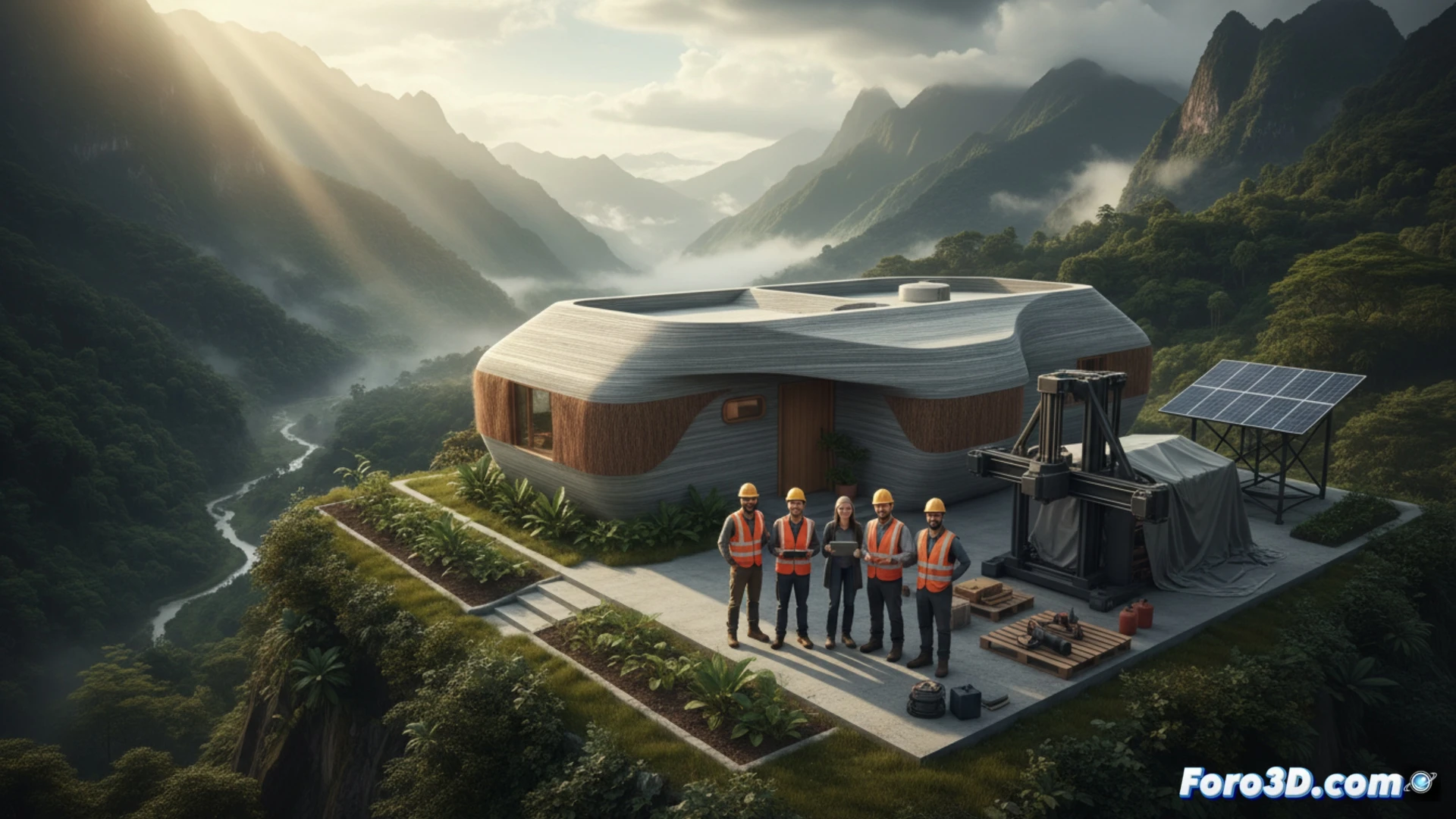
In the remote mountains of Colombia, a team of researchers has managed to build a 40-square-meter social housing unit using 3D printing. Using a mixture of cement and local materials, the project reduces costs and accelerates construction timelines compared to traditional methods. This initiative demonstrates that technology can be a viable tool to address the housing crisis in hard-to-reach areas, where logistics are often an obstacle.
Local cement and robotics to overcome geography 🏔️
The housing unit was manufactured with a large-format printer that doses a mixture of Portland cement, sand, and local fibers. The process, supervised by technicians, allowed the walls to be erected in less than 48 hours, a time much shorter than conventional construction methods. The choice of local materials not only reduces transportation costs but also adapts the structure to the region's climate and humidity. The researchers point out that the design can be replicated in other areas with similar conditions.
The printer that doesn't ask for vacations or overtime 🤖
While a human bricklayer would ask for a break after hauling bags of cement uphill, the 3D printer only requires electricity and a bit of maintenance. Of course, the local neighbors are already asking if the machine can also print a larger kitchen or a balcony with a view of the valley. For now, the technology is limited to walls. But who knows, maybe soon we'll see a sign that says: Houses printed, ask for prices per square meter.