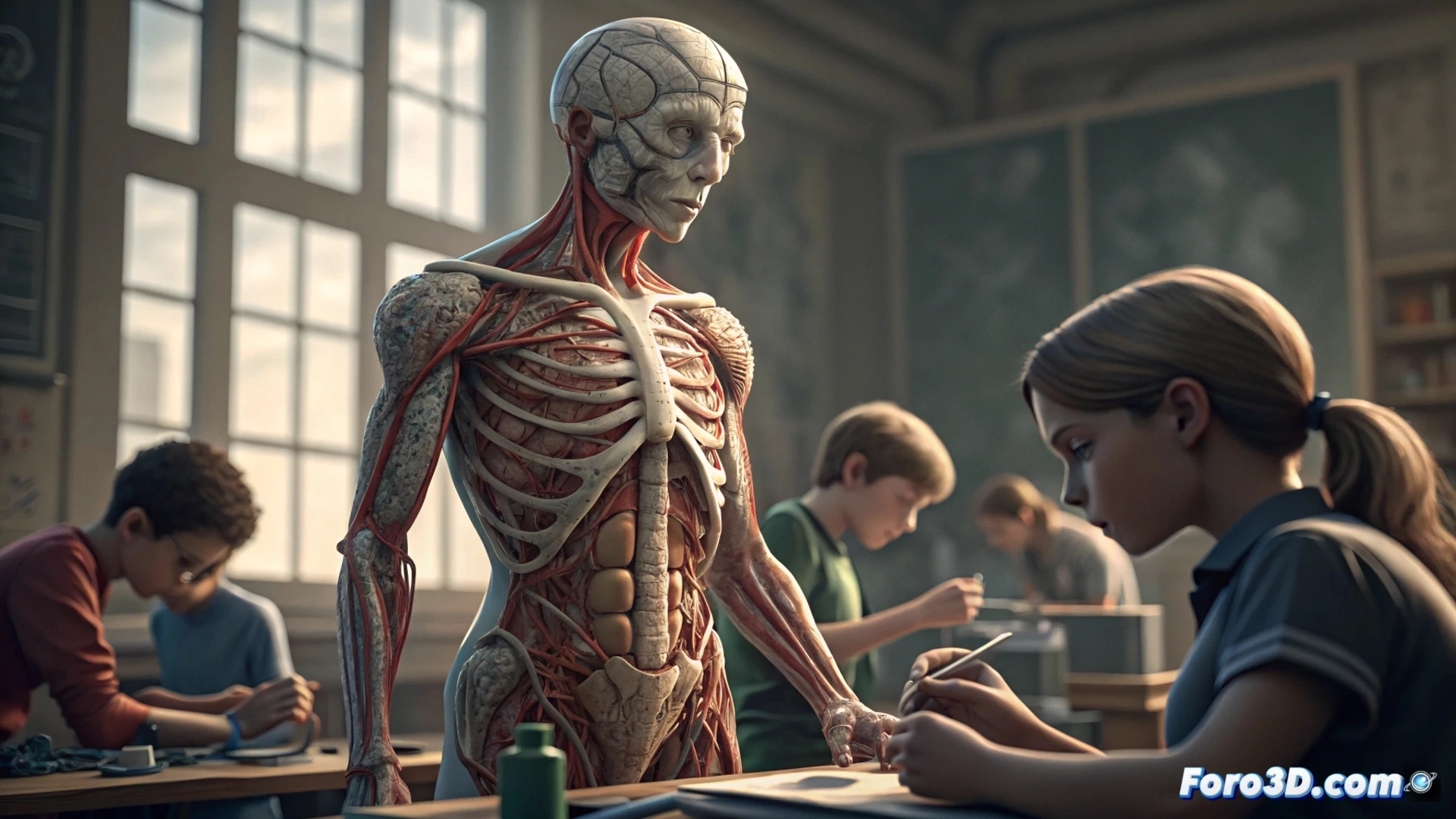
3D printing is redefining the student's role in the classroom, transforming them from a passive consumer of information into an active creator of physical objects. By materializing abstract concepts such as complex geometric shapes or anatomical models, this technology enables deeper understanding through hands-on, tangible experience.
Technical development and key skills in 3D design 🛠️
The digital design and manufacturing process introduces students to the use of CAD software, where they learn to model parts from scratch. This practice develops problem-solving skills as they face printing limitations, such as the need for supports or part orientation. It also fosters critical thinking by having to optimize designs to save material and time, while boosting creativity by transforming a digital idea into a functional object.
When the teacher asks to print and the printer says no 😅
Of course, the experience is not without its moments of pure forced learning. Like when a student designs an epic piece for a science project, but the printer decides today is a strike day and the base of the piece detaches after 10 minutes. That's when the student discovers that patience and bed calibration are the real core subjects.