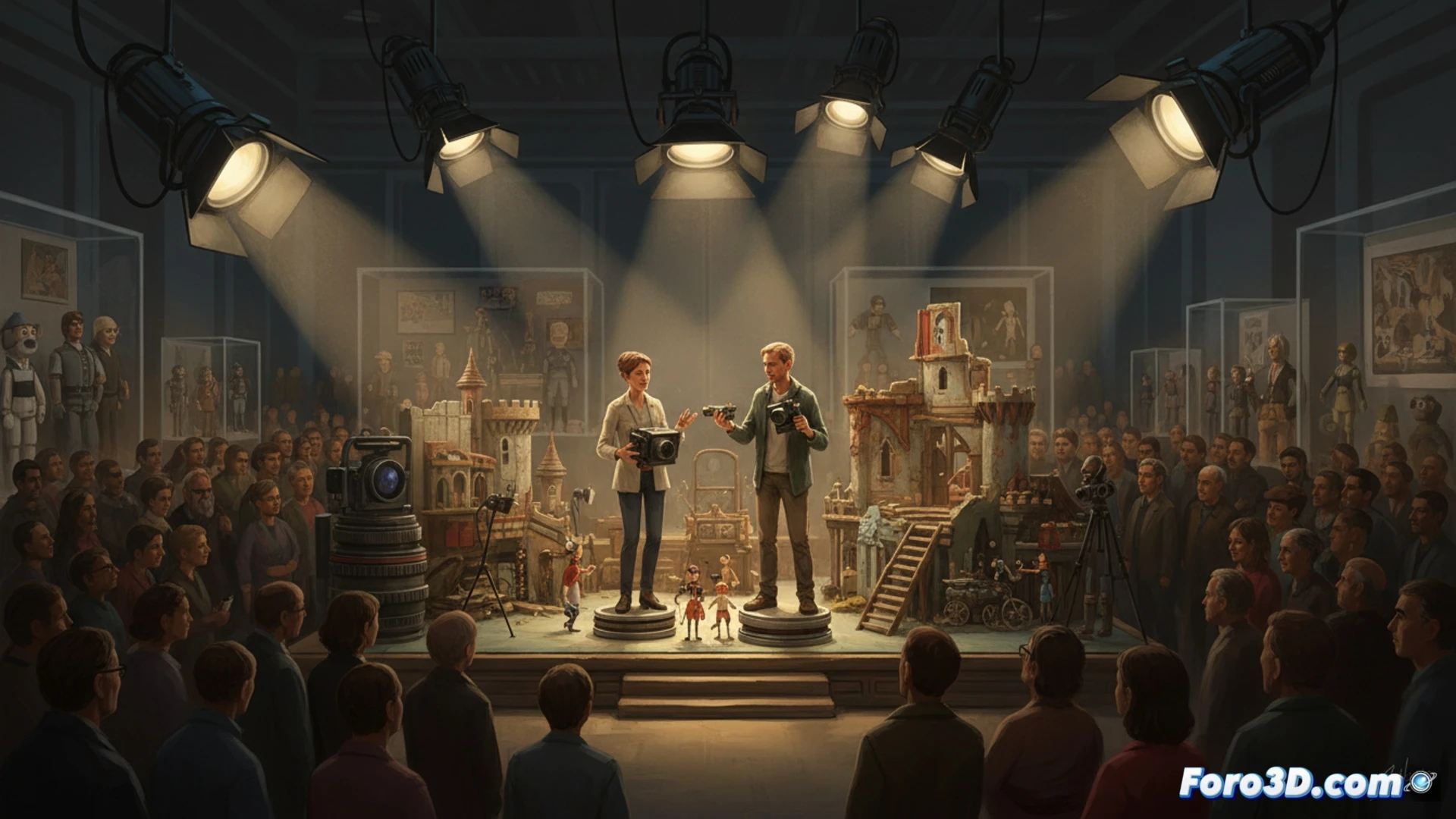
Stop-motion is a border territory between craftsmanship and cinema. At the National Festival of Animated Film, cinematographers Nadine Buss and Simon Filliot detailed the challenges of lighting characters that are barely a few centimeters tall. Miniaturizing sets, textures, and materials means shoots that stretch for weeks, where each frame demands a precision that large live-action productions rarely know.
LEDs, Microshadows, and the Scale of Light 💡
Lighting for miniatures is not simply a matter of reducing the size of the lights. Buss and Filliot explained that physical laws do not miniaturize: a hard light at full scale becomes gigantic next to a 10 cm puppet. To avoid this, they use miniature LEDs, homemade diffusers, and tiny flags. The key is to recreate the atmosphere of a real scene without the shadows betraying the reduced size of the set. Each light source must be designed as another scenic element.
When Your Actor is Shorter Than Your Coffee ☕
The fun begins when you realize the protagonist can't move without their head falling off. Buss confessed that sometimes they spend hours adjusting a single strand of wool or repositioning a speck of dust that on screen will look like a boulder. Filliot added that the biggest drama isn't the lighting, but rather when the technician on duty sneezes near the set. That's when a stop-motion shoot turns into an exercise in controlled breathing.