An artificial intelligence promises to revolutionize music education by analyzing and reducing the technical difficulty of classical pieces like those by Mozart. Far from mutilating the works, this tool adjusts harmonies and melodies to adapt them to different skill levels, allowing conservatory students or novice musicians to perform them without losing the original essence. The goal is pedagogical, not commercial.
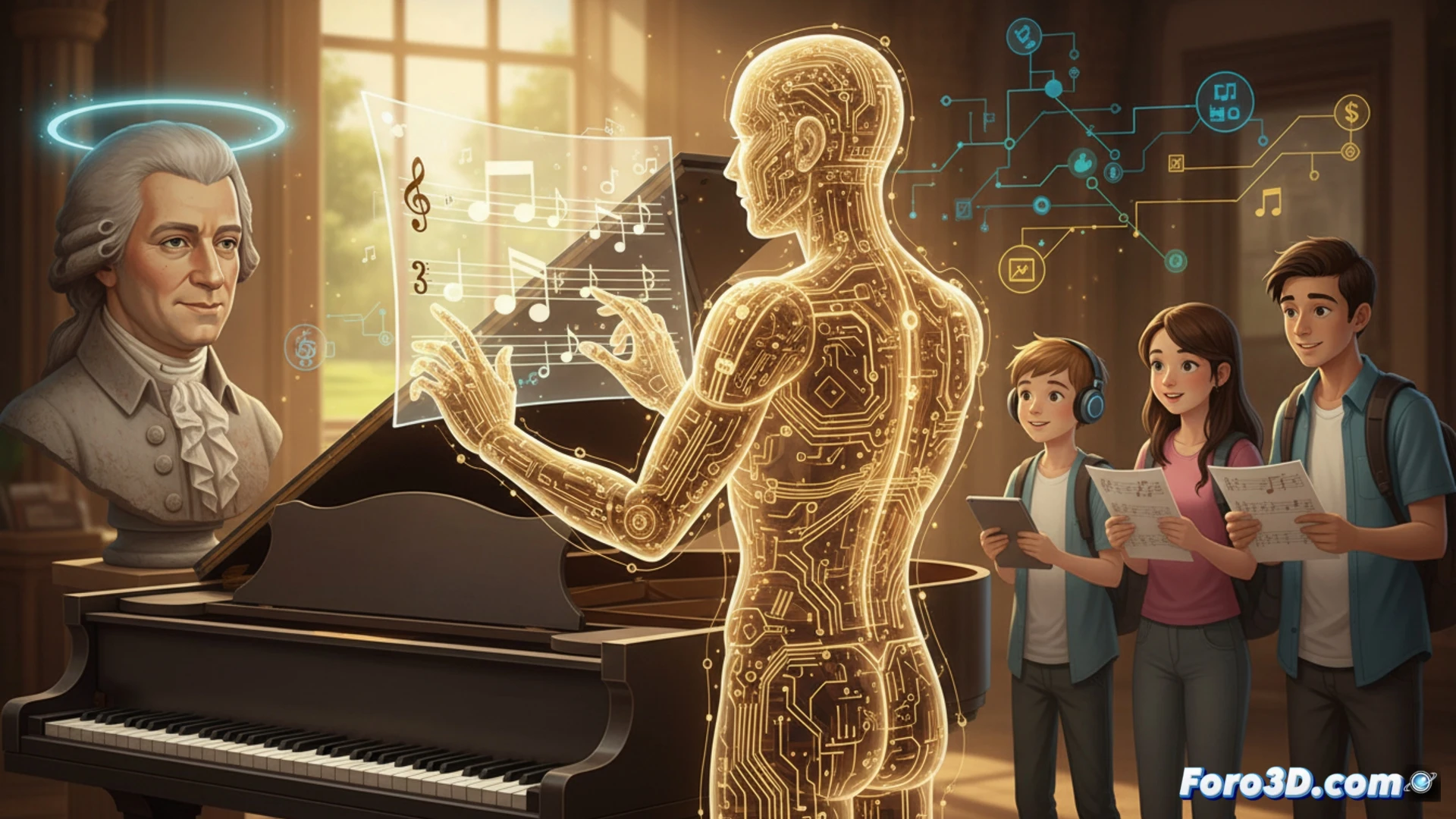
How AI Breaks Down Complexity Without Betraying the Composer 🎼
The system uses deep learning algorithms trained on scores by Mozart and other classical period composers. It first identifies passages of high technical demand, such as fast scales or octave jumps. Then it proposes harmonic or rhythmic substitutions that maintain the original progression but reduce the required motor skill. The result is not a simplistic version, but a progressive adaptation: the student can start with the easy variant and, with practice, get closer to the original score.
Mozart in an Easy Version? It's Not Heresy, It's Teacher Survival 🎹
Some purists are already talking about sacrilege, but surely Mozart himself would have approved of the idea. After all, he himself used to improvise and modify his works in concerts according to the audience's mood. If the Salzburg genius lived today, he would probably use AI to save hours of rehearsal and dedicate himself to what really mattered: collecting the commission and having a glass of wine. The tool does not replace the virtuoso, it just gives a break to those still learning not to step on the pedals.