Artificial intelligence advances relentlessly, but the fear that it will take our jobs is more noise than reality. According to Goldman Sachs and McKinsey, generative AI could automate between 25% and 70% of work tasks by 2026. Automating is not eliminating: an accountant who delegates data entry gains time for strategic analysis. Writing, translation, and programming will see profound changes, but the demand for human judgment and cultural context remains strong.
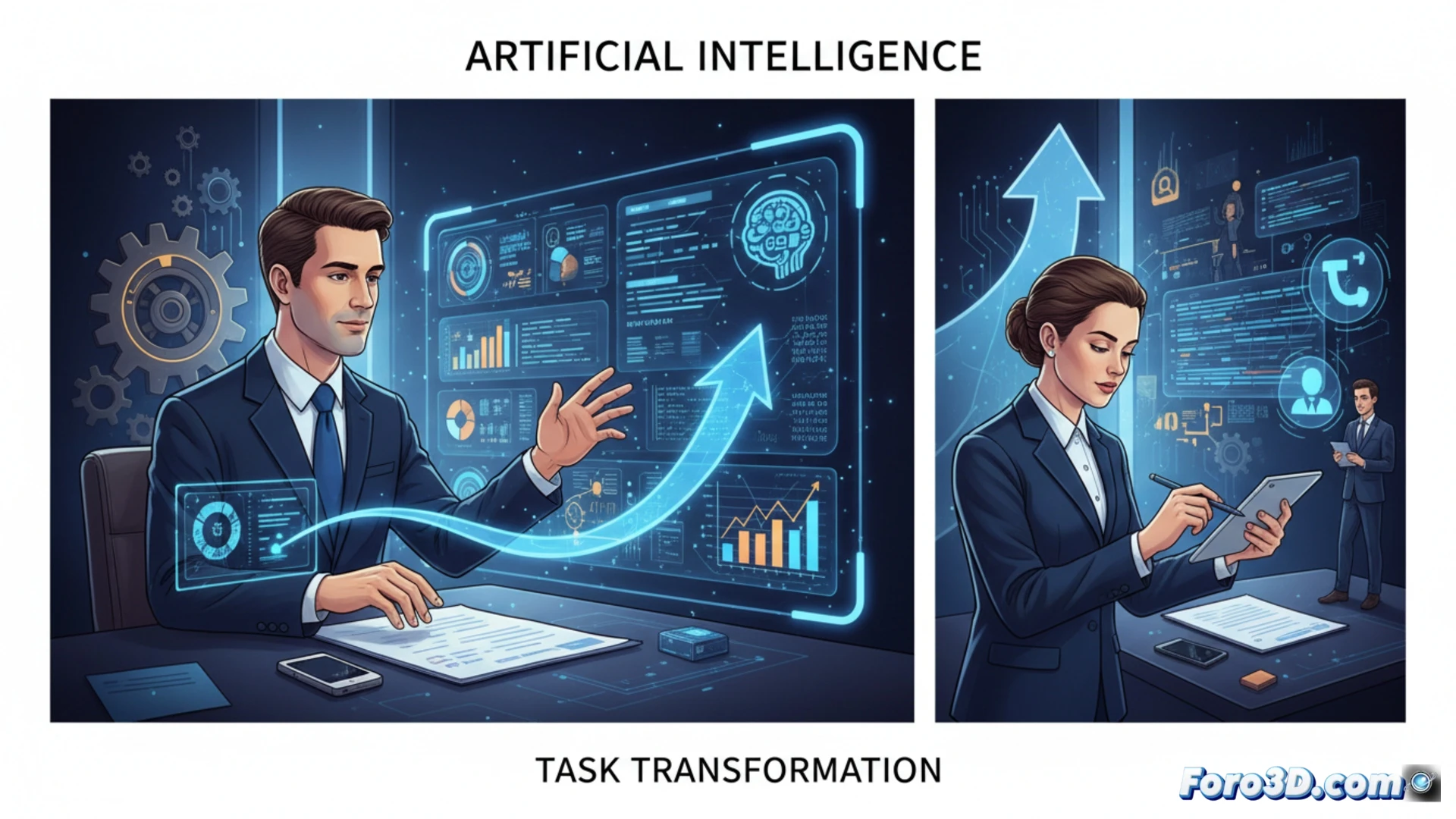
How AI transforms tasks in programming and design 🤖
In software development, AI accelerates the writing of repetitive code and basic debugging. Tools like GitHub Copilot reduce execution times by up to 55% on routine tasks. However, system architecture, complex logic review, and integration with business requirements remain human territory. In graphic design, AI generates visual variants in seconds, but the creative concept and adaptation to brand identity require professional judgment. The key is not to compete against the machine, but to use it to scale capabilities.
The drama of the writer now competing with ChatGPT ✍️
The writer trembled every time they saw ChatGPT write an article in seconds. Until an editor asked them to correct an AI-generated text that described the industrial revolution in the style of an 80s video game. The writer understood that their job was not just to string words together, but to know that the machine does not understand irony, cultural context, or why a joke about accountants doesn't work on a Monday morning. AI is fast, but it is still clumsy.