A team of researchers has achieved a revolutionary breakthrough in biomedicine by using artificial intelligence to generate high-resolution three-dimensional images of inner ear cells. This technique, reported by consalud.es, allows for the visualization of the structures responsible for hearing with unprecedented detail, overcoming the limitations of traditional methods that offered only flat or blurry views. The result is a powerful tool for understanding hearing loss.
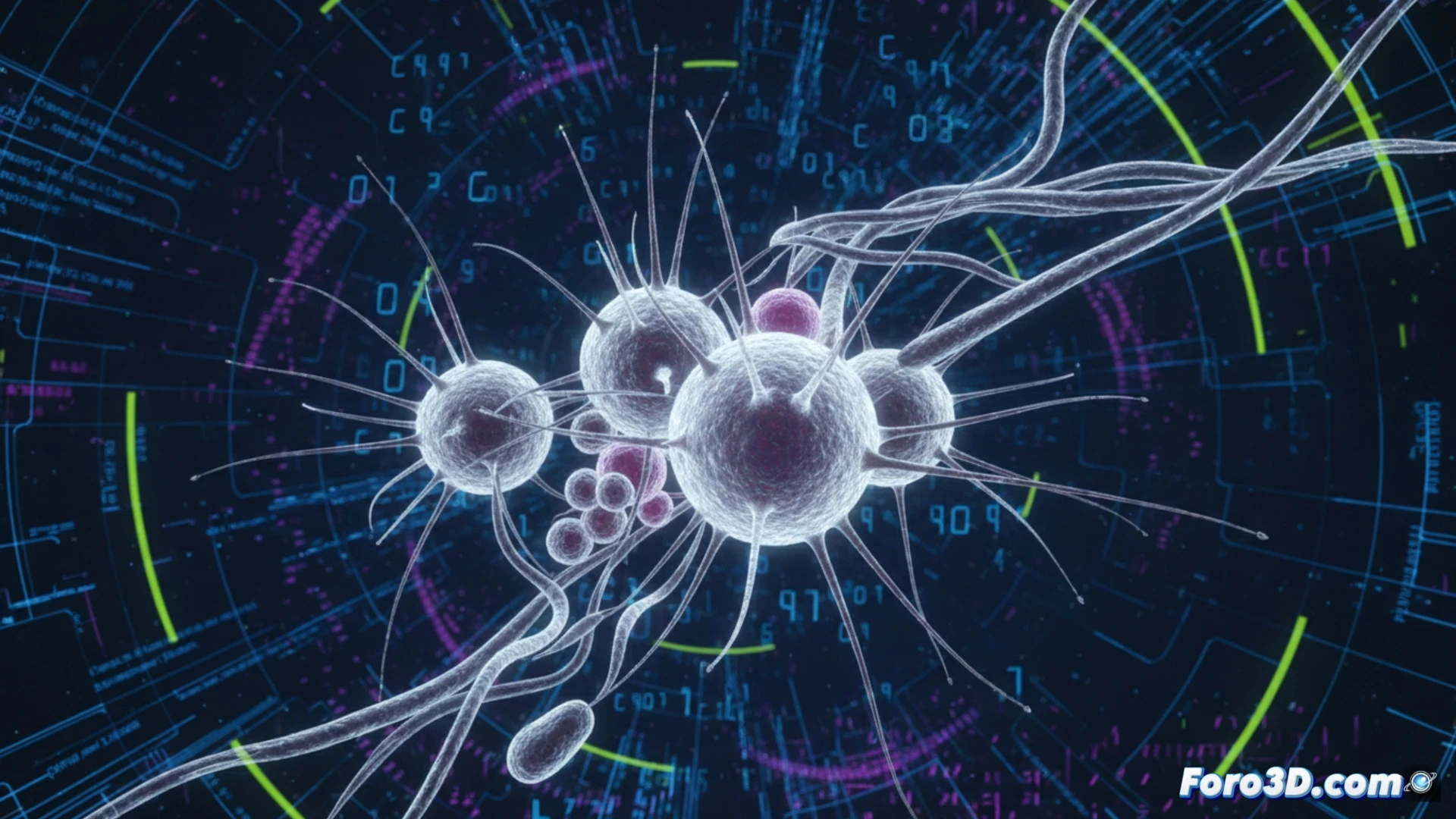
Fusion of AI and Microscopy: The Leap from Two Dimensions to Volume 🧬
The key to success lies in the combination of deep learning algorithms with advanced microscopy. Traditionally, the analysis of inner ear hair cells was limited to 2D histological sections, losing crucial information about their spatial morphology and synaptic connections. Now, AI processes thousands of fluorescence microscopy images to reconstruct complete three-dimensional models. This process eliminates noise and optical distortions, achieving a resolution that reveals nanometric details of cellular structures. For the first time, scientists can rotate and virtually dissect these cells, observing their three-dimensional organization and how they deform with acoustic damage or age.
A New Map for Auditory Therapies 🔬
This milestone in biomedical visualization is not just a matter of digital aesthetics. By providing an accurate three-dimensional map of hair cells, researchers can precisely identify where and how the cellular degeneration that leads to deafness begins. This detailed understanding opens the door to the design of targeted gene and pharmacological therapies, capable of acting on specific points of the cellular machinery. The technique is positioned as a future standard for the study of sensory disorders, demonstrating that AI is an indispensable ally for deciphering the deepest mysteries of the human body.
How the precision of AI-generated 3D models affects the understanding of the cellular mechanisms involved in deafness and the development of future therapies
(PS: and if the printed organ doesn't beat, you can always add a little motor... just kidding!)