The recent success of Hoppers, directed by Daniel Chong, has reshaped expectations in the film market. With a global gross of $375.1 million, the film has surpassed Sinners ($370.2 million) and positions itself as the second highest-grossing original Hollywood release of the decade, behind only Elemental. This milestone demonstrates that audiences are still responding to fresh concepts, not just sequels.
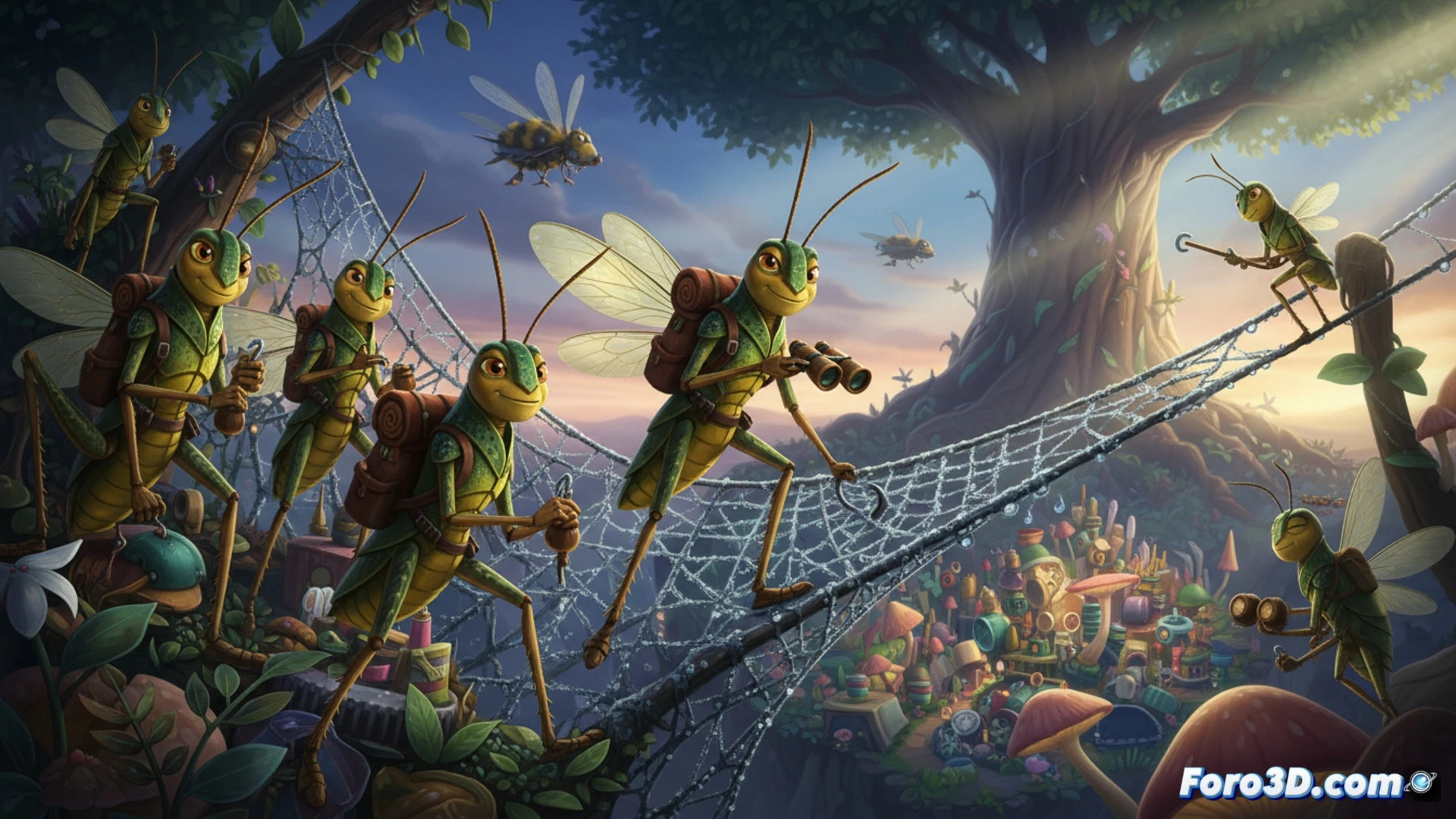
3D Techniques and the Legacy of We Bare Bears in Animation 🎬
To achieve this visual impact, the Pixar team applied advanced facial rigging that allowed characters to express complex emotions without falling into photorealism. Global illumination in Hoppers' natural environments utilized ray-tracing-based render engines to simulate light dispersion in dense vegetation. Daniel Chong, known for his work on We Bare Bears, brought his visual storytelling style to this project, using a saturated color palette and long takes that prioritize movement choreography over rapid cutting. This technical approach made each scene feel organic and dynamic, distinguishing Hoppers from the more static productions of competing franchises.
A Business Model Challenging Franchise Saturation 💡
Beyond the numbers, the case of Hoppers reinforces a key thesis for animation studios: investment in original storytelling and cutting-edge 3D technology remains profitable. While the market is saturated with remakes and sequels, this film demonstrates that creative risk, when executed with Pixar's technical solidity and the vision of a director with an animated series DNA, can directly compete with box office giants. Chong's success not only validates his direction but also opens a door for other creators to bet on new stories within animation cinema.
Can Hoppers' visual narrative serve as a new model for original animation cinema to compete with established franchises in terms of box office and critical recognition?
(PS: Previs in cinema is like storyboarding, but with more possibilities for the director to change their mind.)