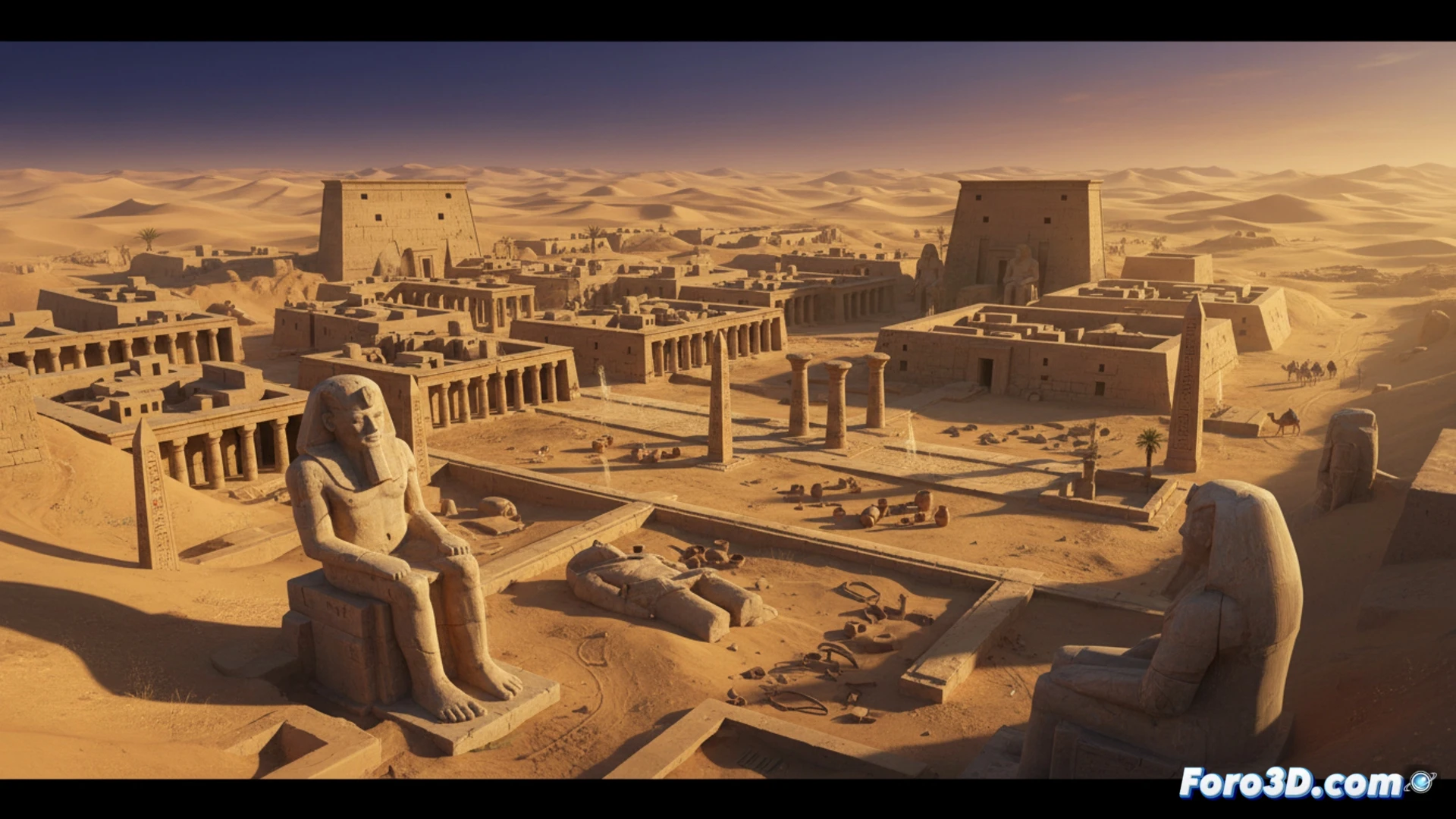
An archaeological team has discovered an ancient Egyptian city that remained buried under sand for three millennia. Located near Luxor, this settlement dates back to the reign of Amenhotep III and remained active during the period of Akhenaten. The site, known as The Rise of Aten, features streets, houses, and workshops in a remarkable state of preservation.
Methodology and technology in the excavation of the site 🧭
Work began with detailed topographic mapping and geophysical surveys to delineate the area. Manual excavation was combined with systematic photogrammetry, generating 3D models of each sector. The recording of each element was carried out in a spatial database, allowing analysis of the distribution of glass and pottery production workshops, and understanding of urban organization.
A move three thousand years late 🐫
Imagine leaving your house in perfect condition, with dinner half-prepared and your work tools ready, thinking you would return in a moment. Three thousand years later, some guys with brushes and shorts show up to say you moved abruptly. The neighbors must have thought it was a flight due to some royal family dispute, but the truth is they just left the city for the sand to act as a long-term conservation real estate agency.