Specialized hardware for artificial intelligence is advancing beyond GPUs. Groq introduces its LPU, a Language Processing Unit designed for extremely fast, low-latency inference. For the 3D professional, this isn't about speedy chatbots, but a potential leap in tools that already use AI: denoisers, upscalers, texture generators, or code assistants. The key question is whether this type of chip could be integrated into workstations to accelerate specific pipeline tasks.
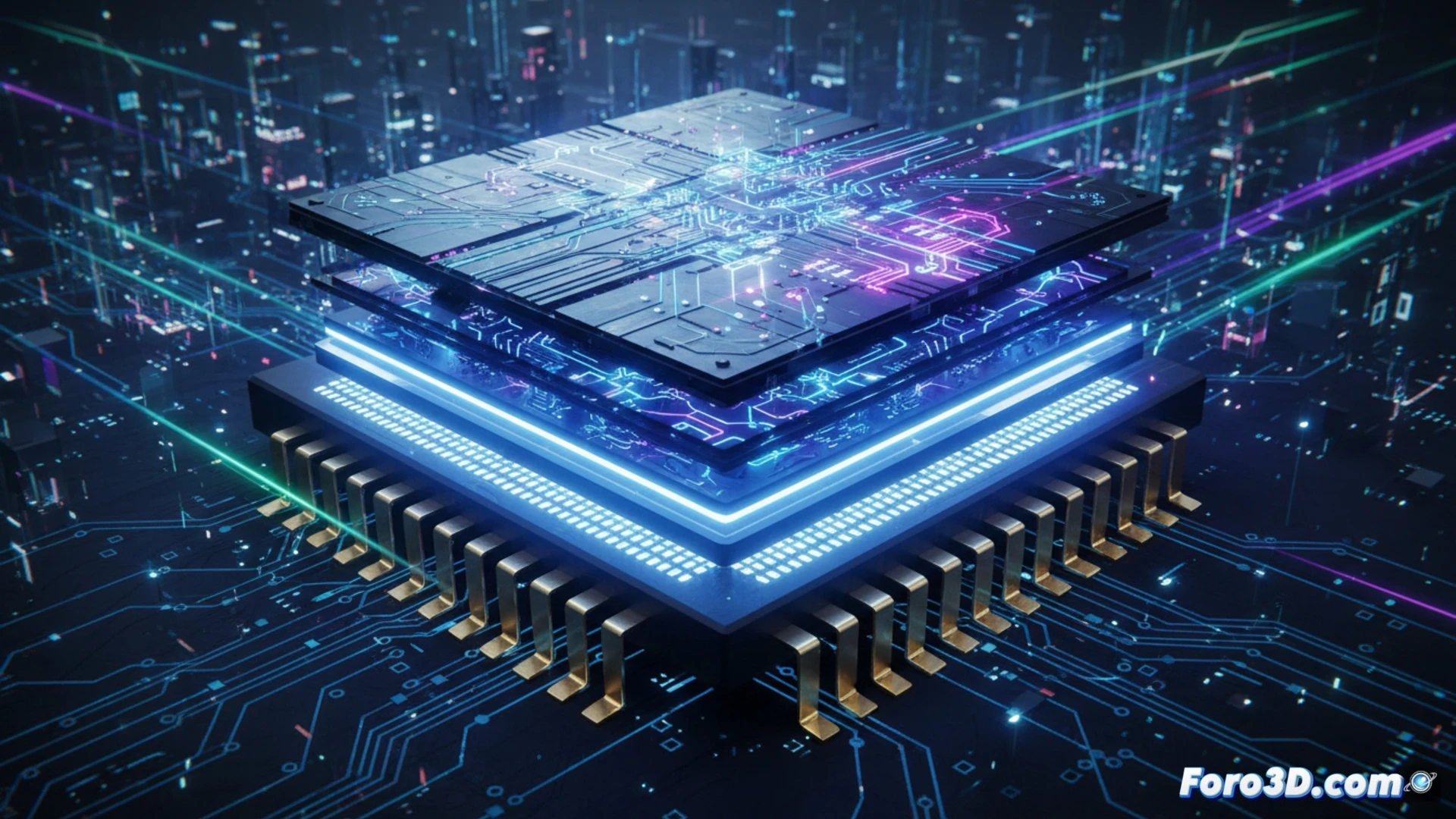
Zero Latency vs. Raw Compute: A New Approach 🚀
The Groq LPU architecture focuses on minimizing latency, delivering responses from language models almost instantly. In a 3D workflow, this translates to real-time interactions with AI-assisted tools. Imagine adjusting parameters of an AI-based denoiser and seeing the result without that minimal cumulative delay, or generating texture variations via prompts with conversational fluidity. It doesn't replace the GPU in traditional rendering, but rather complements it by offloading specific inference tasks where immediacy is crucial, thus optimizing the artist's time.
Pipeline Integration: Specialization vs. Versatility ⚙️
The future role of the LPU in 3D will depend on its integration. As a dedicated coprocessor in a workstation, it could efficiently manage stable AI engines, like OptiX Denoiser or texture generators, freeing the GPU for pure compute and graphics tasks. However, its specialization is also its limit: GPUs remain the backbone due to their versatility for rendering, simulation, and AI. The true advantage would come if 3D applications develop modules that specifically leverage this low-latency architecture.
Can the Groq LPU architecture, optimized for language model inference, significantly accelerate 3D workflows like procedural generation or AI-based simulation?
(PS: If the computer is smoking when opening Blender, you might need more than a fan and faith)