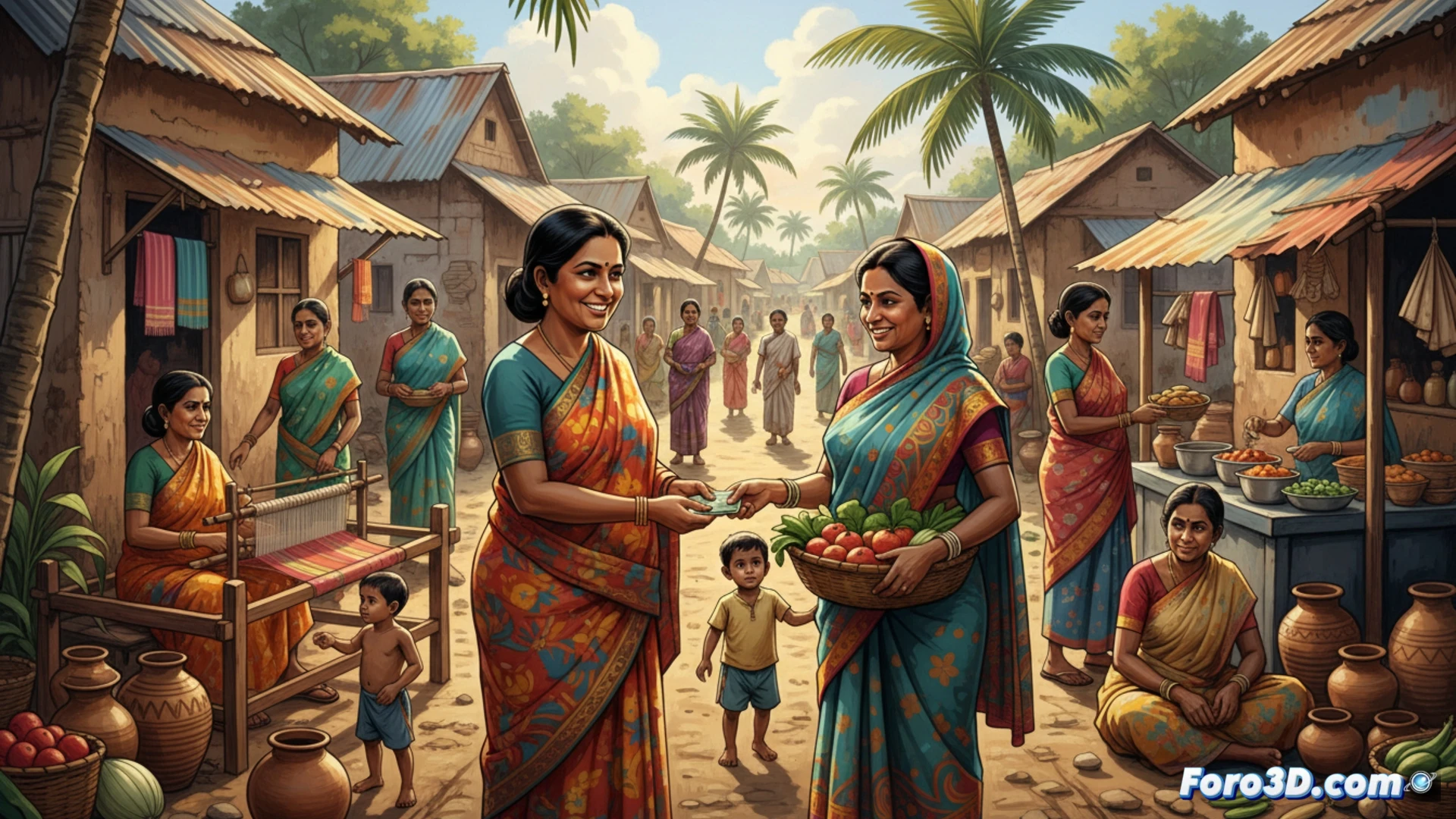
Grameen Bank operates in Bangladesh with a social business model that prioritizes community impact. Its central mechanism is microcredits, small loans aimed at individuals, mostly women, excluded from the traditional financial system. This seed capital funds local initiatives like livestock raising, crafts, or small trade, generating economic autonomy and invigorating the productive base of rural communities in a decentralized manner.
The Scalability of the Model and Its Possible Technological Implementation 🚀
From a development perspective, the Grameen model is based on solidarity responsibility groups that act as collateral, reducing risk. Its scalability could be enhanced with digital platforms for loan management, project tracking, and mobile payments, lowering operational costs. A centralized information system, but with local access via basic devices, would allow monitoring impact indicators and optimizing resource allocation without losing the essential human contact in the process.
When Your Bank Knows All Your Cows by Name 🐄
Imagine a bank where the shareholder meeting is in the town square and the owner of the local bakery is your credit officer. Where risk assessment isn't based on a cold score, but on knowing if your goat project makes sense and if your neighbor backs you. It's a system where credit history is discussed over tea and spices, and the collateral can literally be a cow with its own name. A world far from the algorithms of Wall Street, where default is negotiated with a smile and a more realistic payment plan.