The discovery of Göbekli Tepe in Turkey shook the foundations of history. This complex of megalithic pillars, erected around 9600 BC and deliberately buried a few millennia later, is the oldest known temple. Its preservation, precisely thanks to that intentional burial, poses a unique challenge. This is where digital archaeology becomes indispensable, allowing it to be studied without compromising its physical integrity through non-invasive documentation and analysis techniques.
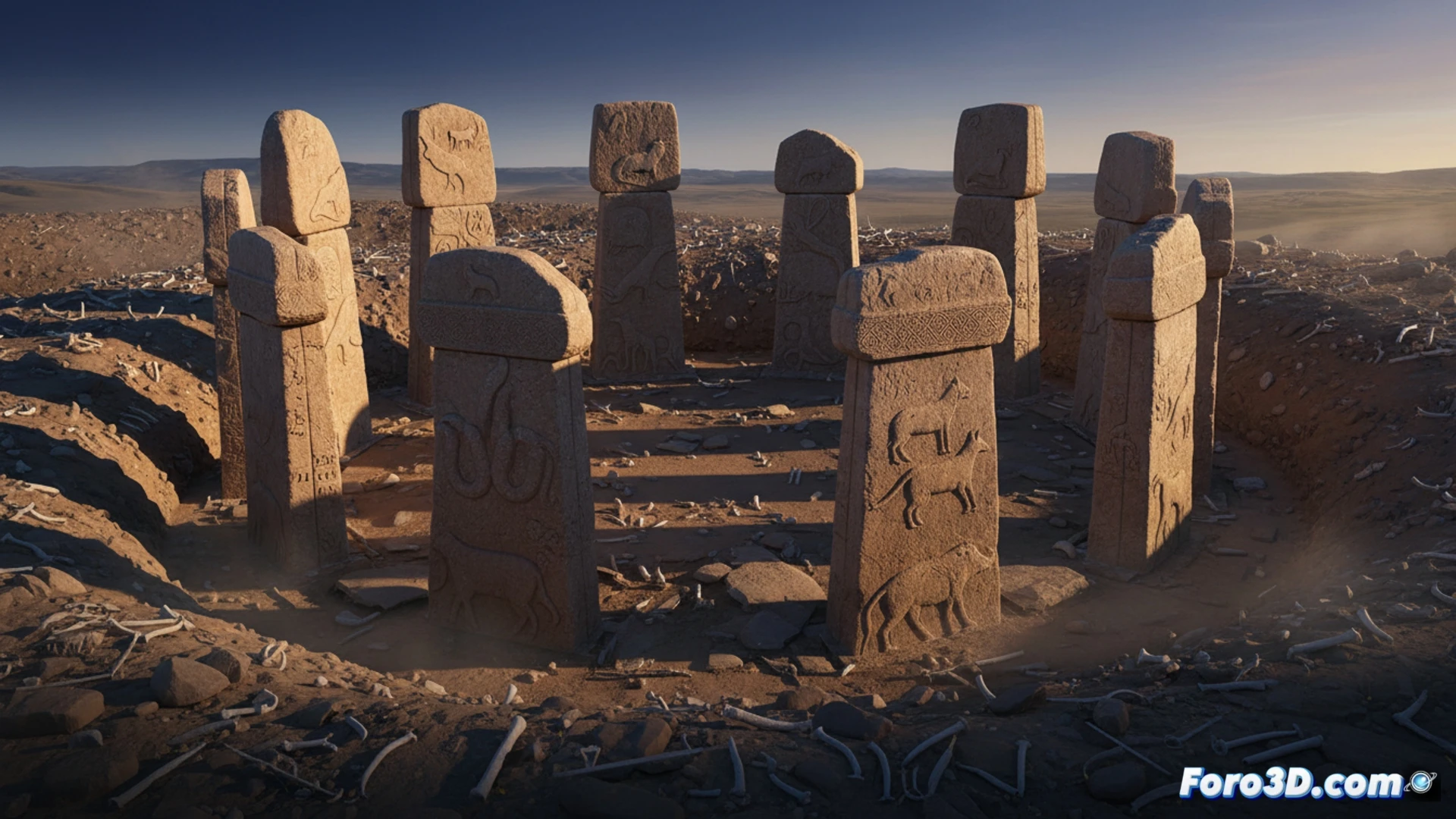
3D Documentation: Laser Scanning and Drone Photogrammetry 🛸
Research at Göbekli Tepe greatly benefits from technologies such as terrestrial laser scanning (LIDAR) and aerial drone photogrammetry. These systems capture millions of data points and high-resolution photographs to generate millimeter-accurate 3D models of the pillars, their intricate reliefs, and the site's topography. These models not only archive the current state but also allow for the analysis of wear patterns, astronomical alignments, and possible construction techniques. Furthermore, they facilitate hypotheses about the burial process by visualizing layers and sediment accumulations in three dimensions.
Preserving the Past, Educating for the Future 🧠
3D digitization transcends pure research. The models of Göbekli Tepe are the foundation for immersive virtual reconstructions and exact physical replicas, created through 3D printing, for museums worldwide. This democratizes access to a fragile and remote heritage, allowing its study and global enjoyment without risk of deterioration. Digital archaeology, therefore, stands as the definitive tool for deciphering, preserving, and sharing humanity's first monuments.
How are 3D modeling techniques and virtual reality transforming our understanding of the social and constructive organization necessary to erect Göbekli Tepe?
(PS: If you dig at a site and find a USB drive, don't plug it in: it could be Roman malware.)