Urban infrastructure management takes a leap towards extreme efficiency with the integration of digital twins. A leading example is LucidPipe, a system of turbines installed in drinking water pipes that generates renewable energy. Its true potential unfolds when these physical devices are connected to a virtual replica that monitors and simulates their operation in real-time, ensuring that energy production does not affect the water supply.
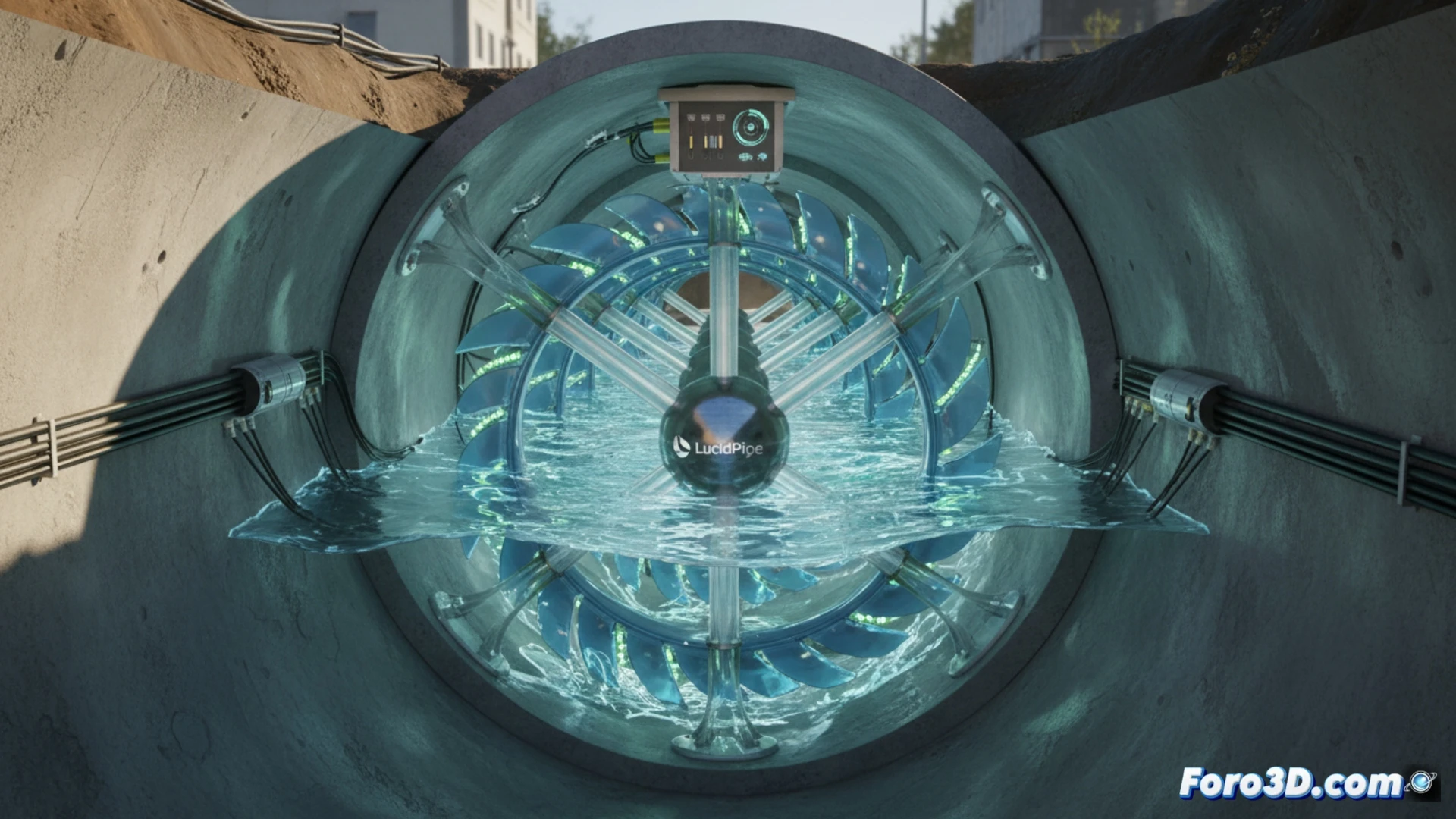
Symbiosis Between Water Flow and Data Flow: The Core of the System 🔄
The LucidPipe digital twin functions as a bidirectional bridge between the physical and virtual worlds. The turbines, spinning with the water flow, generate electricity and, simultaneously, a large amount of operational data. This data, such as pressure, rotation speed, and energy production, is continuously transmitted to the digital model. This model, fed with this information, runs simulations to predict the system's behavior under different demand conditions, optimizes the turbines' operating point to maximize energy without compromising water pressure, and can alert for predictive maintenance. Thus, the physical infrastructure is controlled and improved through its virtual counterpart.
Beyond Energy: Digitalization as the Urban Backbone 🏙️
This case transcends mere renewable generation. It consolidates a paradigm where the digitalization of critical infrastructure, through digital twins, becomes the foundation for intelligent decision-making. It enables proactive, sustainable, and resilient resource management, transforming passive networks into interactive, value-generating systems. The future of smart cities inevitably involves creating these virtual reflections of their physical assets.
How can digital twins transform the management of urban hydraulic infrastructure to maximize hydroelectric generation in existing pipes?
(PS: My digital twin is currently in a meeting, while I am here modeling. So technically, I am in two places at once.)