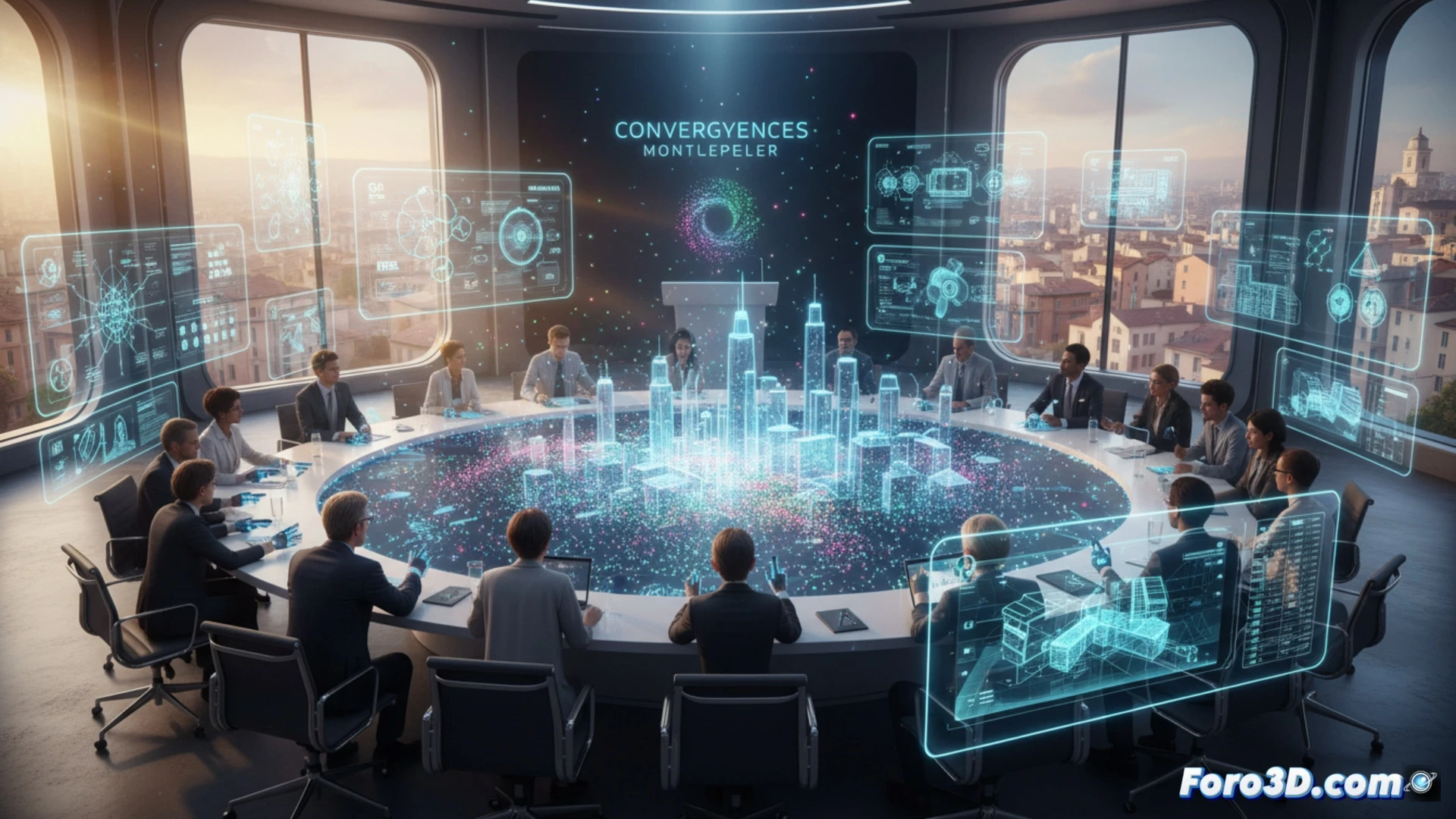
Gaussian Splatting has gone from being a technical curiosity to a cornerstone in the 3D sector. Its ability to represent complex scenes with high visual fidelity positions it in visual effects, digital twins, and extended reality. At the Convergences conference in Montpellier, a workshop brought together French experts and researchers to analyze its current state and future projections.
Real-time processing and data optimization 🚀
The technique is based on representing scenes using 3D ellipses (Gaussians) that store color, opacity, and position. Unlike traditional meshes, it allows real-time rendering from multiple angles without needing to reconstruct geometry. Experts in Montpellier highlighted advances in data compression and memory optimization, key for mobile applications and VR devices with limited resources. The challenge remains scalability in massive environments.
Splatting and the existential crisis of the polygon mesh 😅
While 3D modelers cry over their thousands of polygons, Gaussian Splatting arrives like that friend who solves the puzzle without needing glue. At the workshop, a researcher joked: Now we can render a point cloud without the artist having to apologize for every triangle. Of course, no one has yet explained how to make a Gaussian look like a cat. All in good time.