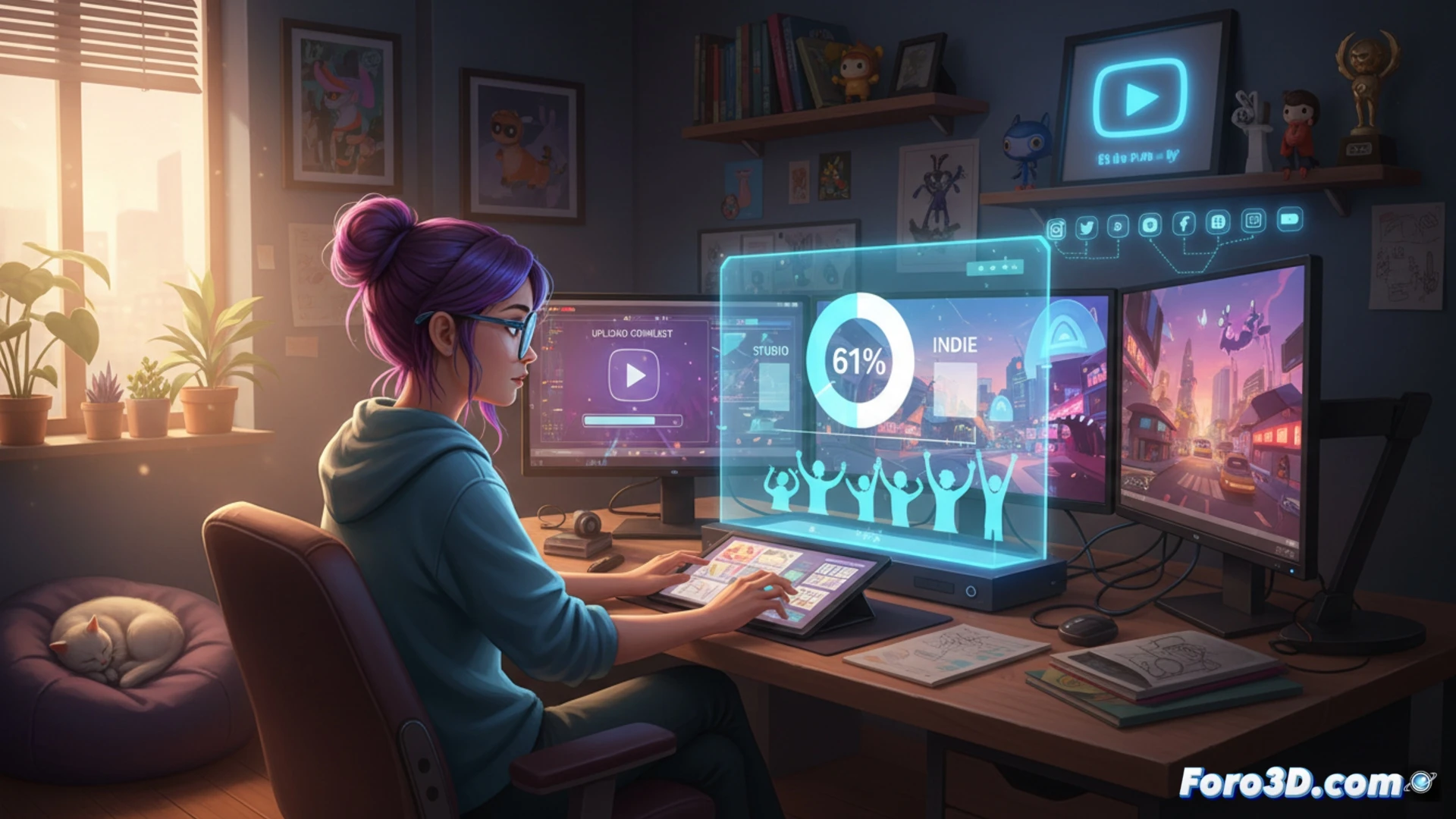
A recent YouTube report highlights an unstoppable trend: independent animation creators are redefining the industry. The data is revealing: 61% of animation fans aged 14 to 24 enjoy independent series as much or more than those from major studios. This phenomenon is a direct mirror of the revolution experienced by the video game sector. For 3D developers, it's not a surprise, but confirmation of a paradigm shift driven by the same tools we use daily.
Unreal Engine and Unity: democratizing the animation pipeline 🎬
The key to this level playing field lies in game engines. Tools like Unreal Engine or Unity have evolved to offer animation and real-time rendering pipelines of cinematic quality, accessible to small teams. An indie animator can now control the entire process: modeling, rigging, animation, lighting, and post-production within a single environment. This eliminates the need for expensive render farms and lengthy production cycles. The ability to create compelling narratives and characters combines with technical knowledge of optimization and real-time work, a convergence of skills identical to that needed to develop an indie game.
Creative convergence: from game asset to animated series ✨
This trend blurs the boundaries between disciplines. A character modeled and rigged for a video game can become the protagonist of a web series. Motion capture techniques, complex shaders, and particle systems are now applied directly to internet animation. For the 3D developer, this expands the professional horizon: timeless skills have a direct outlet in a booming animated content market. The future does not distinguish between game creators and animators, but between digital creators who master powerful tools to tell stories.
How are independent animators using real-time game engines to create and distribute their projects, challenging the traditional workflows of the animation industry?
(P.S.: game jams are like weddings: everyone happy, no one sleeps, and you end up crying)