Collisions between vessels and cetaceans are a growing threat to marine conservation. When a carcass with propeller wounds is located, the physical evidence can be ephemeral. This article details a forensic pipeline that combines 3D photogrammetry, modeling, and statistical analysis to transform cuts on a whale's body into objective expert data, capable of identifying the engine type and speed of the responsible vessel.
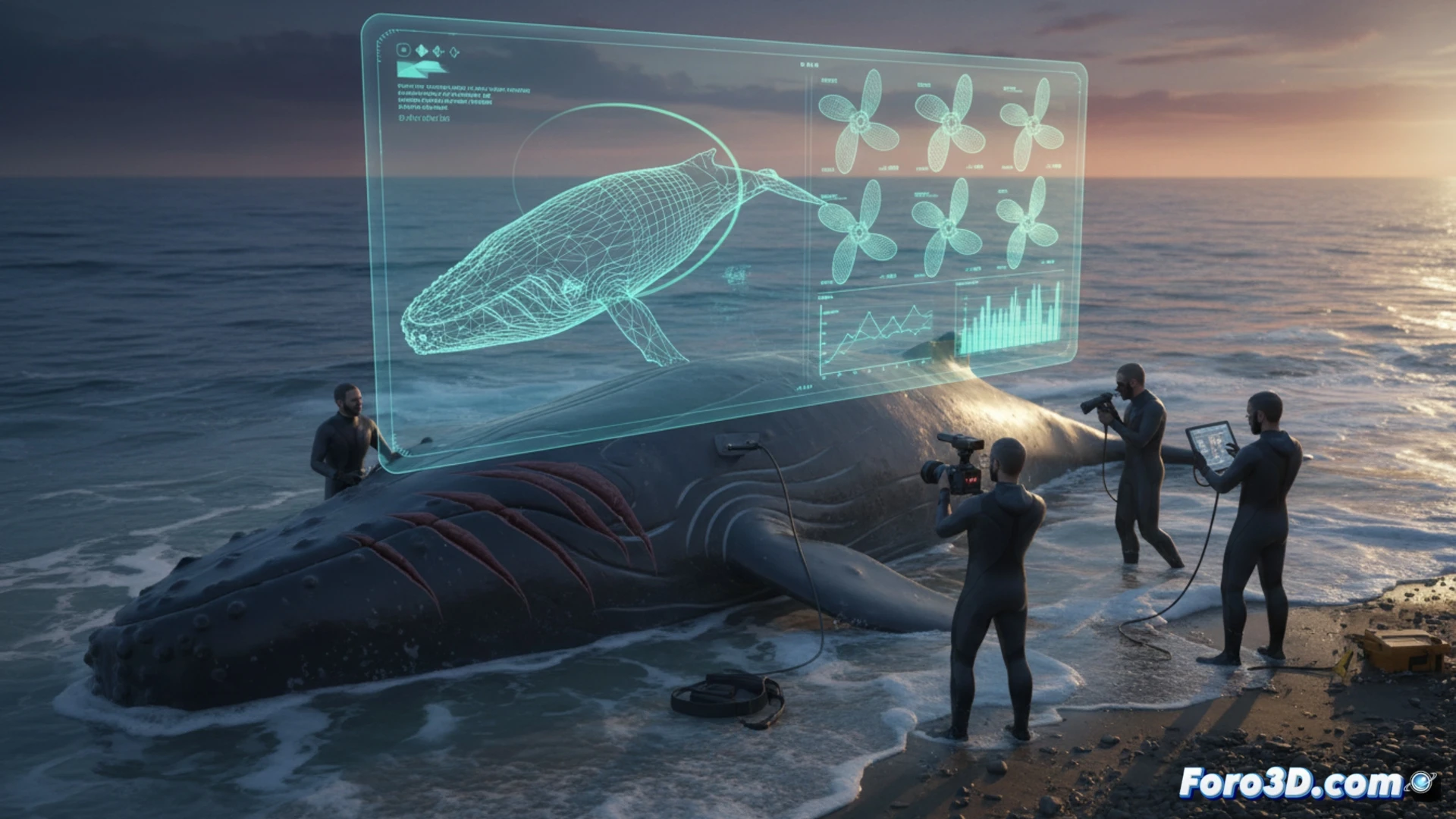
Forensic pipeline: from carcass to technical verdict 🔍
The process begins with systematic photographic capture of the carcass, covering each wound from multiple angles with scale references. These images are processed in Agisoft Metashape to generate a high-resolution 3D model of the body and lesions. In CloudCompare, precise measurements of incision angle, depth, and spacing between cuts are extracted. Simultaneously, propellers of different configurations (pitch, number of blades, diameter) are modeled in Blender. The team geometrically compares these virtual models with the digitized wounds. Finally, MATLAB performs a statistical analysis of cut patterns to correlate wound morphology with specific propeller parameters, thereby estimating the rotation speed and forward speed of the vessel at the moment of impact.
Science as a silent witness in marine protection ⚖️
This methodology transforms the scene of a maritime accident into a solid legal case. By identifying not only the vessel but also its speed, it can be determined whether there was negligence or non-compliance with reduced speed zones. Forensic photogrammetry offers a reproducible and quantifiable piece of evidence, raising the standard for collision investigation with marine fauna. It is a reminder that 3D technology serves not only to create virtual worlds but also to defend real life in our oceans.
What technical limitations does forensic photogrammetry present when reconstructing the damage pattern of a propeller on a cetacean's skin when the carcass shows advanced signs of decomposition or scavenger bites?
(PS: don't forget to calibrate the laser scanner before documenting the scene... or you might be modeling a ghost)