The Italian Society of Dermatology has focused on a growing phenomenon: Snapchat dysmorphia. It is a distortion of self-perception, fueled by the constant use of filters on social media. Exposure to retouched images generates unrealistic expectations of perfection, causing dissatisfaction with one's real appearance and increasing the demand for aesthetic treatments, sometimes unnecessary or harmful.
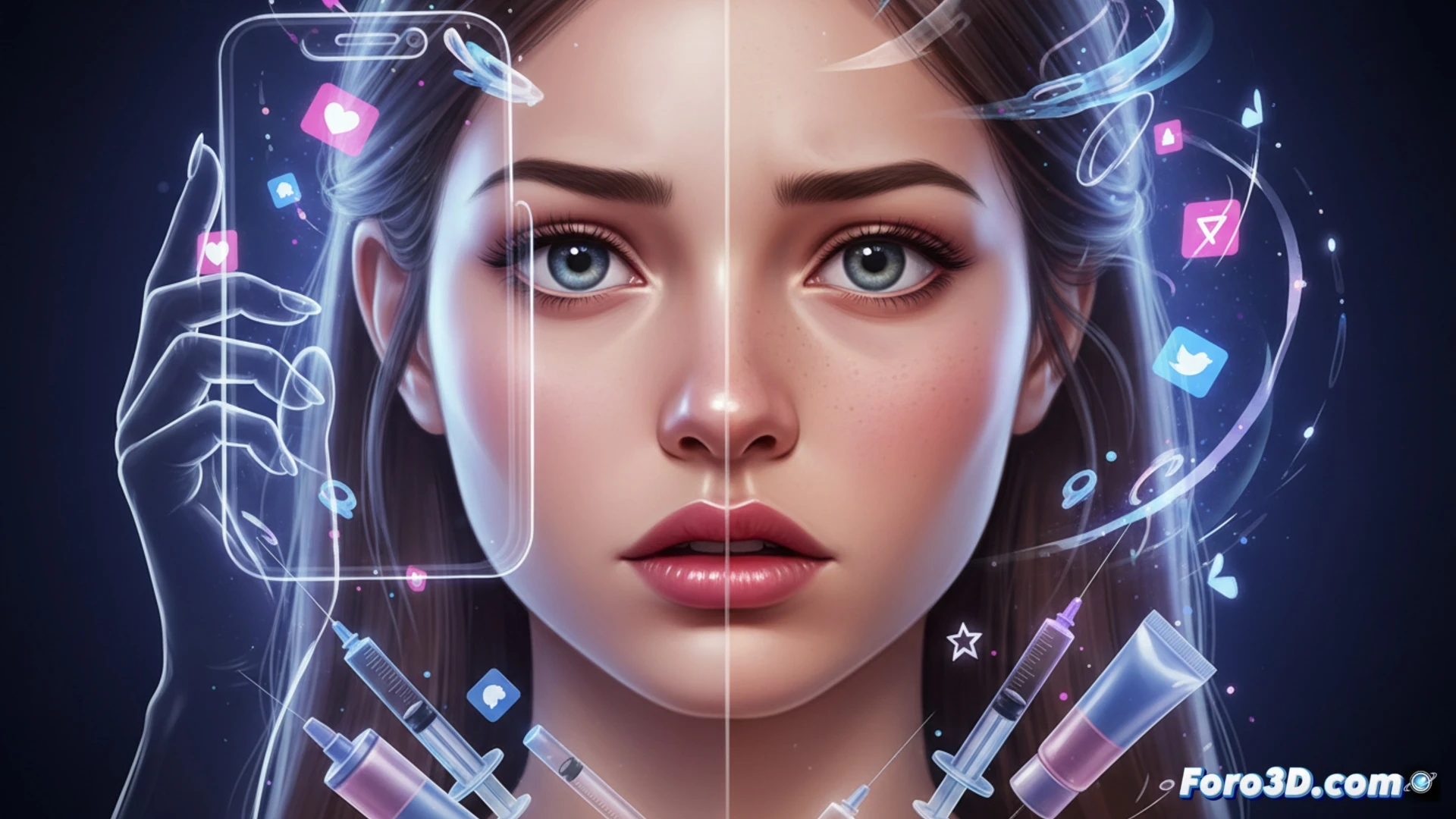
The Algorithm of Dissatisfaction: How Technology Distorts Reality 🤖
Beauty filters use neural networks to modify facial features in real time: they smooth skin, enlarge eyes, and slim the nose. On a technical level, they are generative models trained with thousands of faces, which normalize an unattainable aesthetic standard. The problem arises when the user internalizes that image as their digital identity, ignoring that skin has texture, pores, and expressions that no algorithm can replicate without erasing individuality.
Filter Operation: When the Dermatologist Becomes a Photoshop Wizard ✨
Now patients arrive with their phone in hand asking: I want to look like this. And they point to a photo where even the eyebrows look fake. The dermatologist, patiently, explains that real skin doesn't come with a smoothed mode or a remove wrinkles option. But some insist so much that one suspects in the future they will ask for a lifelong filter, with updates included and no option to uninstall reality.