In 2026, the supply of filaments labeled as eco-friendly is wide, but so is the confusion. Distinguishing a genuinely biodegradable material from a greenwashing strategy requires attention. This analysis reviews the current state of these filaments, focusing on understanding certifications and the real conditions of degradation. 🌱
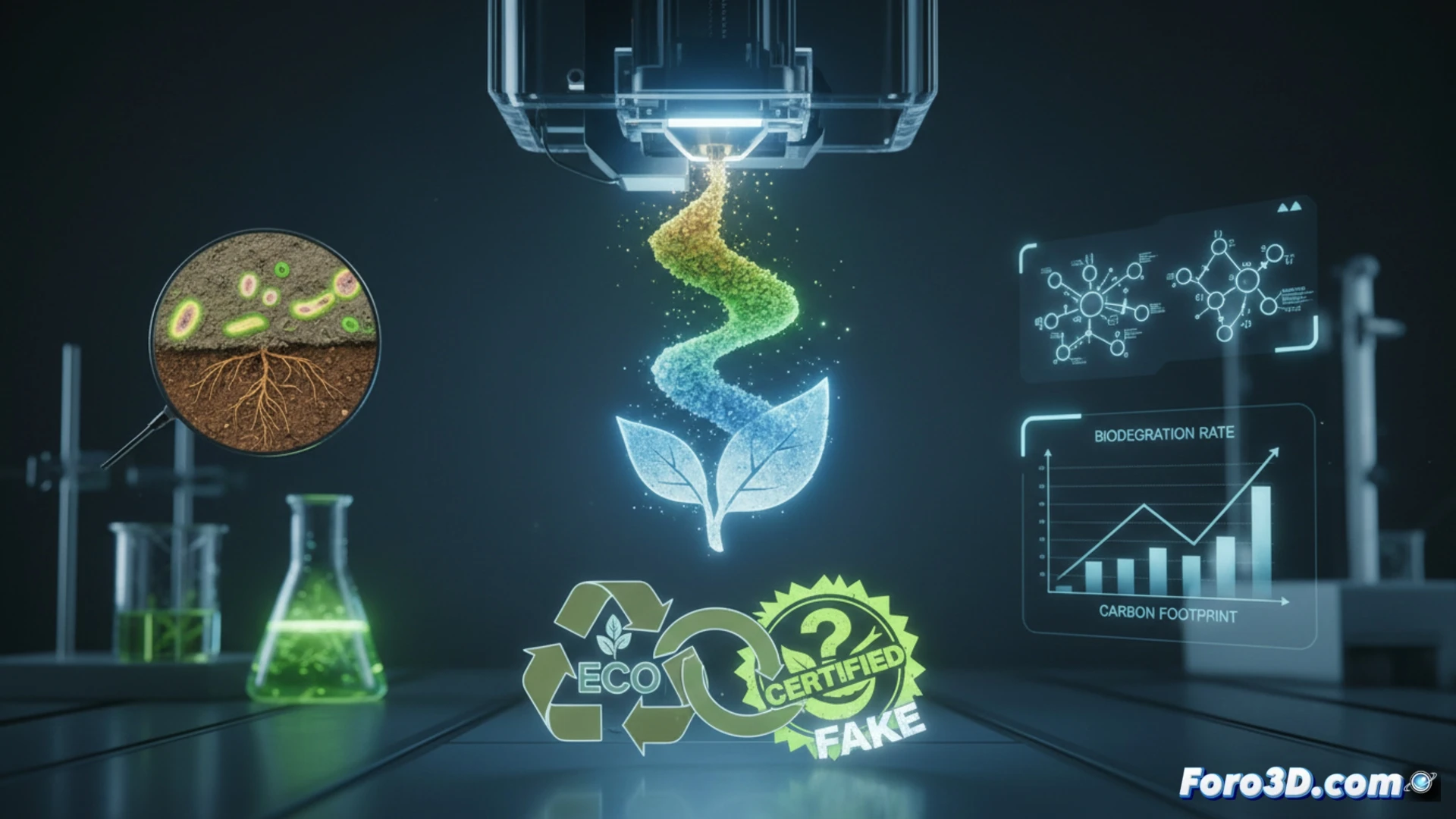
Technical Conditions of Certified Biodegradability 🧪
A biodegradable filament does not decompose in any environment. Certifications like EN 13432 or ASTM D6400 specify industrial composting conditions, with controlled temperature, humidity, and microbiology. In 2026, materials like PLA (polylactic acid) remain dominant, but their degradation at home is very slow. Modified variants and blends are emerging, seeking to balance mechanical properties with a managed end-of-life.
My PLA Lies in the Garden, Just Like in 2025 🪦
I buried a piece of PLA with a compostable certificate a year ago, next to some coffee grounds. The coffee disappeared. The PLA looks like a modern fossil, intact and mocking. Now I understand that industrially compostable is not synonymous with magically evaporable. My pile of leaves doesn't reach 60 degrees nor does it have shifts of specialized microbes. It will continue to decorate the soil, perhaps until the next ice age.