3D printing promises to transform the energy sector with lighter and more efficient parts, but its adoption is progressing slowly. Experts like Tarun Chand point out that the high initial cost, fear of failure in critical components, and slow certification processes keep the technology in the background. Citizens could benefit from cheaper and more durable infrastructure, but they are still waiting.
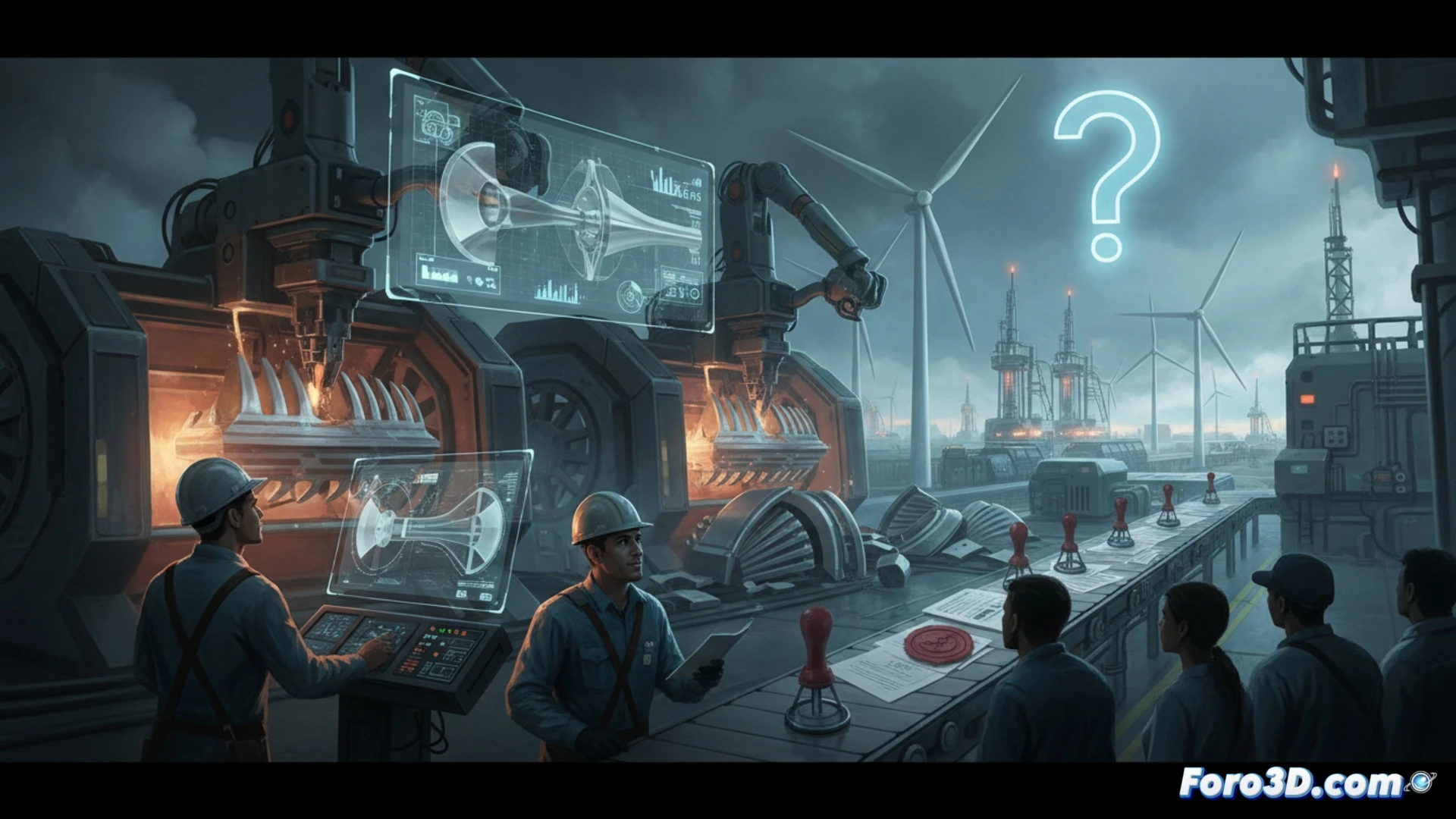
Technical barriers holding back the industrial revolution ⚙️
Additive manufacturing has already demonstrated significant savings in prototypes and small parts. However, scaling up to large and critical components for turbines or reactors clashes with the lack of standards and the need to validate each material. Companies prefer traditional methods, even if they are more expensive, because the risk of a catastrophic failure outweighs the potential savings. Certification, slow and costly, does not help.
The engineer's dilemma: to print or not to print 🤔
In the end, the energy sector looks at 3D printing like a teenager looks at a car: they know it works, but they don't dare to ask for it because insurance and maintenance seem like a luxury. While experts debate standards, traditional parts continue in production. The technology is ready, but the fear of what auditors will say is stronger than the promise of savings.