Industrial 3D printing is leaving its experimental phase in the energy sector to consolidate itself as a real production tool. The focus is no longer on isolated demonstrations, but on creating repeatable applications that increase asset availability, shorten spare parts supply times, and enable distributed manufacturing models. This operational deployment marks a significant change in equipment lifecycle management.
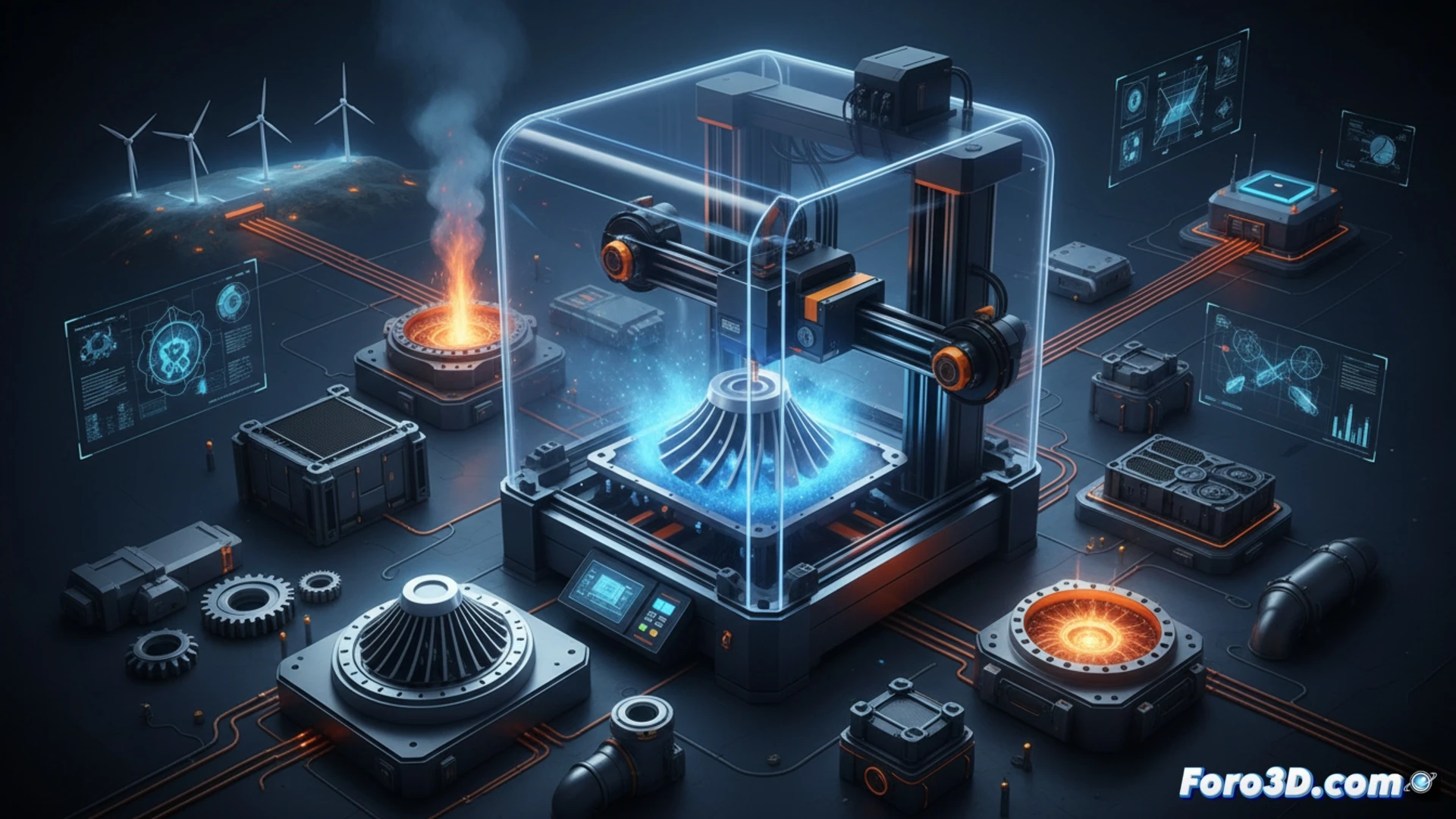
From the single part to the system: cases from Siemens Energy and Equinor 🏭
Progress is observed in two complementary approaches. On one hand, manufacturers like Siemens Energy produce certified critical components, such as gas turbine blades or combustion injectors, with optimized geometries that are only viable through material addition. On the other hand, operators like Equinor implement an integrated system, with framework agreements for on-demand manufacturing of spare parts at locations close to their facilities, reducing dependence on long supply chains.
Goodbye to the scrap warehouse, hello to the digital STL file 💾
The dream of having a physical warehouse full of spare parts you never use is fading away. Now the challenge is to maintain an orderly and updated digital library of 3D models. The problem of rust is replaced by that of file versioning. And one thinks: before you cursed for not finding a part on a shelf; now you will curse for not finding the correct file in a folder with cryptic names. Progress has its paradoxes.