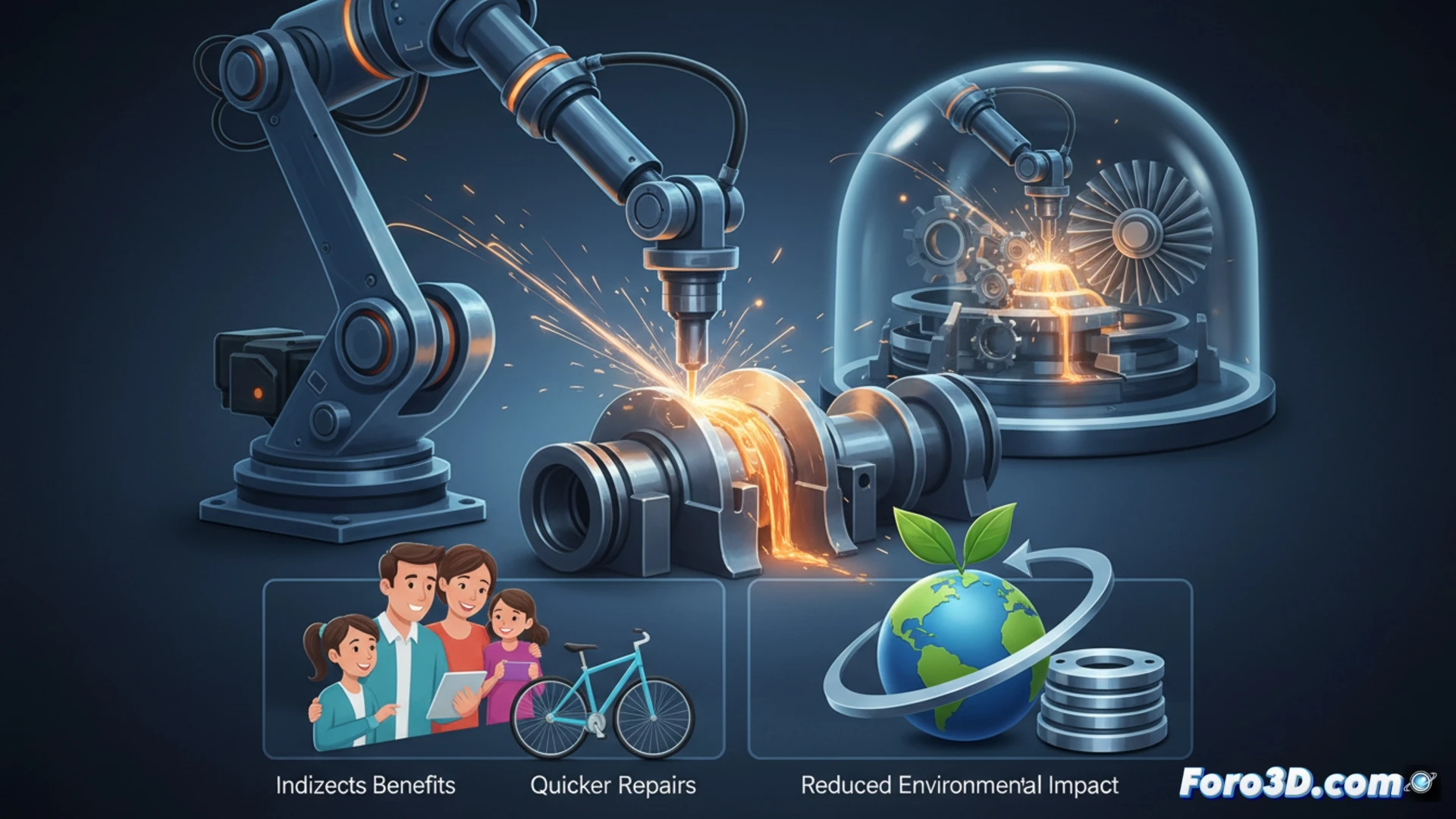
A company has implemented a manufacturing technology that deposits metal layer by layer to create or repair industrial components. This method drastically reduces production time and material waste compared to subtractive techniques. For the general public, the benefits are indirect: potentially cheaper industrial goods, accelerated repairs, and a smaller environmental footprint by extending the lifespan of parts.
The Technical Process Behind Metal Printing 🔬
The technology is based on a head that deposits a metallic material, often in the form of wire or powder, which is instantly melted by a concentrated energy source, such as a laser or an electric arc. The part is built by successive layers, guided by a 3D digital model. This allows for complex and internal geometries that are impossible to mill, and facilitates localized repairs without disassembling entire components, saving material and work hours.
Goodbye to the Lost Screw, Hello to the Corrupted File 💾
The future is promising. We will no longer lose weeks waiting for a spare part, we will only lose hours trying to get the software to recognize the metal printer's driver. Instead of discarding a broken part, we will be able to reprint it, provided the CAD file is not from an incompatible older version. An advancement without a doubt, even if we trade physical scrap for digital scrap. At least the planet appreciates it, even if our maintenance technician looks at the machine with suspicion.