The temptation to use artificial intelligence to study is great: paste the syllabus into ChatGPT and get summaries and exercises in minutes. However, if the AI does all the cognitive work, you don't learn, since learning requires the brain to process, make mistakes, and remember. After a year of experiments with ChatGPT, Gemini, and NotebookLM, it is confirmed that AI improves learning when it generates questions, not answers. 🤖
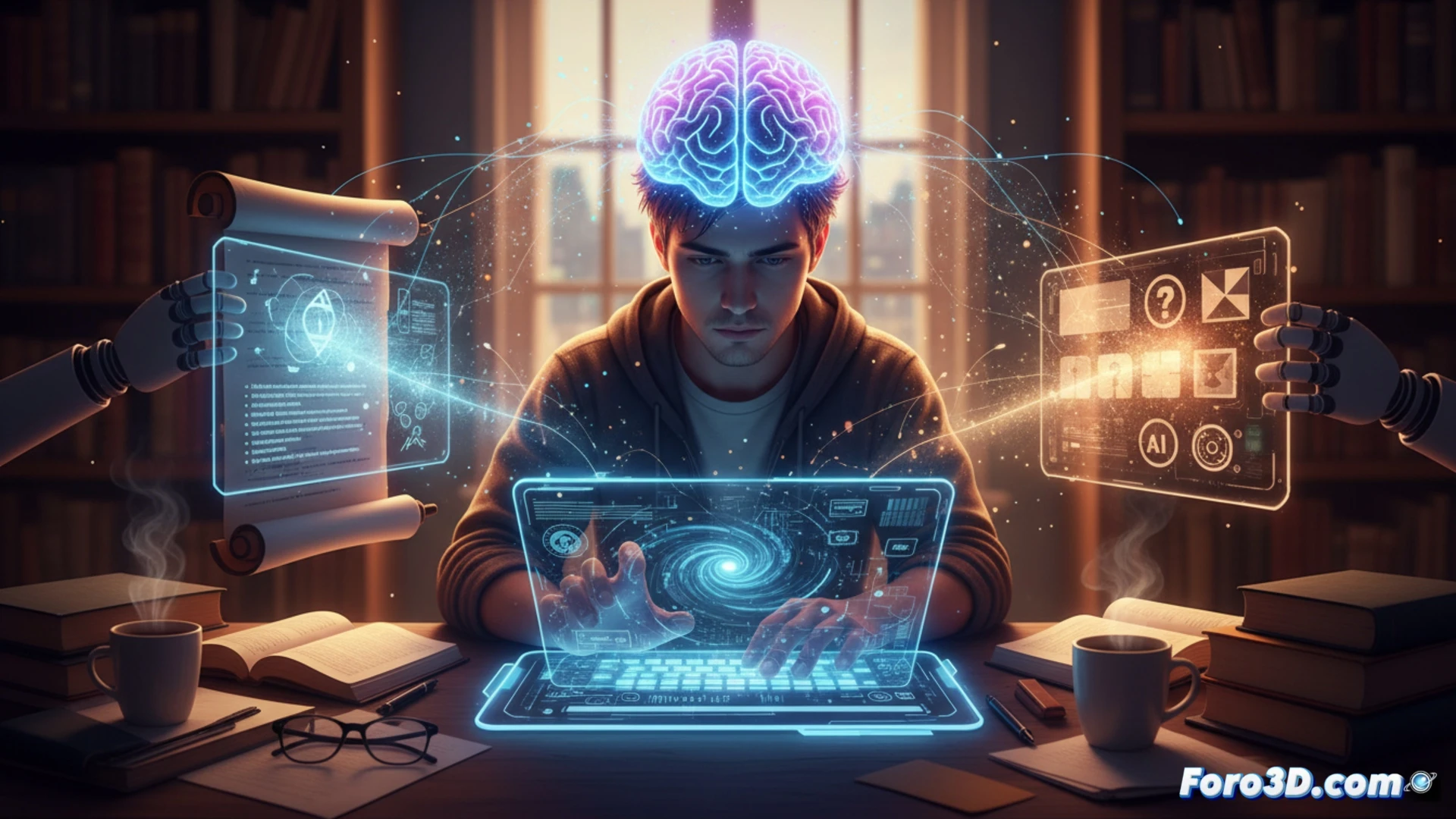
How to turn AI into an active tutor 🧠
The method consists of using AI to generate questions about the syllabus, not to answer for you. By asking ChatGPT or Gemini to formulate open-ended questions or practical cases, you force your brain to search for information, contrast it, and remember it. NotebookLM allows you to organize notes and create study cards. The technical key is to configure the prompt so that the AI acts as an examiner: ask for questions without answers, request hints instead of solutions, and use the spaced repetition function to consolidate concepts. This way, the cognitive effort remains yours.
The student who asks AI to explain why they failed 😅
Of course, you can also ask the AI to write your paper for you, summarize Cervantes' novel in three lines, and generate a fake exam to fool your parents. The problem is that later, in the real exam, you go as blank as the screen of an offline ChatGPT. The AI won't whisper the answers from your pocket. Or worse: it will, and then you'll discover that passing without learning is like winning the lottery but never collecting the prize.