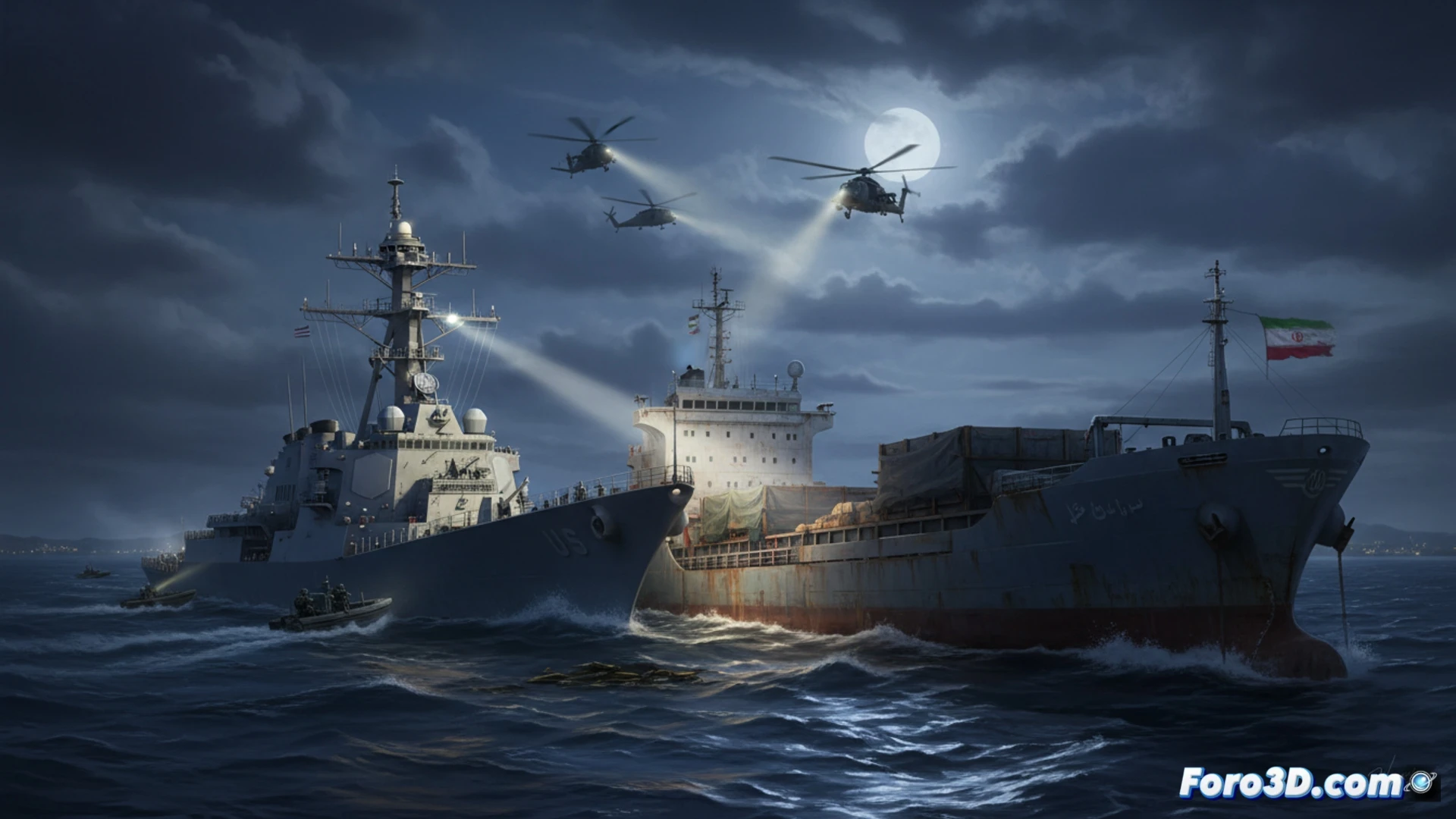
The U.S. Navy has boarded a cargo ship linked to Iran in international waters of the Gulf of Oman. American authorities allege numerous violations of the current ceasefire agreement, including the transport of material potentially intended for weapons programs. This incident represents a new point of tension on a maritime route critical to global hydrocarbon trade.
Maritime monitoring technology in conflict zones 🛰️
These operations rely on an integrated network of surveillance systems. Platforms such as SAR satellites, MQ-9 Reaper drones, and P-8 Poseidon patrol aircraft provide persistent intelligence. The fusion of this data identifies suspicious navigation patterns and enables selective interception. AIS technology is crucial, but ships often turn off their transponders, forcing reliance on other electromagnetic signatures and signals intelligence for tracking.
User manual for evading maritime sanctions 😏
Step one: disable the AIS transponder, that's too obvious. Step two: paint a new name on the hull overnight, a creative task. Step three: try an unconventional route, perhaps disguised as a fishing boat. Despite these efforts, it seems the task of hiding a large cargo ship on the open sea has some complexity. The next manual update should include a chapter on optical camouflage.