In the cold depths of the Southern Ocean, a spherical organism has been identified as a carnivorous sponge. Known as the death ball sponge, it deploys filaments equipped with microscopic hooks to trap small crustaceans. Its structure resembles biological velcro, immobilizing prey to digest them slowly. A passive predator in an extreme ecosystem.
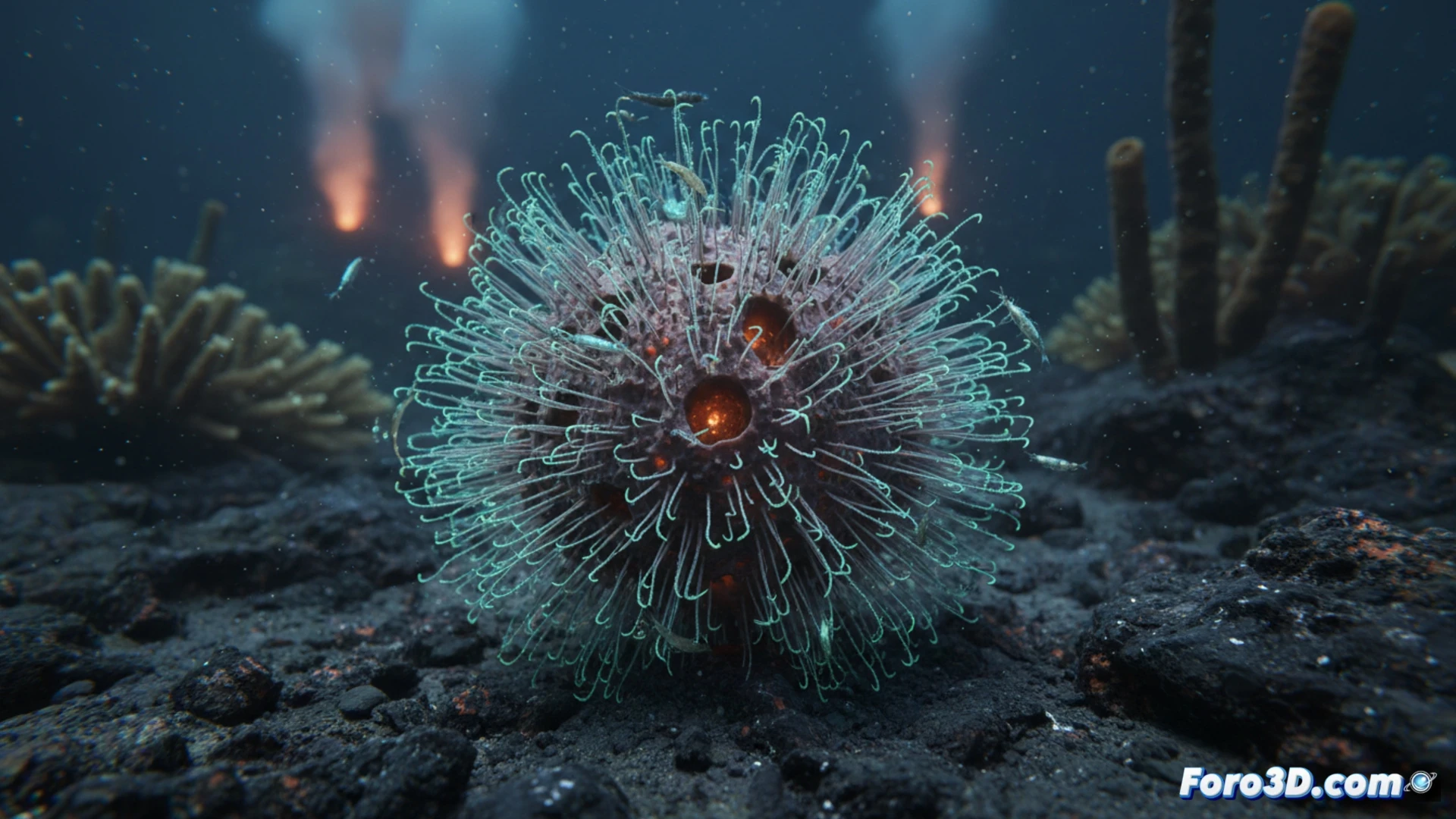
Capture mechanism: filaments with three-dimensional hooks 🧠
The sponge uses a network of filaments that extend from its spherical body. Each filament contains curved spicules that act as hooks. Upon contact with a crustacean, the hooks become entangled in its appendages and chitin. The prey is trapped with no chance of escape. Then, specialized cells migrate toward the crustacean to envelop it and secrete digestive enzymes. This process can take days. A simple yet effective design for an animal without a nervous system.
The abyss vacuum cleaner that doesn't need batteries 🧽
While we pay fortunes for robot vacuums that bump into furniture, nature has already invented a functional spherical vacuum cleaner. That said, the death ball sponge takes several days to digest a shrimp. If we used it at home, the kitchen would smell rotten before it finished with the crumbs. But hey, it doesn't get tangled in cables and works without electricity. Maybe we should take notes.