The so-called Klerksdorp Spheres are mineral objects, primarily composed of pyrite or hematite, found in South African strata dating back about 3 billion years. Their remarkably spherical shape and parallel grooves have fueled decades of debate between natural geological explanations and speculations about an artificial origin. This is where digital archaeology unleashes its potential, transforming the mystery into a technical problem analyzable through objective data and three-dimensional models.
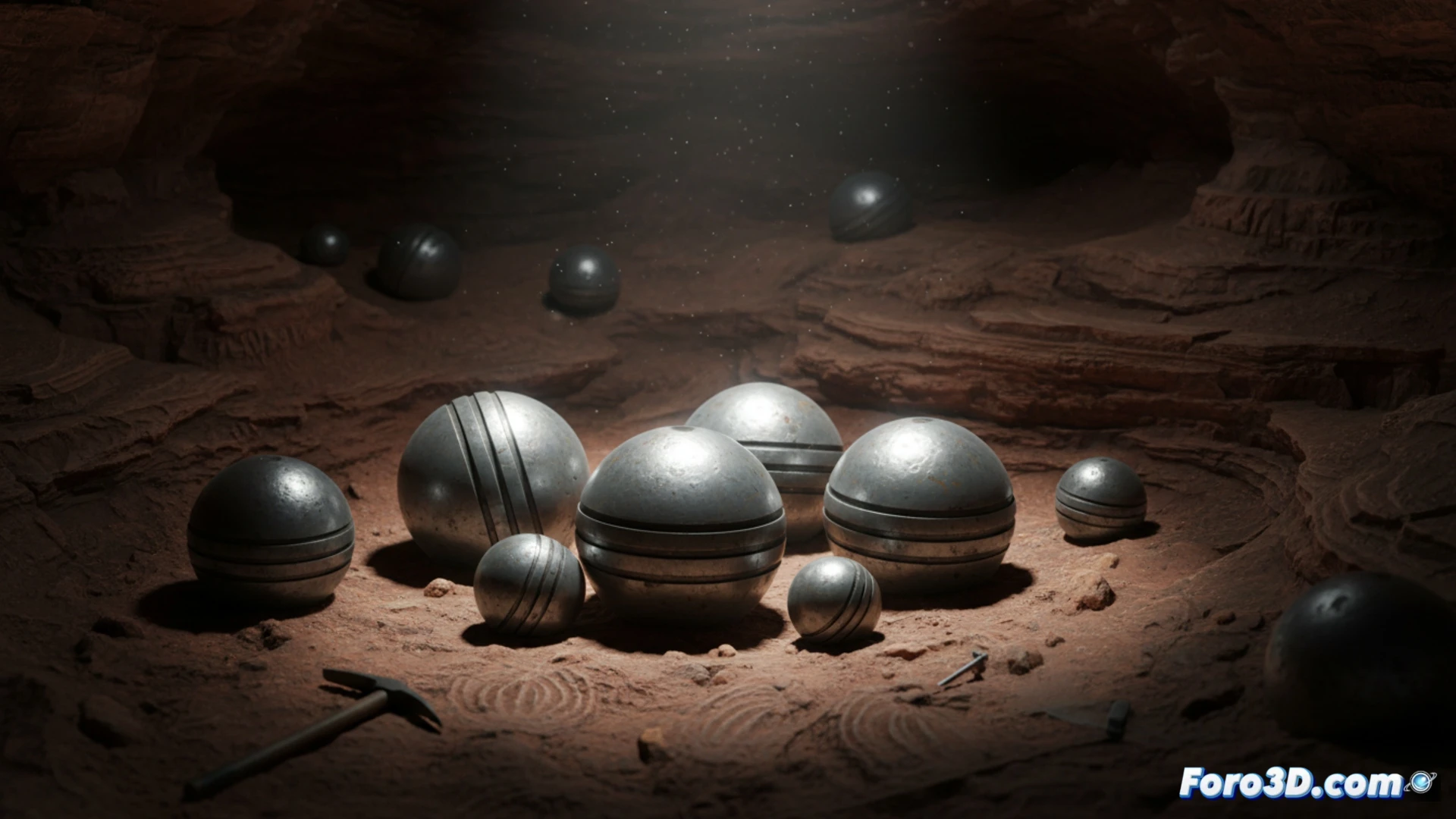
From rock to model: capture and digital analysis 🔍
The first contribution of 3D is exact digital preservation. Through laser scanning or high-resolution photogrammetry, a model of each sphere can be generated with sub-millimeter precision. This digital twin allows for non-invasive measurements of spherical geometry, deviations, and groove distribution. Surface analysis, using normal or curvature maps, reveals wear patterns or crystal growth imperceptible to the eye. Comparing hundreds of these models with each other, and with spheres created by known geological processes or human manufacture, could statistically identify the 'digital fingerprint' of their formation.
Beyond the object: collaboration and outreach 🌐
Digitization democratizes study. An accessible 3D model allows geologists, archaeologists, and experts worldwide to examine the same artifact simultaneously, fostering crucial interdisciplinary collaboration. Furthermore, these models are exceptional outreach tools, enabling the public to interact with perfect virtual replicas of the find. Thus, 3D technology is not just a scientific magnifying glass, but a bridge connecting rigorous research with public fascination for the enigmas of our deep past.
How can high-precision 3D scanning and modeling determine the natural or artificial origin of the controversial Klerksdorp Spheres?
(PS: and remember: if you can't find a bone, you can always model it yourself)