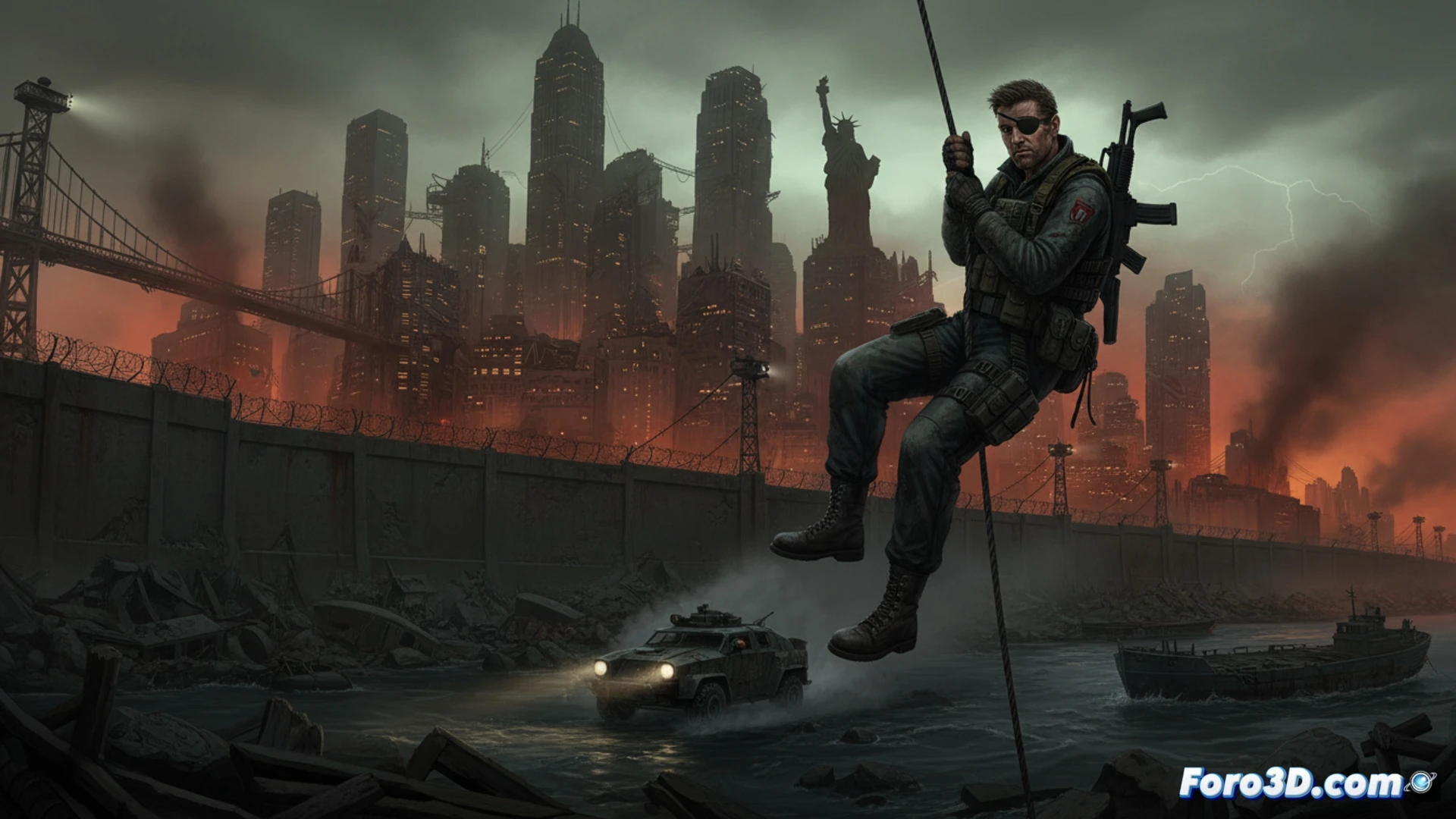
In 1981, John Carpenter imagined a New York turned into a federal prison, a human garbage dump where the government locks up its criminals. The film follows Snake Plissken, a former soldier with an eye patch, who is forced to rescue the kidnapped president inside the island. With an explosive in his neck and a 24-hour deadline, Plissken becomes the ultimate antihero of an era that didn't yet know how close it was to the reality the film portrayed.
How Carpenter built a believable world with a low budget 🎬
With only 6 million dollars, Carpenter used New York at night, shooting on real locations like the World Trade Center and empty streets in East St. Louis. The grimy aesthetic and the use of neon lights created an oppressive atmosphere. The film's technology is deliberately retro: analog clocks, CRT monitors, and conventional firearms. This visual choice, far from aging poorly, reinforces the feeling of decay. The sound, with Carpenter's synthetic soundtrack, completes a world where technology does not save, but controls and surveils.
The rescue plan any public official would approve 💼
The government's strategy is brilliant: send a single guy with a bomb collar and no logistical support. If he fails, he explodes; if he succeeds, he gets a pardon. Seriously, just the kind of plan presented at a cabinet meeting when someone says: Hey, what if we send the most dangerous prisoner to do the job nobody wants to do. The best part is that the president, a guy who looks like he stepped out of an insurance ad, ends up depending on a hacker and a cab driver. Democracy, in all its splendor.