In Romania, a volunteer project is digitally safeguarding an invaluable legacy: the fragile ceramics and figurines of the Cucuteni civilization, which are 6,000 years old. Housed in the Târgu Neamț History and Ethnography Museum, these pieces are being digitized without physical contact using a Creality RaptorX 3D scanner. This initiative, led by Matei Bosincianu of Vatrion in collaboration with the museum, marks a milestone in the digital preservation of the most delicate archaeological heritage.
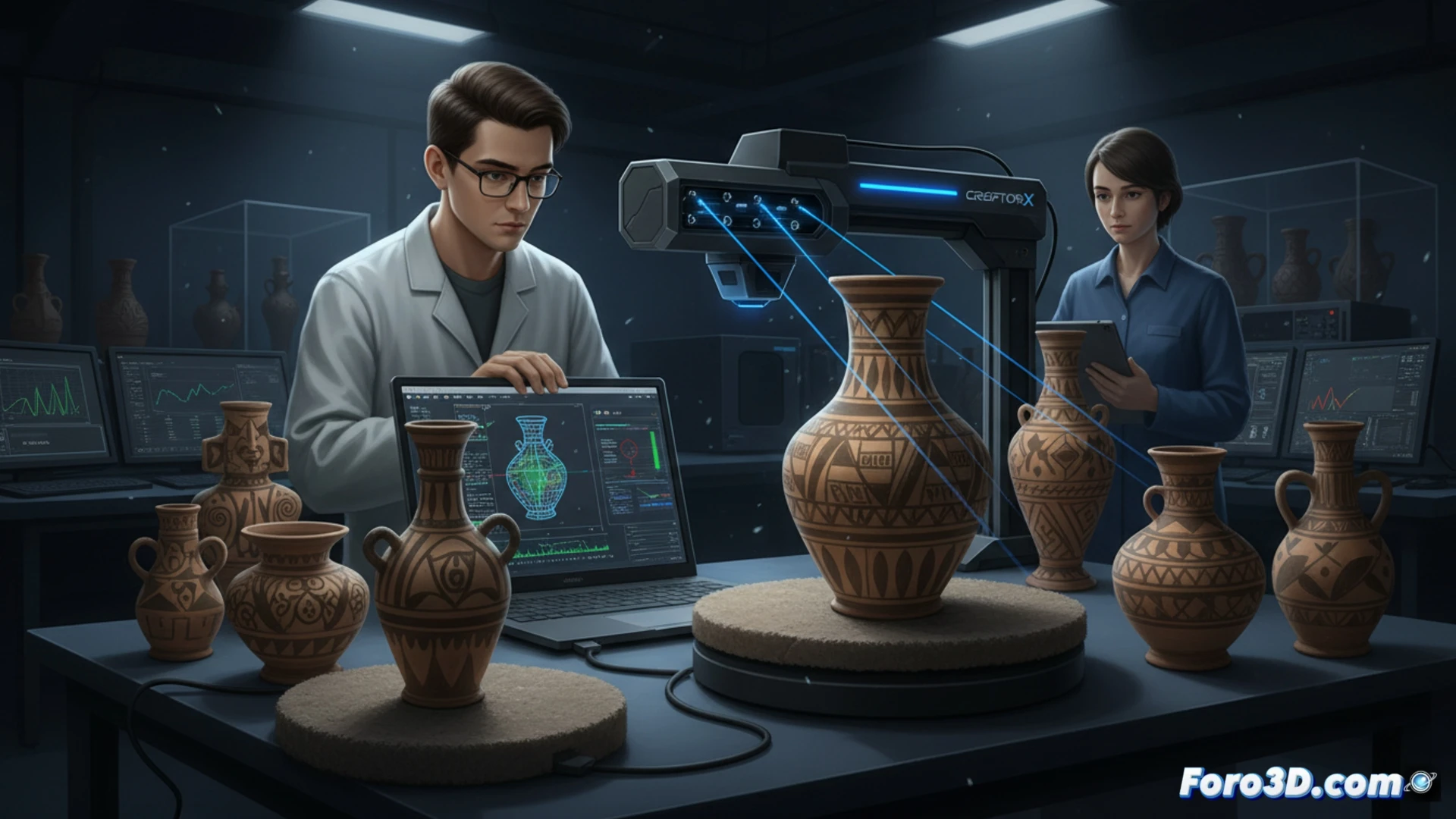
The RaptorX: Laser Precision to Capture Traces of the Past 🔍
The technical challenge was enormous: to capture with absolute fidelity the intricate surface details of the pieces, from geometric decorations to possible ancient fingerprints, without touching them. The solution was the Creality RaptorX 3D scanner and its laser technology. This equipment performs a non-invasive digitization, recording the geometry and textures with a reported accuracy of hundredths of a millimeter. The process generates a highly detailed 3D model that serves as an exact digital replica, allowing for safe and repeatable scientific study without risk of damaging the original.
Beyond Conservation: A Digital Future for History 🚀
The resulting models go beyond mere conservation. They facilitate detailed scientific analysis, accessible from anywhere, democratizing the study of unique artifacts. This digital preservation ensures that the legacy of the Cucuteni culture survives intact for future generations and research, even in the face of potential physical damage. The project, already widely recognized, sets a clear precedent: 3D technology is now a fundamental and indispensable tool in modern archaeology.
How is laser 3D scanning revolutionizing the documentation and conservation of fragile archaeological artifacts, such as the Neolithic ceramics of Romania?
(PS: and remember: if you can't find a bone, you can always model it yourself)