The security of a vault was breached without signs of mechanical violence. The lock, apparently intact, hid the key to the crime: internal micro-scratches. Forensic analysis revealed that the thief used a bump key manufactured using 3D metal printing, created from a simple photograph of the keyhole. This case marks a milestone in digital forensics. 🔐
Workflow: From the Keyhole to Solid Evidence 🔧
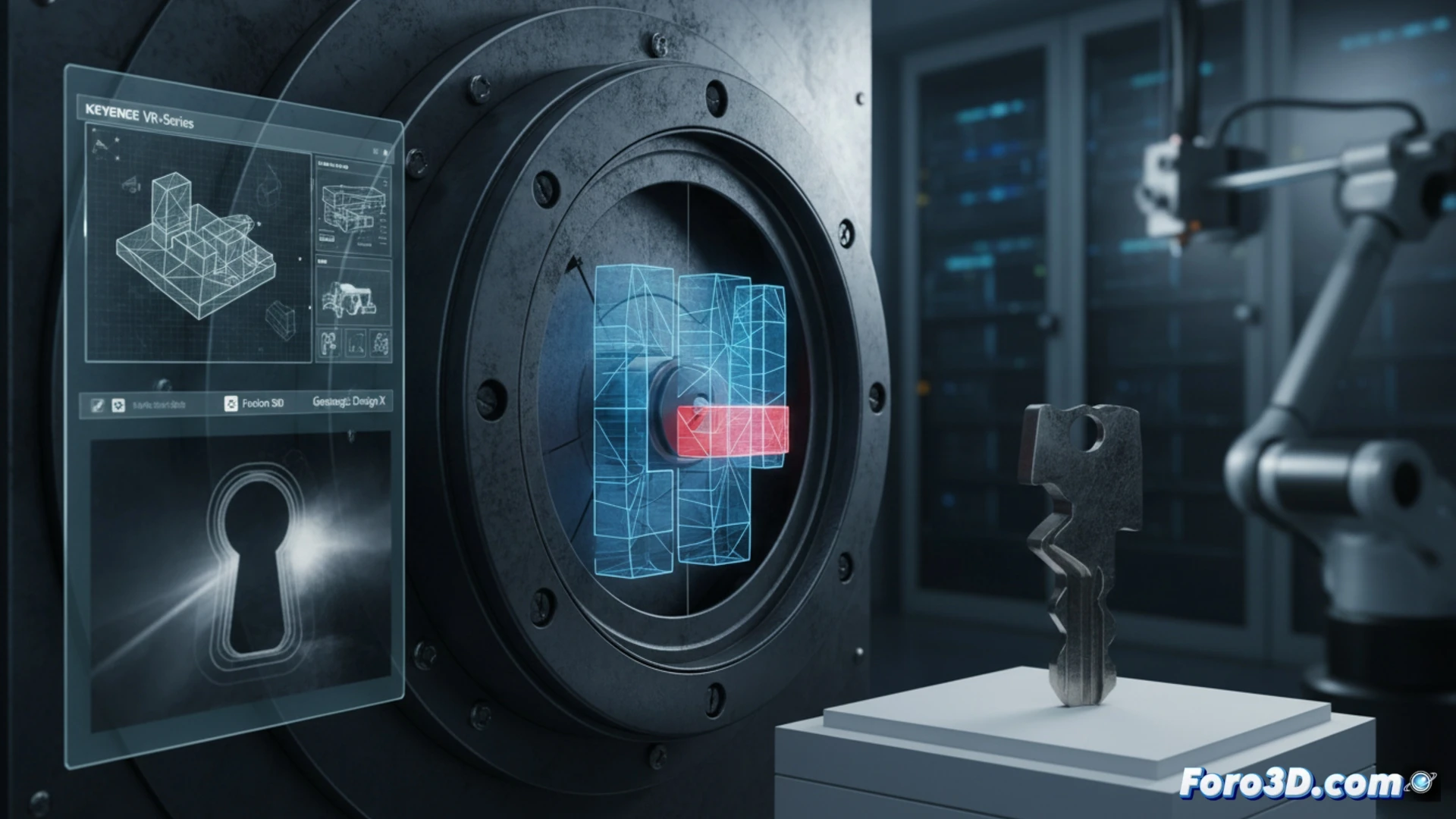
The process began with capturing a high-resolution image of the keyhole. This photograph was used as a reference for the three-dimensional scanning of the internal pins using a Keyence VR-Series microscope, which detected the characteristic micro-scratches of a bump attack. The point cloud data was imported into Geomagic Design X for reverse modeling of the notches. Subsequently, Fusion 360 allowed designing the exact geometry of the master key. The final step was additive metal manufacturing, producing a key that fit perfectly, confirming the robbery hypothesis.
Implications for Security and Technical Expertise 🛡️
This case demonstrates that physical security no longer depends solely on the robustness of the metal, but on the ability to conceal the internal geometry of the mechanisms. For forensic experts, optical 3D scanning becomes an indispensable tool for documenting microscopic damage. The combination of photogrammetry, microscopy, and reverse modeling not only solves crimes but also redefines the standards of expert evidence in the era of digital manufacturing.
How can a forensic 3D scan differentiate between an original key and a 3D-printed copy when the lock shows no visible physical damage?
(PS: In the forensic pipeline, the most important thing is not to mix the evidence with the reference models... or you'll end up with a ghost at the scene.)