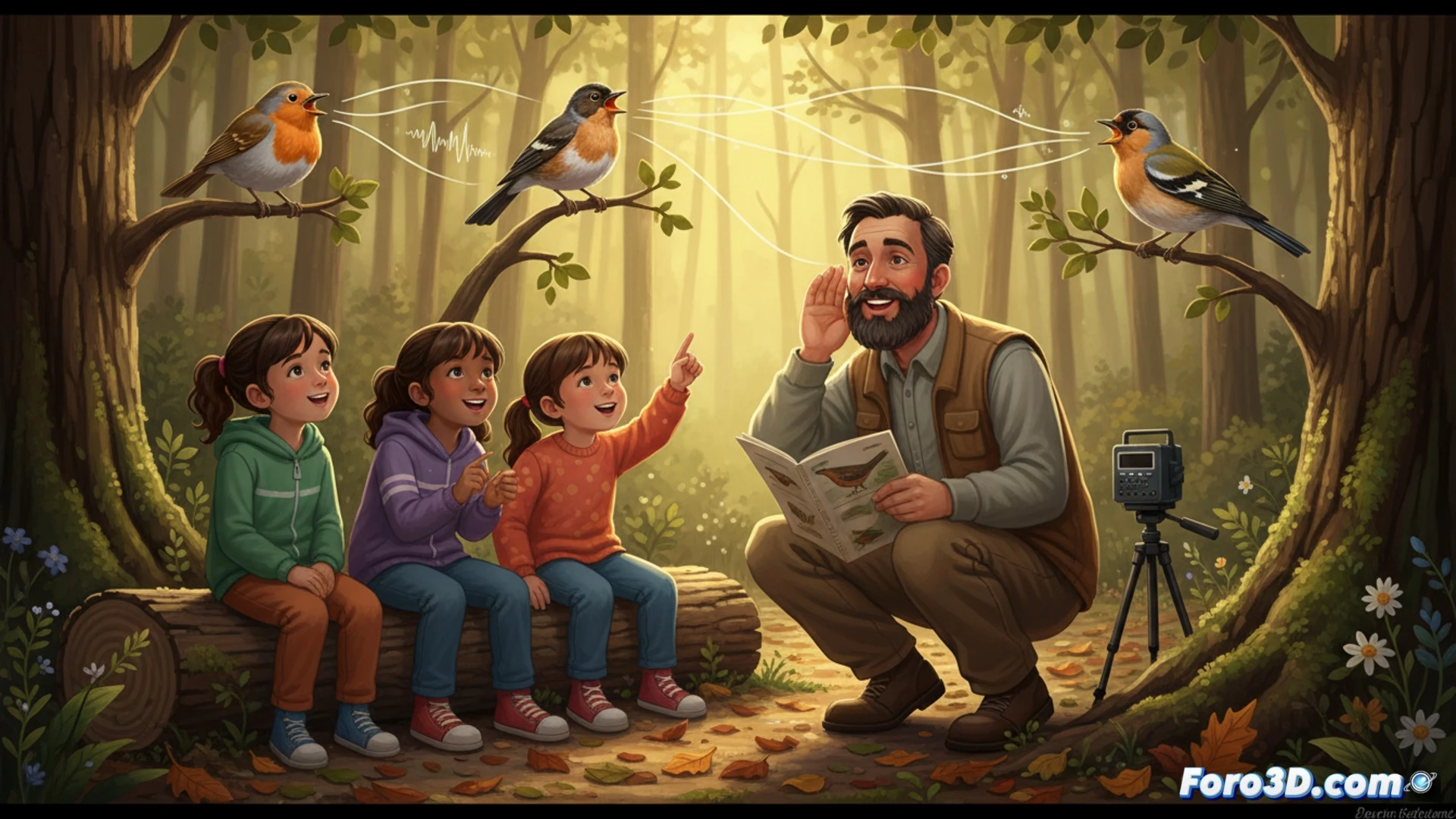
Recognizing bird songs is a valuable and accessible activity with a methodical approach. Experts highlight that this practice develops listening and concentration skills, fostering a connection with nature. Distinguishing the blackbird's song from the finch's stimulates observation and memory in young children, offering educational outdoor entertainment.
Digital tools and methodology for auditory recognition 🎵
The process can be structured in phases. First, familiarization with common species using apps and sound banks, which function as accessible databases. Then, field practice using recordings for comparison. The key is to isolate variables: learn one song per week, noting the rhythmic pattern and pitch. This systematic methodology prevents information overload and consolidates learning progressively.
When the blackbird replies with a 404 error 🐦⬛
The theory is clear, but practice has its bugs. You spend the week studying the tit's trill, you plant yourself in the park with an expert air, and the bird in question decides to improvise a remix. Or worse, you keep absolute silence to listen, and your child chooses that moment to ask, at full volume, why birds don't have teeth. Nature doesn't follow the user manual, and that's part of its charm. Or its bad attitude.