Director Genki Kawamura has revealed Stanley Kubrick's key influence on his horror film Exit 8. Kawamura focused on a specific detail from The Shining: the change in the tricycle's sound as it moves from carpet to wooden floor. This technique, which generates psychological unease, served as a model for the sound design of his own project, seeking that same ability to captivate the audience through hearing.
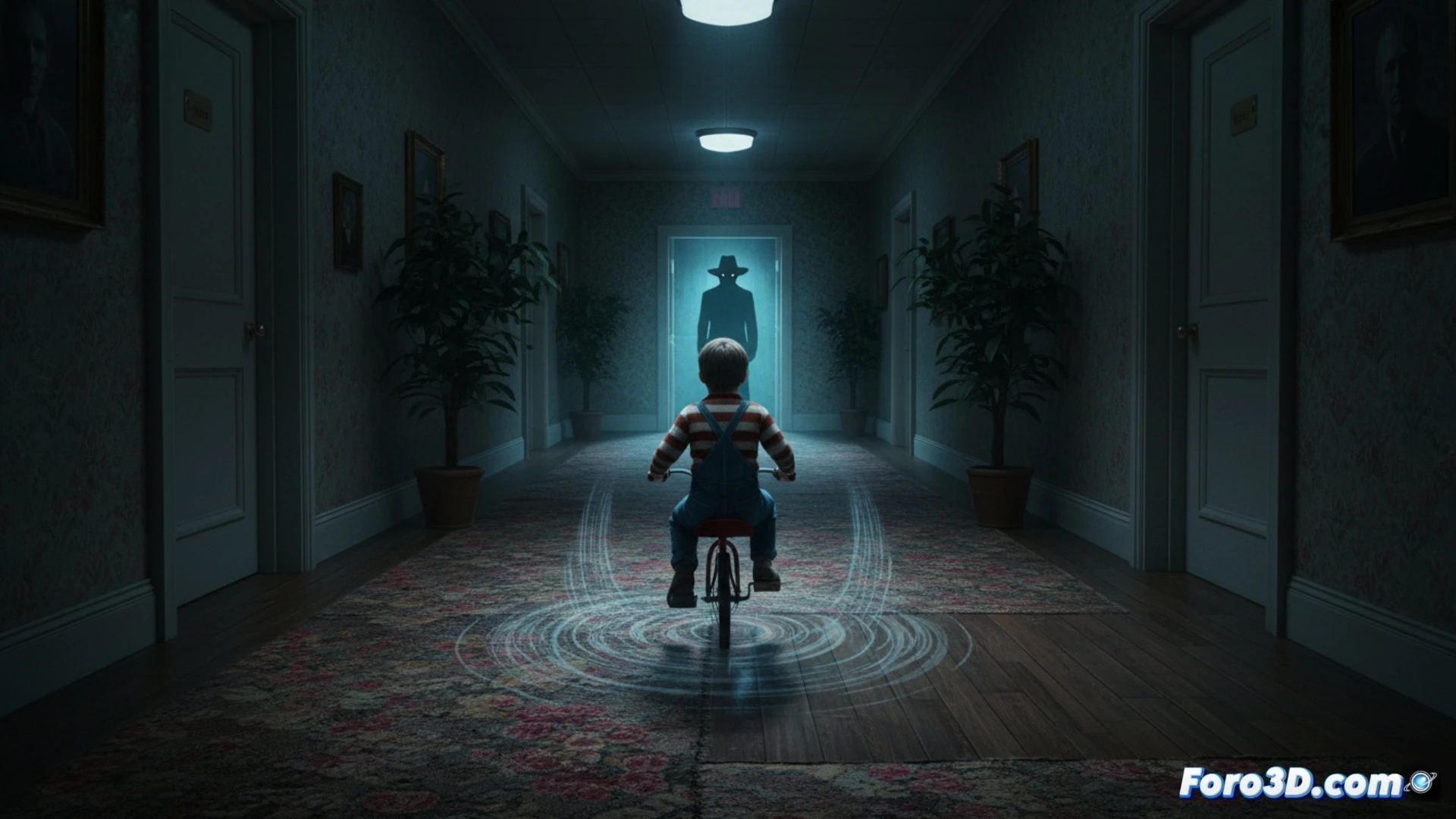
Acoustic Psychology and Its Technical Implementation 🎚️
This effect is not just about recording two different sounds. The technique lies in the abrupt transition and the manipulation of reverb and frequency. The sound on carpet is muffled and high-friction, while the one on wood is resonant and sharp. The sudden alteration breaks auditory expectation, creating a micro-jump scare. In post-production, equalization and sound layering are used to exaggerate this contrast, making the change not just naturalistic, but psychologically charged.
Does Your Vacuum Sound Like the Overlook Hotel? 😱
This explains why sometimes the simple noise of a creaking door or the change in texture while walking can make us nervous without knowing why. Our brains are being programmed by horror cinema to find threat in the everyday. Perhaps the next time your dishwasher changes cycle with a sinister click, it won't be a malfunction, but an unintentional homage to Kubrick. The real terror begins when you suspect your house is doing its own sound design.