In the Bay of Cádiz lies, since 1587, the San Giorgio e Sant'Elmo Buonaventura, an Italian ship sunk during the attack by Francis Drake. Found beneath a layer of mud that has preserved it exceptionally well, its study has revealed a unique time capsule. Digital archaeology now emerges as the key tool to document, analyze, and preserve this heritage without altering its fragile state, through the creation of an exact digital twin.
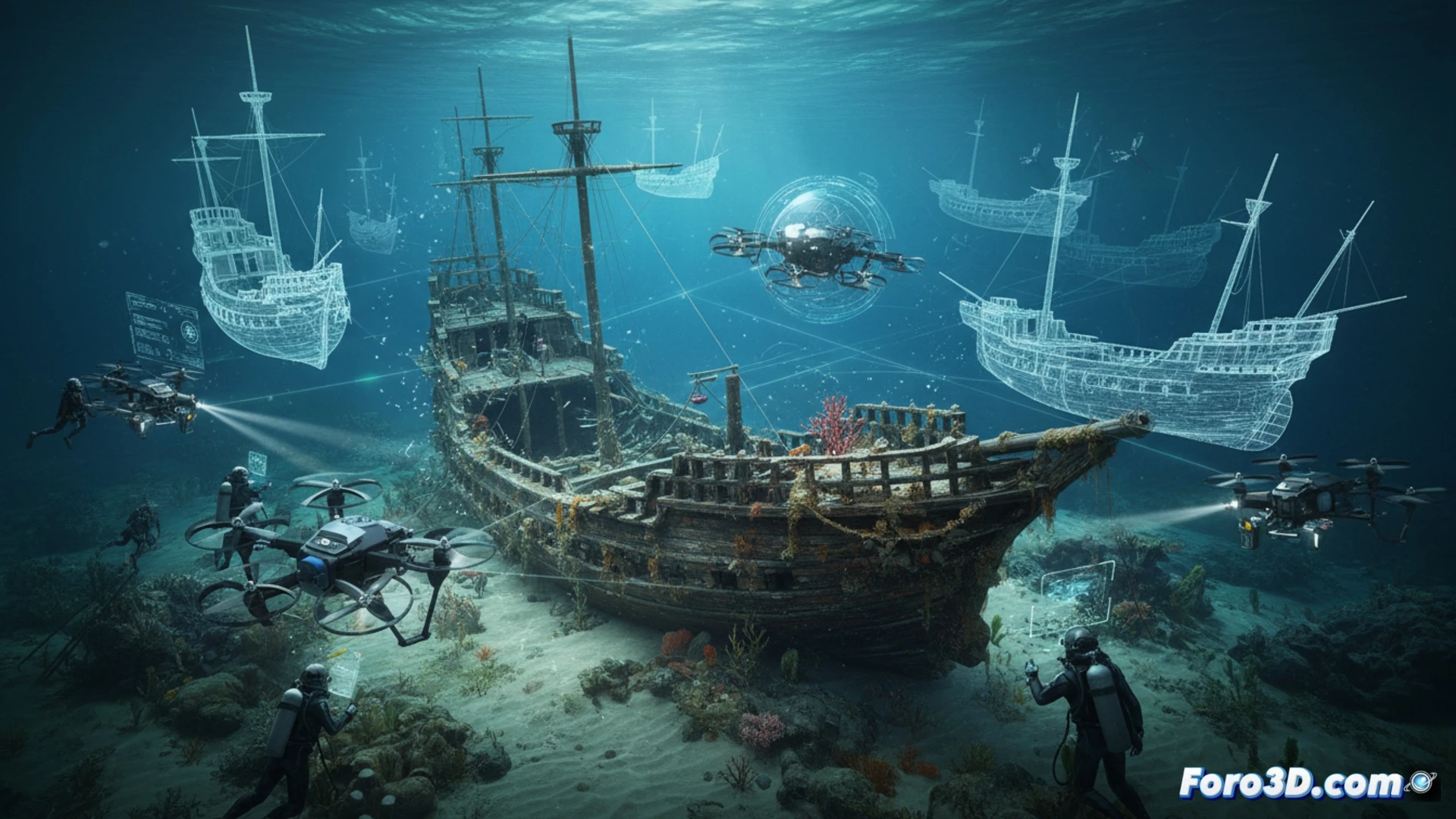
Underwater Photogrammetry and DNA: A Non-Invasive Forensic Analysis 🧬
Documenting such an intact wreck requires non-invasive techniques. Underwater photogrammetry allows for the generation of a millimeter-accurate 3D model of the structure and its cargo scatter, including the sealed jars with olives. This digital twin is the baseline plan for all study. Combined with genetic analysis of the jars' contents, which has identified pathogens like the one for pneumonia, a forensic reconstruction of life on board is achieved. The 3D scanning of elements like the found skull allows for the analysis of trauma, such as its wound, without handling the original, merging archaeology, anthropology, and medicine.
Virtual Preservation vs. Inevitable Degradation 💾
Once exposed, the wreck will begin to degrade. The 3D model then becomes the permanent record, an asset for future research and outreach. This virtual reconstruction allows not only for the study of the ship but also immerses the public in its history in an interactive way, ensuring that the legacy of the San Giorgio transcends its inevitable physical deterioration and remains accessible for future generations.
How is underwater 3D documentation transforming our understanding of shipbuilding and life on board in 16th-century galleons, taking the San Giorgio wreck in Cádiz as a case study?
(PS: If you're excavating a site and find a USB drive, don't plug it in: it could be Roman malware.)