Among the celebrated Dead Sea Scrolls, one stands out for its exceptional material: the Copper Scroll. This 1st-century AD manuscript does not contain religious texts, but rather a list of 64 hidden treasures of gold and silver. Its condition, extremely fragile and oxidized, made it impossible to physically unroll it without destroying it. This is where digital archaeology took charge, employing non-invasive preservation technologies to reveal its secrets.
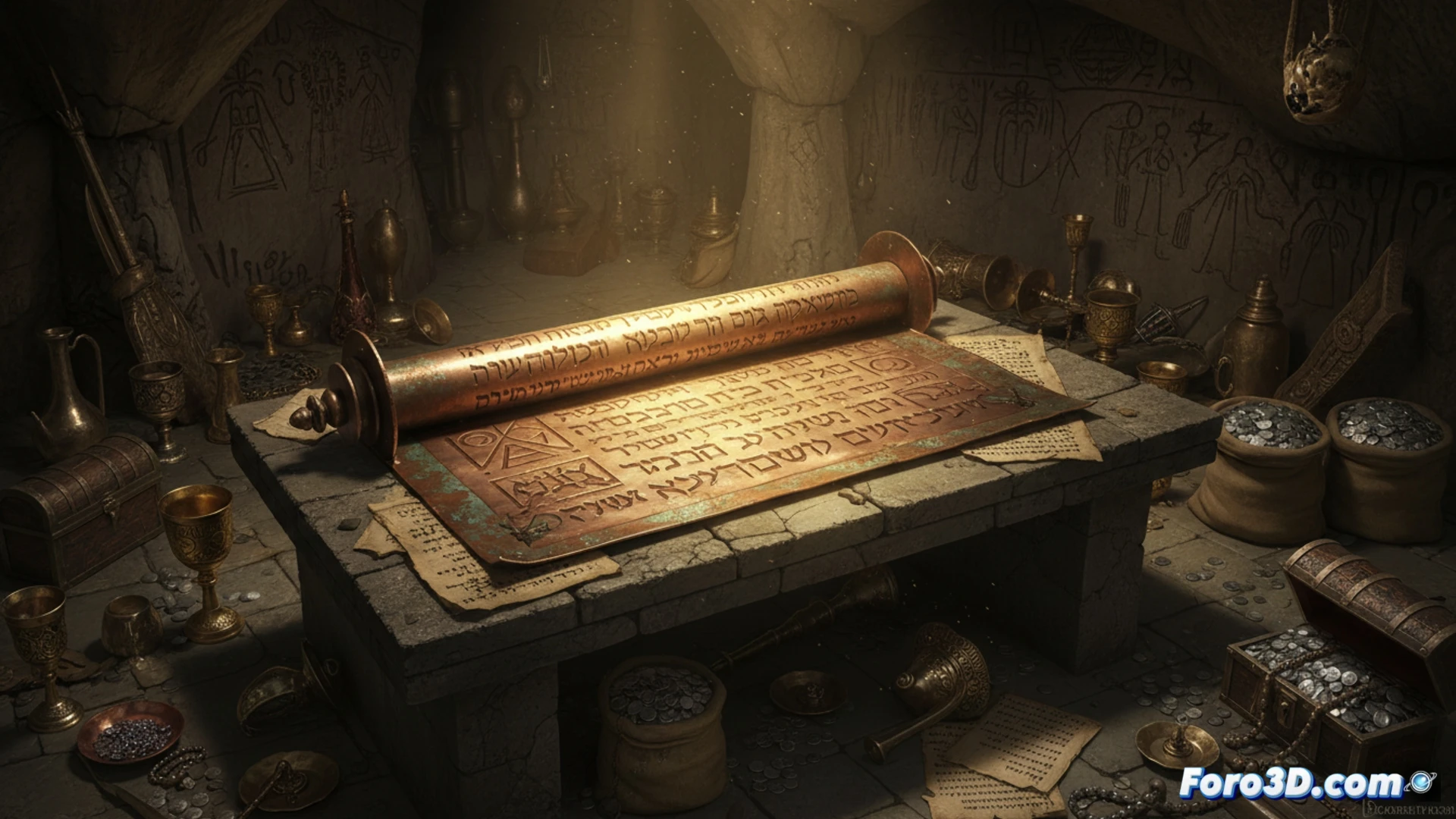
Photogrammetry and Scanning: Keys to Conservation and Analysis 🗺️
The investigation of the Copper Scroll relied on advanced digitization techniques. First, high-resolution photogrammetry was used to create an accurate 3D model of its corroded surface. This model allowed researchers to virtually unroll it, manipulating the digital image without touching the fragile original. Subsequently, technologies like computed tomography helped to visually penetrate the layers of corrosion, enhancing the contrast of the engraved Hebrew letters. This process is fundamental for heritage projects, as it creates a permanent and accessible record for global study, even allowing the application of algorithms to digitally restore lost texts.
Virtual Reconstruction of the Past and Its Future 🔮
The case of the Copper Scroll exemplifies the future of archaeology. Virtual reconstruction not only preserves but also enables new interpretations. The 3D data could be used to recreate the described locations, cross-referencing geographical information with models of the terrain from that era. This convergence between technology and history democratizes access to heritage and transforms how we interact with it, ensuring that even the most delicate objects continue to speak to future generations.
How are 3D digitization and computational analysis revolutionizing the interpretation of the treasure map inscribed on the Copper Scroll?
(PS: If you're excavating a site and find a USB drive, don't plug it in: it could be Roman malware.)