While attention focuses on sophisticated exploits, the most common and effective attack vector remains credential theft. Techniques like phishing or credential stuffing allow attackers to enter systems as legitimate users. This initial access, often underestimated, is the first step for lateral movement and data theft. Security must refocus on identity.
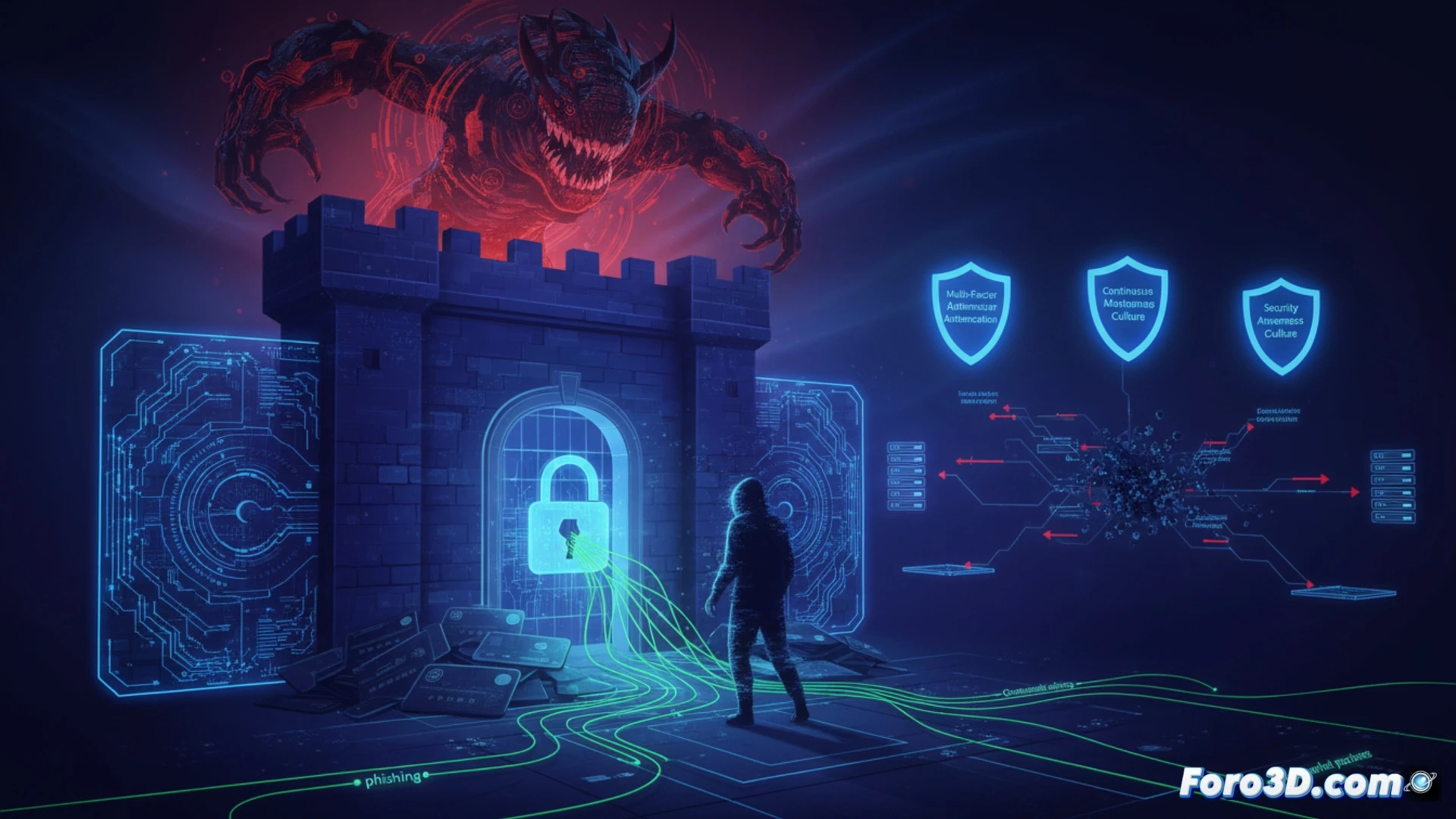
Technical Mechanisms Behind Identity-Based Attacks 🔍
The process begins with obtaining credentials, through leaked databases or social engineering. With a valid username-password pair, the attacker bypasses traditional network perimeters. Inside the system, they employ legitimate administrative tools, like PSExec or WMI, for lateral movement. The final objective is usually to reach accounts with elevated privileges to extract information or deploy ransomware.
Your '123456' Password is a Five-Star Sieve 😬
It seems we invest in state-of-the-art firewalls only to protect the castle with a cardboard door. Attackers no longer need to scale walls with complex zero-day exploits; they simply ask for the keys via email and someone hands them over. It's like installing an anti-intruder alarm at home but leaving the window open with a sticky note that says password: admin. Laziness is the cybercriminal's best ally.