Pixel art has evolved from its initial association with retro video games. Today it is established as a form of artistic expression with its own identity, used in contemporary projects. Artists like Shingo Kabaya, coming from the 3D era, have adopted this technique for its ability to convey abstract and personal ideas. His work demonstrates that the medium is not a simple nostalgic resource, but a modern and versatile visual language.
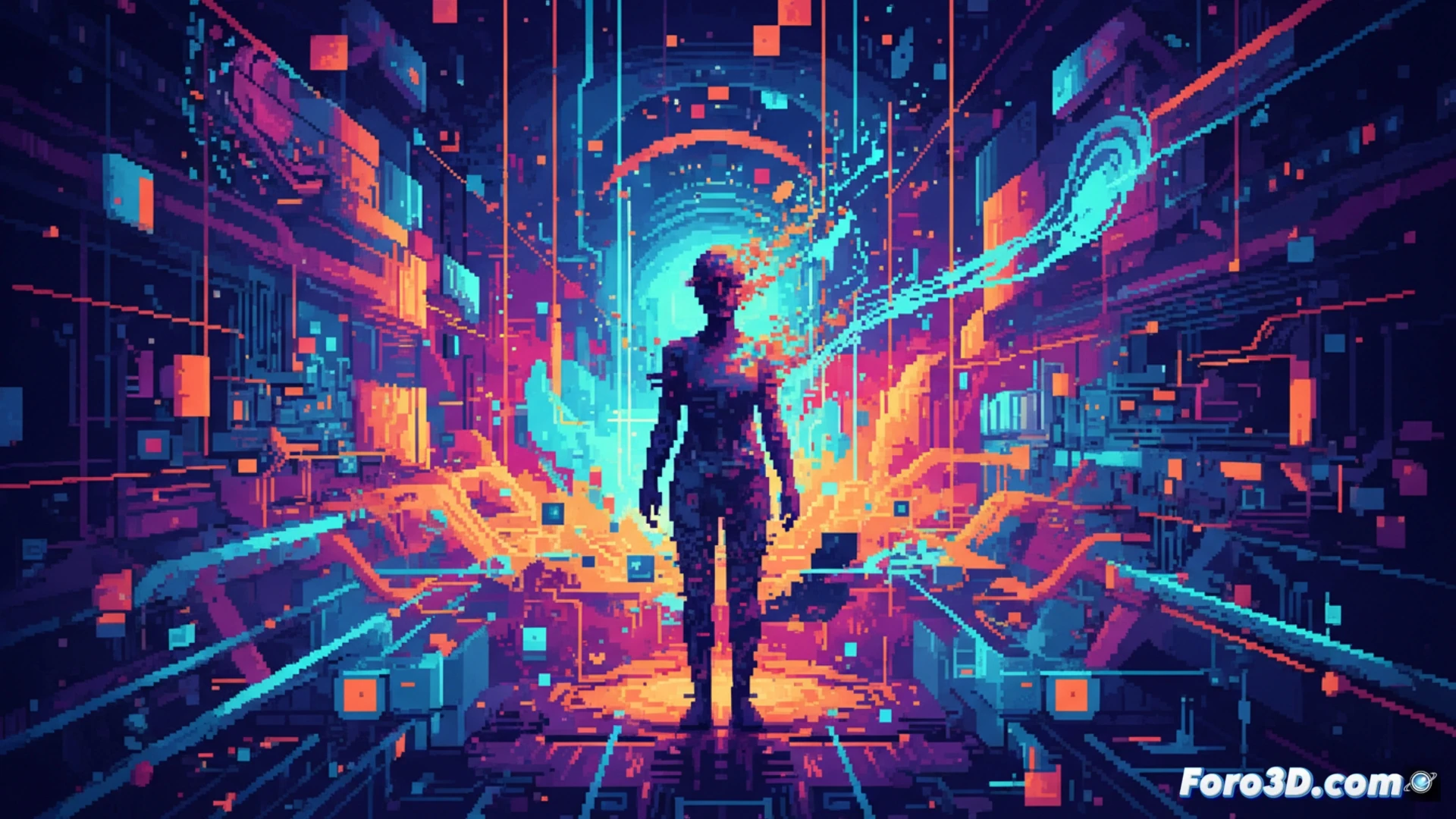
From polygonal modeling to creative constraint: a technical choice 🎨
Kabaya's transition from PS2 3D modeling to pixel art is not a step backwards, but a change of tool. Pixel art imposes clear technical restrictions: a limited palette, a low resolution, and the need to define every shape with strategic pixel placement. This limitation, far from being an obstacle, fosters visual synthesis and creativity. In projects like Romeo is a Dead Man, these restrictions become the main style, where abstraction and meaning are born from resource economy.
Confession: my 16-core graphics card cries with a 64x64 canvas 😢
It's curious how we dedicate enormous hardware resources to rendering worlds in 4K, while some artists create profound works with a handful of pixels. Our PC, with its shiny RTX, could process that image in a fraction of a millisecond, but we spend hours deciding if a brown pixel should be one shade to the left. The real stress test is not for the GPU, but for our perfectionist patience. Technology advances, but art sometimes chooses the slower, more deliberate path.