In 1898, an excavation in the Saqqara necropolis uncovered a peculiar sycamore wood object. Cataloged as a toy or a bird-shaped weathervane, it remained for decades in the basement of the Egyptian Museum in Cairo. However, its aerodynamic design, with clearly profiled wings and a vertical tail, has led researchers to propose a revolutionary hypothesis: it could be a functional glider model, a scaled artifact for flight created around 200 BC. 🛩️
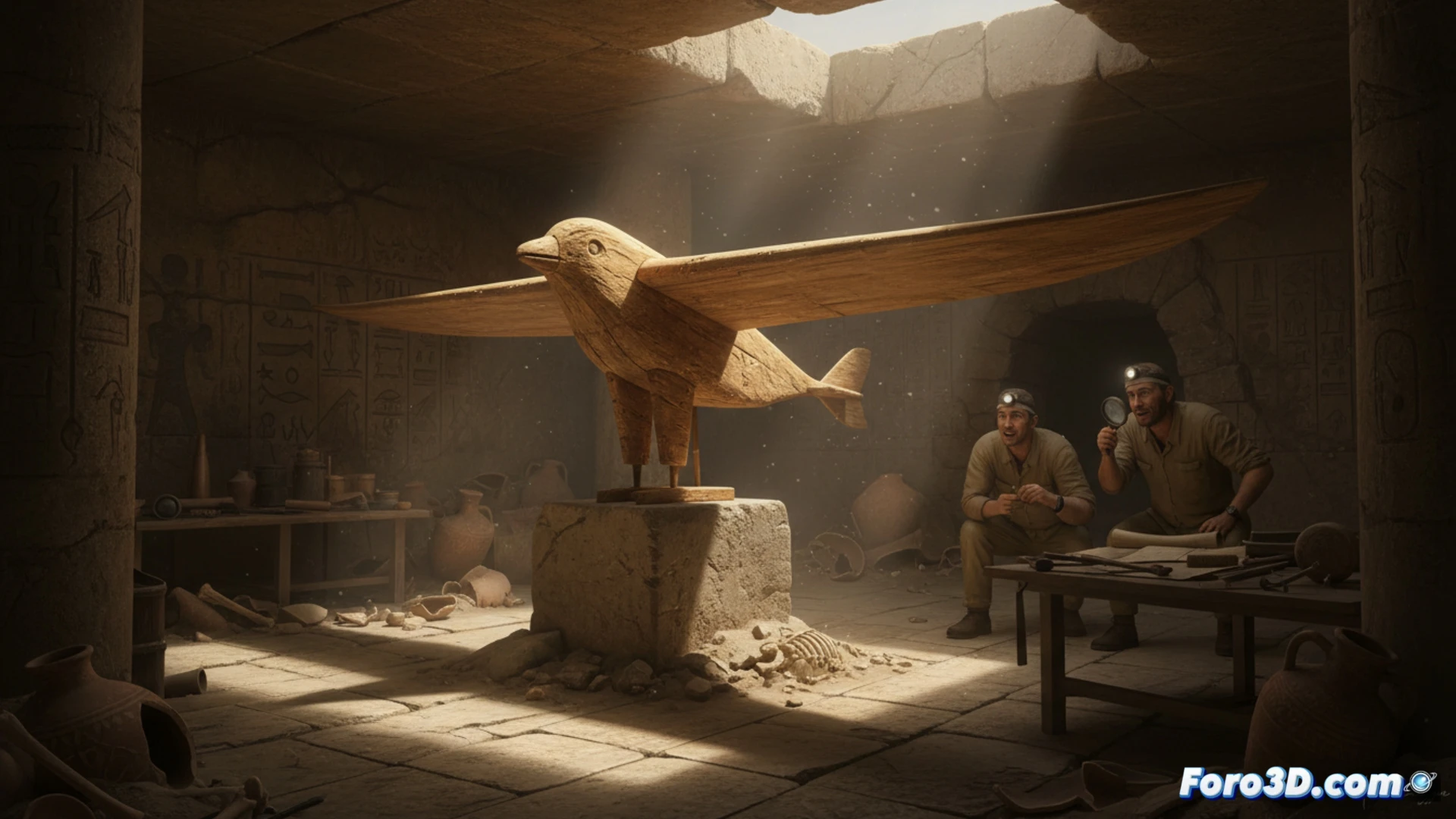
Reverse Engineering and CFD: The Key to Unveiling Its Function 🔍
Digital archaeology offers the tools to test this theory without compromising the fragile original. Through high-precision 3D scanning, an exact geometric model is obtained. Using reverse engineering on this model allows for the analysis of its proportions and centers of gravity. The definitive step is taken by Computational Fluid Dynamics (CFD). By simulating airflow around the digital model under different conditions, it is possible to quantify whether it generates sufficient lift to glide. These studies have shown that, with small adjustments to the tail (possibly lost), the design presents surprisingly efficient aerodynamic characteristics, although the debate about its intentionality remains open.
Reinterpreting the Past with Present Technology 💻
Beyond solving the mystery, this case exemplifies the power of digital archaeology. A 3D model becomes a virtual testing ground for hypotheses that were once mere speculation. This methodology preserves the artifact, allows for interactive dissemination, and forces us to reconsider the technological capabilities of ancient civilizations. The Saqqara Bird, whether a toy, a ritual object, or a prototype, demonstrates how the intersection between heritage and modern technology enriches our understanding of history.
Can aerodynamic analysis with CFD simulation software confirm the flight capability of the Saqqara Bird as a primitive glider?
(PS: If you're excavating a site and find a USB drive, don't plug it in: it could be malware from the Romans.)