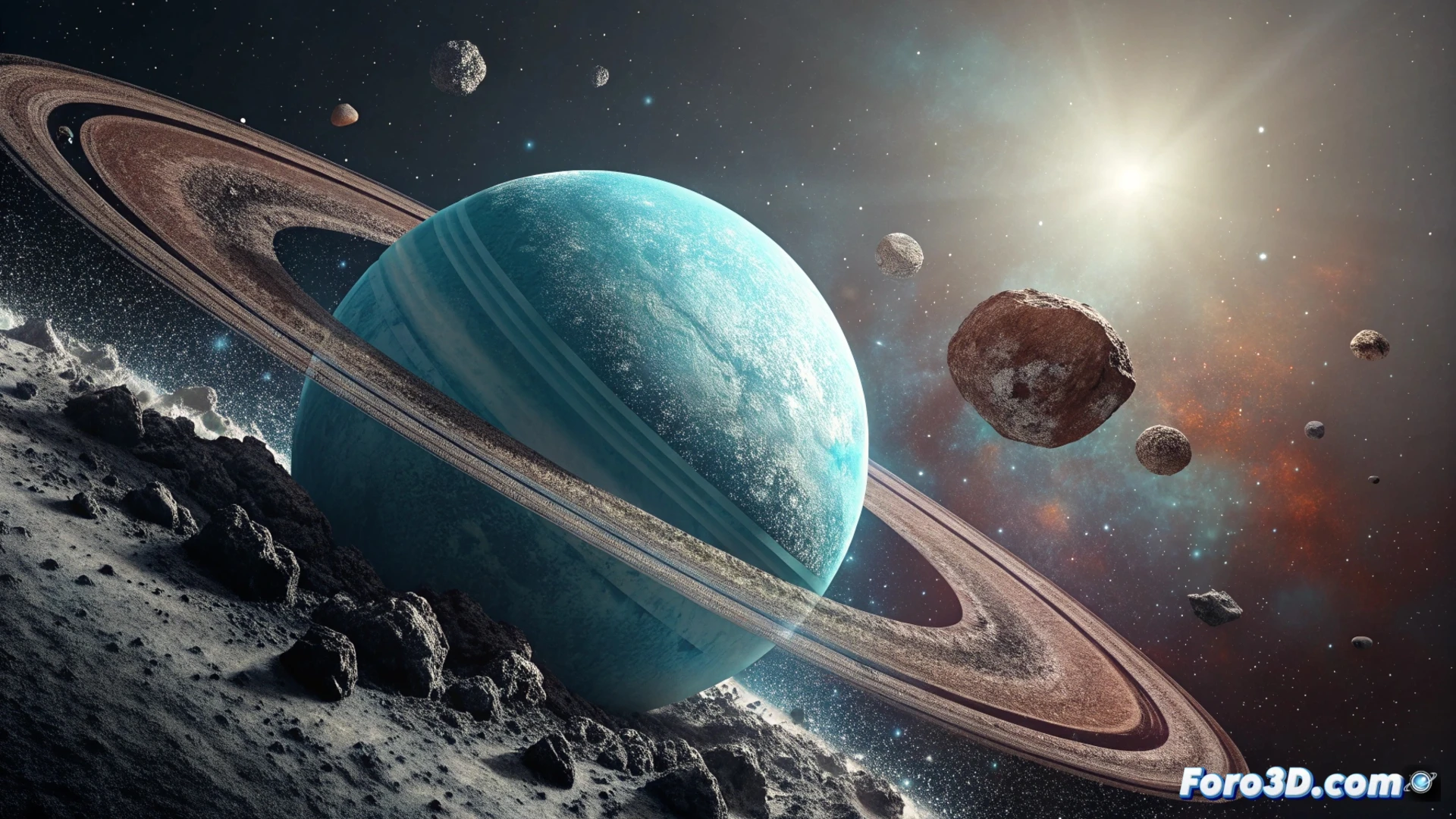
A recent study has unveiled the mystery of Uranus's Mu and Nu rings, which had puzzled astronomers for decades. Thanks to the Keck, Hubble, and James Webb telescopes, it has been discovered that the Mu ring, with a bluish hue, is composed of ice fragments ejected from a nearby moon by micrometeoroid impacts. On the other hand, the Nu ring, reddish in color, consists of rocky particles likely originating from invisible moons, also due to impacts.
How technology unveiled the secrets of the rings 🔭
The research team combined data from the Keck, Hubble, and James Webb observatories to analyze the composition and dynamics of the rings. The results indicate that, unlike other planetary systems where rings form from collisions between moons or gravitational forces, on Uranus, micrometeoroid impacts are the primary and continuous driver. This process generates ice particles in Mu and rocky material in Nu, offering a clearer view of the evolution of the Uranian system.
Uranus: the planet that prefers impacts to moon brawls 🪐
It seems Uranus is not a fan of orbital dramas. While Saturn boasts rings formed by moons breaking into pieces, the ice giant opts for a more direct method: letting micrometeoroids hit its moons until they release dust and ice. So, if you ever feel overwhelmed by cosmic dust at home, remember: at least your furniture isn't being bombarded by space rocks every other day.