The US firm Astrobotic has successfully completed testing of its Chakram rotating detonation rocket engine, considered the most powerful of its kind. The tests, conducted at NASA's Marshall Space Flight Center, accumulated 470 seconds of operation across two prototypes, with a continuous burn record of 300 seconds, marking a breakthrough in space propulsion.
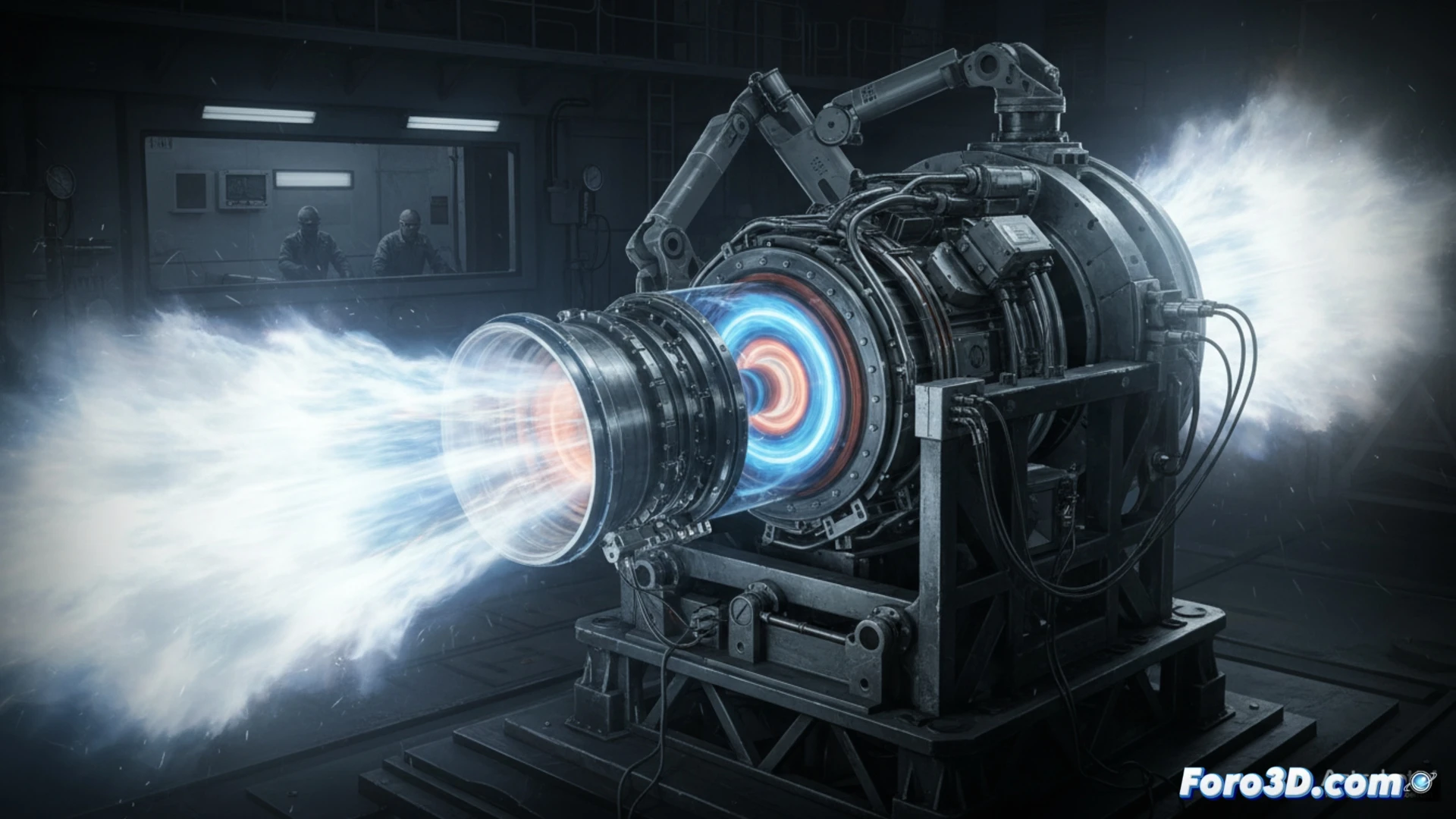
How Rotating Detonation RDRE Works 🚀
The Chakram engine belongs to the RDRE (Rotating Detonation Rocket Engine) class. Instead of conventional combustion, it generates supersonic detonation waves that spin within the chamber. This design allows for greater thermal efficiency and superior thrust in a smaller space. Tests at the Marshall Center validated the stability of the process, a key step for its use in heavy cargo missions and deep space exploration.
Astrobotic: This Time, They Didn't Explode by Mistake 🔥
That an engine named Chakram functions without disintegrating is news. The company, known for its lunar landers, has demonstrated it can contain a rotating explosion inside a tube and call it propulsion. 470 seconds of controlled fire that, in any other context, would be cause for evacuation. Fortunately, here the only thing spinning is the engine, not the engineers fleeing.