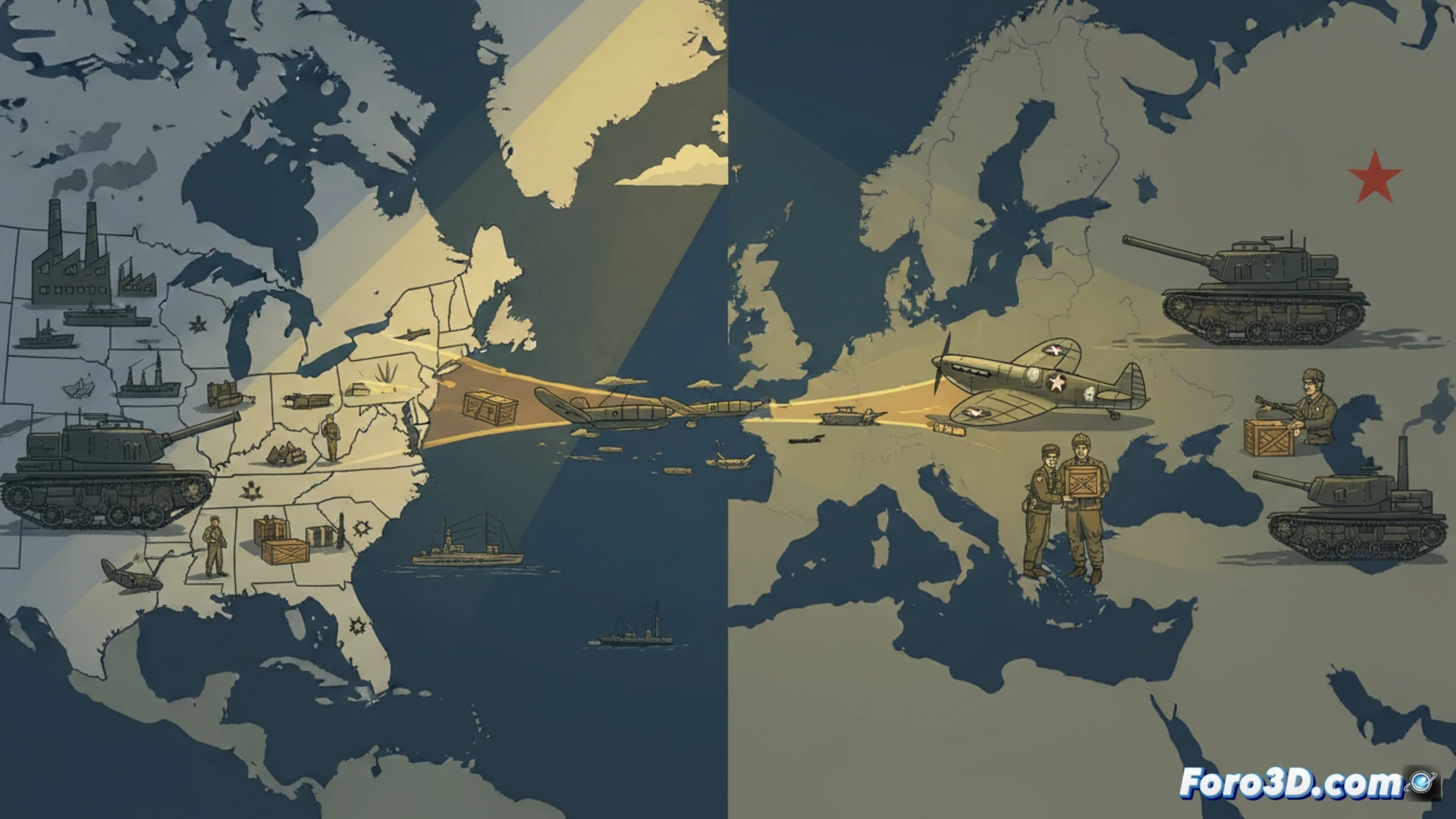
In March 1941, the United States passed the Lend-Lease Act, a program that allowed the supply of war material, food, and resources to allied nations. Although initially aimed at the United Kingdom, it was extended to the Soviet Union after the Nazi invasion. This constant flow of aid was a key logistical factor in sustaining the allied war effort on the European and Eastern fronts, long before the United States' direct entry into the conflict.
The Technology Transfer and the Material Delivered 🚚
The program did not just send food and fuel. It included a massive transfer of technological and transportation equipment. Over 400,000 Studebaker trucks and Jeeps were supplied, which motorized the Red Army. Locomotives, railway tracks, radios, and communication equipment also arrived. Aircraft like the P-39 Airacobra and M3 Lee tanks complemented Soviet production. This material helped solve critical logistical bottlenecks in the USSR.
Stalin and Capitalism with Home Delivery 🫡
It's a historical detail with a certain irony. The Soviet Union, which preached the struggle against capitalism, depended on its factories for a substantial part of its mobility and supplies. Without those American trucks and cans of spam, the Soviet offensive would have been notably slower. A peculiar situation where dialectical materialism needed help from logistical materialism made in Detroit. Geopolitics makes for strange trenchmates.