In 1985, electronics took an unexpected turn when Xilinx's XC2064 FPGA hit the market. This device, now recognized as an IEEE milestone, contained an 8 by 8 grid of configurable logic blocks. Its great innovation: allowing hardware to be reprogrammed after manufacturing, offering flexibility that was previously unthinkable in fixed integrated circuits.
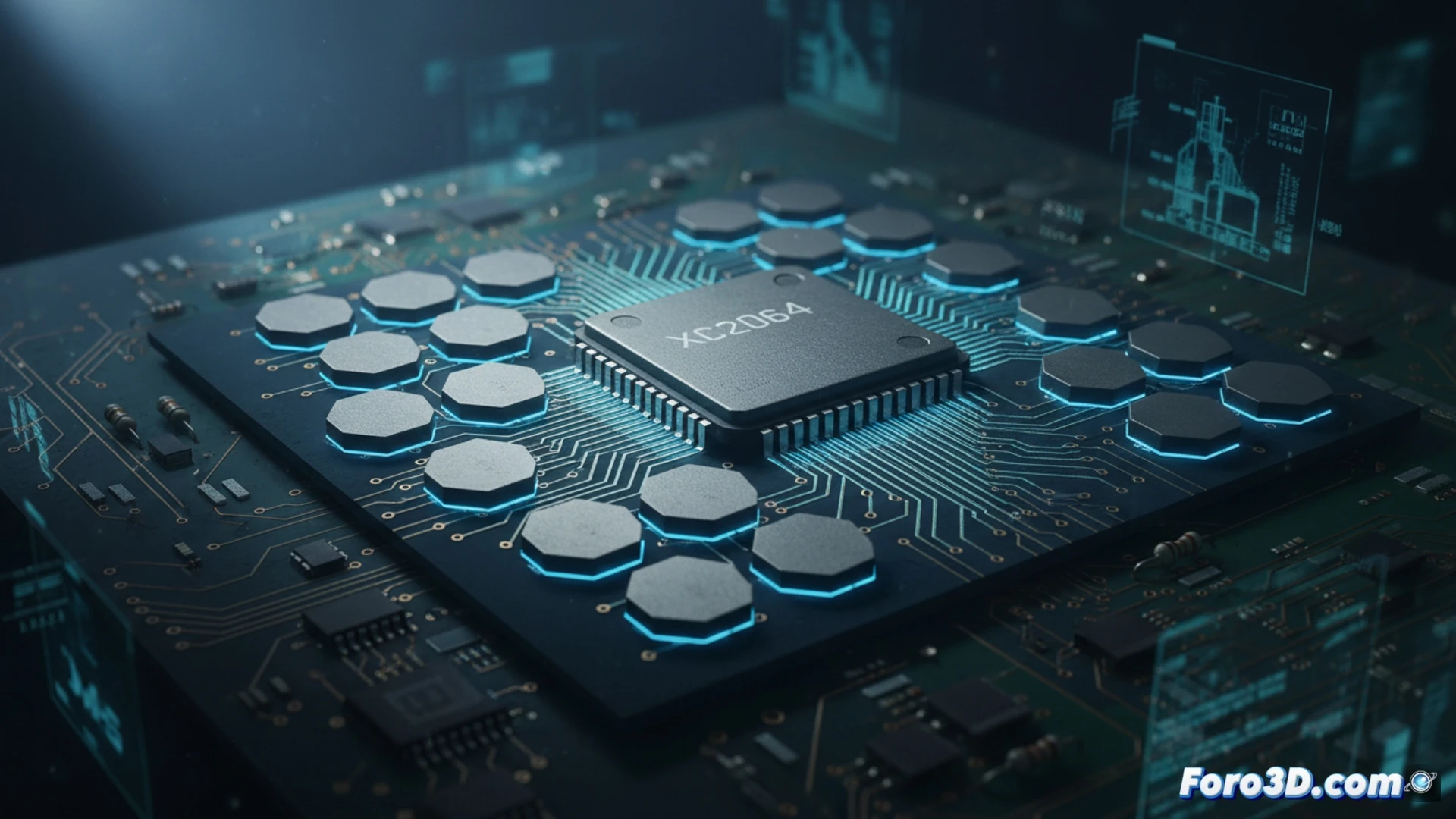
The architecture that redefined circuit design ⚙️
The XC2064 operated with an array of logic blocks connected by programmable routing channels. Each block could be configured to perform simple logic functions, and interconnections were adjusted using static memory cells. This allowed engineers to modify the chip's behavior without changing the physical hardware, speeding up prototypes and reducing costs in digital system development.
When your chip decides to change its mind without warning 🤖
Imagine buying a processor and the next day it decides it would rather be a video controller. That, in essence, is what the XC2064 did. Sure, at a speed that would make a wristwatch cry today and with a capacity barely enough for a couple of logic gates. But hey, it was a chip with personality: every time you turned it on, it could be whatever you wanted. Or whatever it wanted, depending on how you look at it.